Burial of King Oyo takes place in Uganda as news anchor prepares for throne
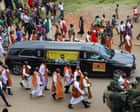
The dust of Fort Portal has settled over the Karambi Royal Tombs, marking the final resting place of Oyo Nyimba Kabamba Iguru Rukidi IV, a monarch whose reign as the world's youngest king was cut short by the ravages of malaria at just eighteen years old. Yet, his burial today is far more than a somber ceremony for a lost youth; it is the symbolic closing of a wound that has festered within the Tooro kingdom for months. As royal guards in their traditional regalia carried the casket through the narrow streets, the atmosphere was thick with a mixture of grief and relief, a dual emotion that had been simmering in the hearts of the people since the death of the late king left the throne hanging in the balance.
At the center of this funeral procession stood the man who would become the next face of the monarchy, Edward Rukidi Kijanangoma, a figure whose profession as a news anchor made his elevation to the throne one of the most controversial appointments in the kingdom's modern history. To many traditionalists, the idea of a media personality, accustomed to speaking into microphones and shaping public narratives, sitting upon the throne of his ancestors was an affront to the sacredness of the lineage. However, as the news anchor prepared to cast nine coffee berries into the grave—a ritual act of sealing the past and acknowledging the new order—he transformed from a perceived outsider into the living embodiment of a desperate need for stability. The berries, falling one by one into the earth, represented a severing of ties with a bitter succession battle that threatened to tear the kingdom apart.
The succession dispute was not merely a legal quibble over royal decrees; it was a power struggle with roots deep in the soil of Tooro. Following the early death of King Oyo, factions vied for control, each claiming legitimacy through different interpretations of custom and bloodline. The appointment of Kijanangoma was seen by some as a modernization of the monarchy, an attempt to inject a voice of the people into the palace, while others viewed it as a political maneuver that bypassed traditional elders. This tension reached a boiling point during the funeral preparations, where the streets were lined with supporters of rival claimants, creating a volatile environment that the royal family hoped the burial would finally resolve.
In the quiet moments before the casket was lowered, Kijanangoma stood amidst the silence of the ancestors, his role shifting instantly from the observer of history to the author of it. The news anchor who once reported on the drama of the succession crisis now performed the solemn duty of honoring the very king who died because of it. This transformation is the core of the story: the idea that in a kingdom where tradition is paramount, the most unexpected figure can sometimes be the only one capable of unifying a fractured community. By casting the coffee berries himself, he accepted the weight of the crown, acknowledging that the throne is not just about blood, but about the ability to hold the kingdom together when the foundations shake.
As the earth was turned over the final resting place, the immediate tension that had gripped Fort Portal began to dissipate, replaced by a collective exhale from a population that had braced itself for civil unrest. The burial of King Oyo serves as a poignant reminder that even in the most rigid of traditional systems, the future is often written by hands that did not exist when the old order was established. The kingdom now looks toward a new chapter, one where the voice of the news anchor merges with the whispers of the ancestors, hoping that the peace forged in this soil will endure long after the coffee berries have lost their scent.