From Indigenous Loss, a Potent Legal Argument on Climate
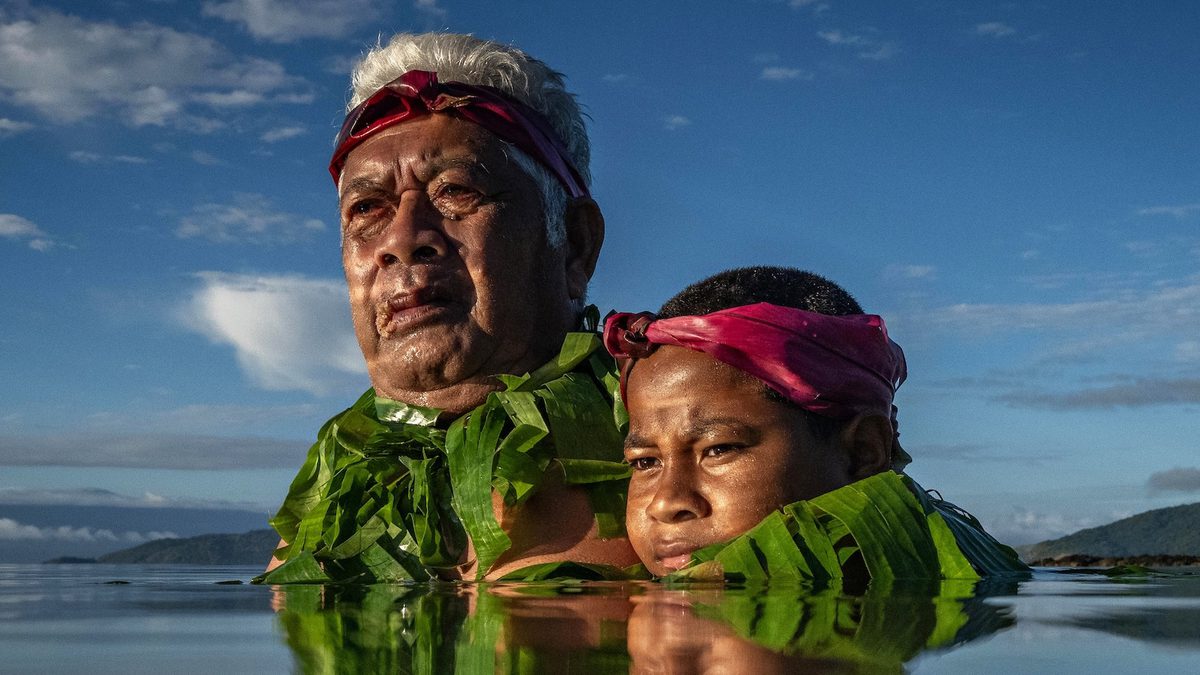
When the International Court of Justice ruled in the Pacific Islands Forum's case against Australia, the headlines focused on carbon budgets and legal precedents for sovereign survival. Yet, buried within the dense legal briefs and judicial deliberations was a more profound, perhaps more human, argument that reshaped how the world understands climate harm. Julian Aguon, a human rights lawyer who has dedicated his career to the defense of Indigenous peoples, did not merely argue for the preservation of land; he argued for the preservation of the very soul of a culture that has existed for millennia. His victory was not just a diplomatic win for small island nations, but a critical moment for recognizing that climate change is an act of cultural erasure as much as it is an environmental catastrophe.
Aguon's work forces us to confront a reality that Western legal systems have long struggled to articulate: the difference between the destruction of a physical object and the destruction of a people's way of life. For Indigenous communities in the Pacific, the land is not a resource to be managed or a territory to be defended; it is the library, the church, and the family home combined. When rising seas swallow ancestral villages, it is not simply a loss of real estate; it is the burning of a living archive. The specific songs, navigation routes, and oral histories tied to particular peaks and atolls vanish with the water, taking with them the collective memory that defines the community's identity. This is the core of Aguon's argument—a legal framework that acknowledges that without a physical home, the cultural continuity necessary for survival is impossible.
The implications of this reasoning extend far beyond the immediate crisis facing nations like Kiribati or Tuvalu. Historically, international law has treated environmental damage as a secondary concern to economic interests or abstract sovereignty. By successfully framing the loss of traditional knowledge and spiritual practice as a violation of fundamental human rights, Aguon has opened a new door in global jurisprudence. This precedent suggests that climate litigation must evolve from protecting borders to protecting the intangible heritage that binds generations together. It challenges the notion that adaptation strategies, such as relocation, are sufficient solutions, positing instead that moving a people without their land is akin to moving a library and leaving the books behind.
Critics might argue that such arguments are idealistic in the face of hard data showing meters of rising sea levels, or that legal victories are mere symbolic gestures in a warming world. However, the power of Aguon's approach lies precisely in its ability to make the invisible visible. By naming the specific injuries to tradition and belief, he transforms abstract temperature rise into a tangible narrative of loss that resonates with the broader human experience. This humanizes the statistic of a disappearing nation, turning a distant geopolitical issue into a story of family, memory, and the fragility of human civilization. It reminds us that when we talk about climate justice, we are ultimately talking about who we are and how we choose to remember each other.
On Bluesky? Meet HomeSky.
Follower analytics, a growth toolkit, scheduling and AI posting — built for Bluesky. Connect your account and use everything free for 60 days.
Try HomeSky free →