Healthy Feedback
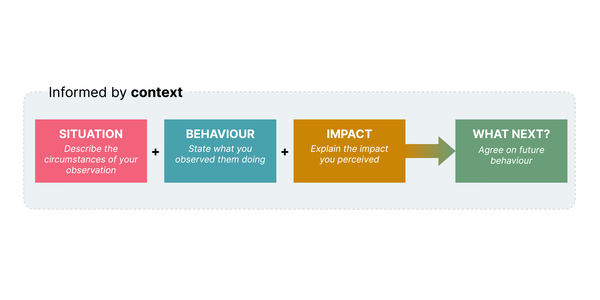
Human collaboration, like most things, improves with feedback. But it's not obvious how to make feedback effective. We often approach the subject with the assumption that criticism is a tool for correction and praise is a reward for success, creating a binary dynamic that frequently breeds defensiveness or complacency. The reality of high-performing teams suggests a much more nuanced truth: both praise and criticism must be viewed as positive forces. When we strip away the emotional baggage of judgment and reframe feedback as a collaborative mechanism for growth, we unlock a level of psychological safety that allows code, ideas, and strategies to evolve without fear.
Consider the environment of a well-oiled software development team. In these settings, a line of code that fails doesn't just trigger a bug report; it sparks a collective investigation where every member feels responsible for the outcome. This is the essence of healthy peer feedback. It transforms the act of reviewing work from a hierarchical inspection into a shared learning experience. When Anuja Karnik and Sumeet Gayathri Moghe articulate this principle, they are pointing toward a fundamental shift in organizational culture. They suggest that if we can align our intentions behind both praise and critique with the goal of improvement, the friction that usually accompanies difficult conversations evaporates.
The mechanics of this approach rely heavily on the concept of intent. Effective feedback is not about assigning blame or offering hollow compliments; it is about data exchange. When a colleague points out a potential security vulnerability, their intent is not to undermine your authority but to protect the system and the users. Conversely, when someone offers high praise for a clever algorithm, they are not merely flattering you but validating the effectiveness of your problem-solving approach. By consistently reinforcing this underlying intent, teams create a feedback loop where the focus remains relentlessly on the work itself rather than the person producing it.
This mindset requires discipline, particularly in the realm of technical criticism. It is easy to fall into the trap of "feedback as correction," where the critic feels they have done a favor by pointing out flaws. However, true healthy feedback treats the recipient as an equal partner in the discovery process. It involves asking questions that invite the recipient to reflect on their own reasoning rather than simply dictating how a task should have been done. This Socratic method of peer review fosters deeper understanding and ensures that the solutions adopted are those the team truly believes in, rather than those imposed from above.
Ultimately, the goal of healthy feedback is to build a resilience that can withstand the inevitable pressures of complex systems and rapid change. When feedback is framed as a positive, constructive element of the workflow, it becomes a continuous engine for innovation. Teams that master this dynamic do not just fix bugs or write better code; they cultivate a culture where every interaction is an opportunity to learn together. In doing so, they turn the often-challenging task of human collaboration into its most powerful asset, ensuring that the collective output exceeds the sum of individual efforts.
On Bluesky? Meet HomeSky.
Follower analytics, a growth toolkit, scheduling and AI posting — built for Bluesky. Connect your account and use everything free for 60 days.
Try HomeSky free →