How to Check Your Sources: Book Censorship News, September 25, 2026
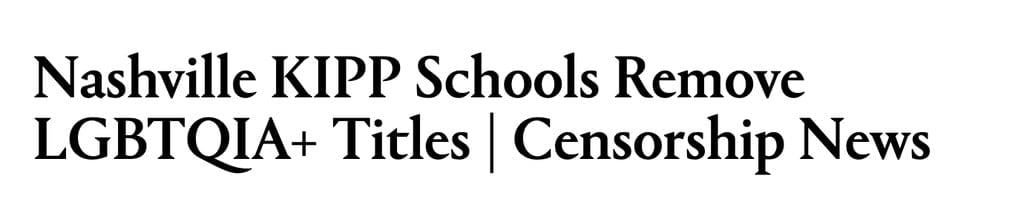
The work of compiling a censorship link roundup often gets mistaken for simple aggregation, a task where one merely sweeps up the day's headlines and strings them together. Yet, in the high-stakes environment of September 2026, where a single misattributed rumor can ignite a real-world fire, this distinction is not merely semantic; it is a matter of intellectual safety. Checking a source is the invisible architecture that holds up the entire edifice of public discourse. Without it, we are not curating news; we are merely amplifying noise, and in the echo chambers of the digital age, noise has the power to drown out the truth.
Consider the landscape of late September. Schools are preparing for the fall semester, and the pressure to remove certain titles from libraries has reached a fever pitch. A well-meaning reader might stumble upon a sensational headline claiming a specific book has been banned from an entire district, only to find that the story relies on a screenshot from an anonymous Twitter account with no verification. This is the first line of defense: the provenance of the image or text. If the source cannot be traced to a reputable news organization or an official public record, the information is likely speculation dressed up as fact.
The second layer of verification involves the human element behind the story. Who is reporting this? Is the outlet known for fact-checking, or is it a platform that frequently publishes unverified allegations to drive engagement? In the realm of book censorship, the stakes are uniquely personal. Families are making decisions about what children can read, and librarians are facing political heat. When a source lacks a clear editorial process, the emotional weight of the story often overrides the need for factual rigor, leading readers to react to anger rather than information.
Furthermore, the speed of modern information distribution creates a dangerous lag between the creation of a lie and its correction. By the time a debunking article is published, the initial false claim has already been reshared thousands of times. This is why the initial check must be rigorous and immediate. It requires digging deeper than the headline, looking for the original filing, checking the date of the alleged ban, and cross-referencing with local school board minutes. It is a tedious, sometimes frustrating process, but it is the only way to ensure that the links we share are building a bridge to understanding rather than a wall of misinformation.
Ultimately, the responsibility of the curator extends beyond the act of clicking "share." It is a commitment to the integrity of the community that consumes these updates. When we take the time to verify, we model a standard of care that encourages others to do the same. We transform the act of reading from a passive consumption of content into an active engagement with reality. In a world where information is the most abundant resource yet the most unreliable, the discipline to check our sources is the most vital skill we possess.
On Bluesky? Meet HomeSky.
Follower analytics, a growth toolkit, scheduling and AI posting — built for Bluesky. Connect your account and use everything free for 60 days.
Try HomeSky free →