‘I believed the hype’: the white South Africans denied refugee status in the US
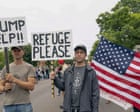
When the announcement rippled through the corridors of the American diplomatic community in early 2025, it was met not with the usual skepticism reserved for geopolitical maneuvering, but with a mixture of relief and vindication among a specific demographic in Pretoria. Donald Trump's declaration that the United States would accept Afrikaners as refugees was framed as a moral imperative, a direct response to what was labeled a "white genocide" in South Africa. For many, this was the long-awaited validation of a narrative that had been simmering in the shadows of their lives for decades—a belief that their culture was being systematically erased and that their very existence as a people was under existential threat.
However, the machinery of the United Nations High Commissioner for Refugees (UNHCR) and the US State Department operates on a set of rigid, often unforgiving criteria that have little to do with political rhetoric or public sentiment. The concept of "genocide" in international law requires proof of specific intent to destroy, in whole or in part, a national, ethnical, racial or religious group. While the rhetoric of dehumanization has unfortunately entered the lexicon of South African politics, the legal threshold for refugee status remains incredibly high. Applicants from South Africa were required to demonstrate a well-founded fear of persecution that could not be mitigated by internal relocation, a standard that dozens have now failed to meet in the eyes of US adjudicators.
The rejection of these applicants has created a vacuum of confusion and despair that contrasts sharply with the certainty of the initial headlines. Families who had sold property, paused their careers, and prepared for a trans-Atlantic exodus found themselves grounded, their visas revoked, their dreams deferred. The confusion stems from a fundamental disconnect between the sensationalized political narrative and the bureaucratic reality of asylum law. Those who believed their prayers had been answered by a presidential decree were suddenly told by immigration officers that their fears, while real, did not constitute the legal definition of persecution required to cross the Atlantic.
This episode serves as a stark reminder of how easily geopolitical narratives can detach from the hard facts of international law. The drive to save thousands of people from a perceived catastrophe has shown early signs of slowing, not because the danger in South Africa has vanished, but because the legal mechanisms for intervention are designed to be precise, not performative. The US administration cannot simply repatriate a group based on a headline; they must navigate a labyrinth of evidence, testimony, and precedent that demands a level of proof that the "white genocide" narrative, however emotionally resonant, struggles to provide in a court of law.
As the dust settles on this failed migration wave, the implications extend far beyond the individual stories of rejected applicants. It signals a shift in the tone of the debate surrounding South Africa, moving from the high ground of international humanitarian intervention back to the messy, complex reality of domestic politics. The dream of an organized exodus has fractured, leaving many Afrikaners to face the challenges of their home country without the safety net they had hoped for. The silence of the US government since February has become its own kind of statement, suggesting that the tide of sentiment is turning, and that the world is less willing to accept simplified narratives of victimhood without irrefutable evidence.
On Bluesky? Meet HomeSky.
Follower analytics, a growth toolkit, scheduling and AI posting — built for Bluesky. Connect your account and use everything free for 60 days.
Try HomeSky free →