If Venus Had An Ancient Moon, It Was Doomed
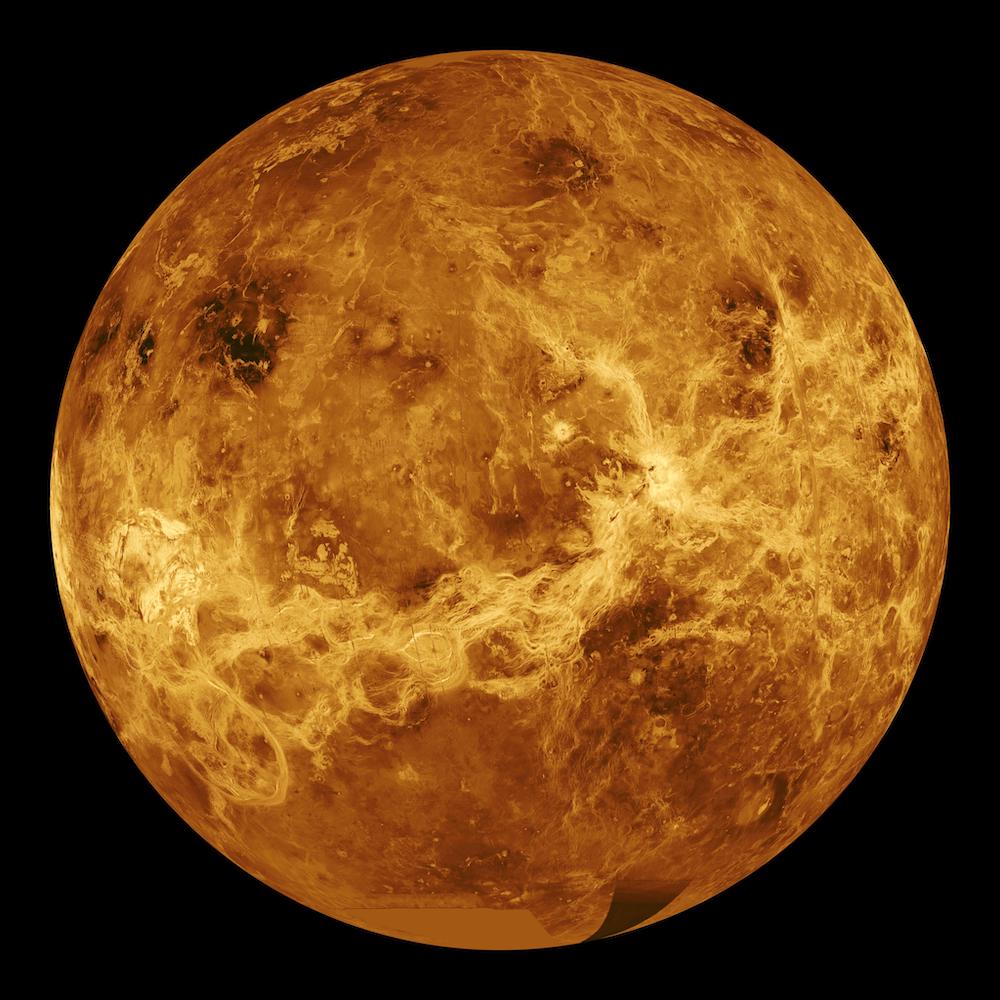
For billions of years, Earth has enjoyed the steady, silvery glow of a massive companion that tides our oceans and stabilizes our spinning world. Venus, our estranged sister planet, stands alone in the void of its orbit, a world of crushing heat and retrograde winds with no satellite to call its own. It is a natural question for any student of the cosmos: did this desolate sister ever have a moon, and if so, why did it vanish while Earth kept hers? The answer, according to new research, is not a tale of gentle evolution or peaceful capture, but a grim verdict of cosmic inevitability.
The prevailing theory suggests that Venus and Earth formed around the same time from the same debris disk, yet they diverged wildly in their fates. If Venus did host a moon in the distant past, the mathematics of its orbit tell us it was never going to last. Unlike Earth, which is tilted at a gentle twenty-three degrees and sits in a stable zone of the solar system, Venus is a chaotic mess. Its extreme axial wobble and proximity to the Sun create a gravitational environment where any moon would be subjected to relentless tidal forces.
Imagine trying to build a tower on a ship that is rocking violently from side to side while being pulled toward a massive magnet. That is the life of a moon orbiting Venus. Calculations indicate that if a moon formed alongside the planet, the gravitational grip of the Sun would eventually stretch its orbit until it tore the moon apart. This isn't a slow drift over eons; it is a rapid, violent unraveling that would happen relatively quickly in cosmic terms, likely within a few hundred million years.
This discovery adds a layer of tragedy to the story of our solar system's architecture. It implies that the presence of a moon on Venus was never a permanent state of being, but rather a fleeting chapter in a history of loss. The moon, if it existed, would have been a victim of the very dynamics that make Venus such a hostile place. As it spiraled outward and finally disintegrated, its debris would have rained down on the surface, perhaps contributing to the planet's thick, toxic atmosphere before vanishing completely into the void.
The silence of Venus is not empty; it is the echo of a lost world. Earth's moon remains a stabilizing force, shielding us from chaotic shifts that could have made life impossible. Venus serves as a stark counterpoint, a warning that even the ingredients for a satellite are not enough if the gravitational dance of the system is too wild. In the grand theater of the universe, some actors are given roles they cannot keep, and Venus was never meant to hold onto its moon for long.
We look up at the night sky and see the Moon as a constant, but the history of our neighbors reminds us that constancy is rare in space. The absence of a moon on Venus is not just an oddity; it is the result of a harsh physical reality that dictated its fate from the start. As we continue to study the inner planets, we find that the differences between them are often written in the stars, not by choice, but by the unyielding laws of gravity.
On Bluesky? Meet HomeSky.
Follower analytics, a growth toolkit, scheduling and AI posting — built for Bluesky. Connect your account and use everything free for 60 days.
Try HomeSky free →