Just How Similar Are Sony’s New Telephoto Primes, After All?
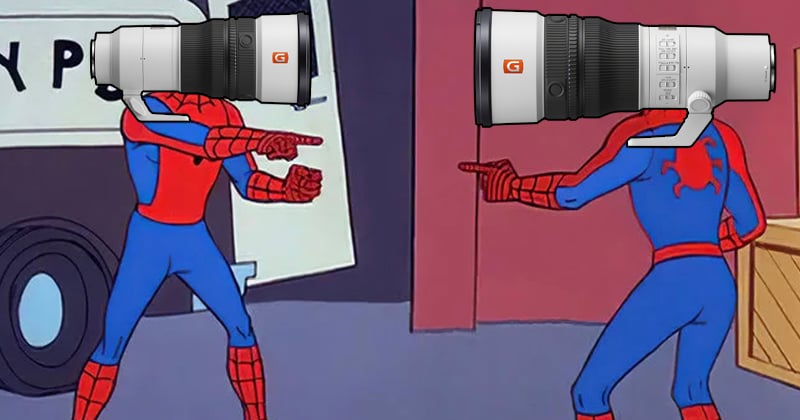
When you first glance at the Sony FE 400mm f/4.5 GM OSS and the FE 600mm f/6.3 GM OSS, the marketing materials present them as distinct tools for distinct jobs, much like a sports car versus a semi-truck. The f/4.5 aperture promises a certain level of light gathering and depth of field control, while the f/6.3 design leans into weight efficiency and reach. But if you peel back the layers of the brochure and look at the actual optical performance, a fascinating paradox emerges: these two lenses are optically more similar than their focal length ratio would suggest. They both inhabit the same narrow slice of the telephoto performance spectrum, delivering a level of sharpness and aberration control that feels almost uniform across the zoom range.
This similarity isn't a coincidence; it is the result of a massive leap in optical engineering that challenges our traditional understanding of how we design fast lenses. For decades, photographers have been taught that to get a faster aperture, you need massive glass elements, exotic glass types, and a physical footprint that defies the body it attaches to. Sony's approach here flips that script, suggesting that we have reached a plateau where we can derive immense optical quality from a much more constrained form factor. The 600mm f/6.3, often touted as a lightweight miracle, actually shares so much of the optical DNA with the 400mm f/4.5 that the difference in image quality between them at comparable f-stops is negligible to the human eye.
Consider the practical implications for a photographer in the field. If the optical engine of the 600mm is so refined that it mimics the rendering of the 400mm, then the choice between them becomes less about "better optics" and more about a trade-off between focal length, weight, and cost. The f/6.3 lens isn't just a "slower" version of the f/4.5; it is a highly optimized version of the same underlying optical philosophy. This means that when you are shooting in lower light or trying to isolate a subject with shallow depth of field, the gap in performance is far smaller than the aperture numbers indicate. You aren't losing a full stop of light; you are gaining a full stop of reach for a fraction of the bulk.
The reason this matters deeply is that it signals a shift in the entire industry's approach to prime lenses. We are seeing a move away from the idea that "bigger is better" and toward a more surgical, efficiency-first design methodology. This is particularly relevant for wildlife photographers who have spent years carrying massive bags filled with heavy glass, only to find themselves limited by the weight rather than the capability. The fact that Sony has engineered two lenses with such similar optical cores, despite a significant difference in focal length and aperture, suggests that we may finally be entering an era where the most limiting factor in our photography isn't the gear's ability to resolve light, but rather our own physical endurance.
Ultimately, these lenses prove that the days of accepting "good enough" as the only alternative to "fast and heavy" are over. The engineering behind these primes is not just efficient; it is revolutionary in its ability to decouple optical quality from physical size. Whether you are reaching out to catch a bird in flight at 600mm or freezing the action of a race car at 400mm, the core promise remains the same: incredible detail, stunning bokeh, and a level of clarity that makes the rest of the telephoto landscape feel like yesterday's technology.
On Bluesky? Meet HomeSky.
Follower analytics, a growth toolkit, scheduling and AI posting — built for Bluesky. Connect your account and use everything free for 60 days.
Try HomeSky free →