NASA Hosts Virtual Artemis Webinar for Blind, Low-Vision Community
In the vast, often deafening silence of space exploration, accessibility has long been the quiet undercurrent of humanity's reach for the stars. While the roar of rocket engines and the glint of lunar regolith often dominate the headlines, a profound commitment to inclusion is quietly shaping the future of the Artemis program. NASA is now taking a significant step forward by hosting a specialized virtual webinar tailored exclusively for the blind and low-vision community, marking a pivotal moment where the grandeur of spaceflight intersects with the urgent reality of equitable access to information.
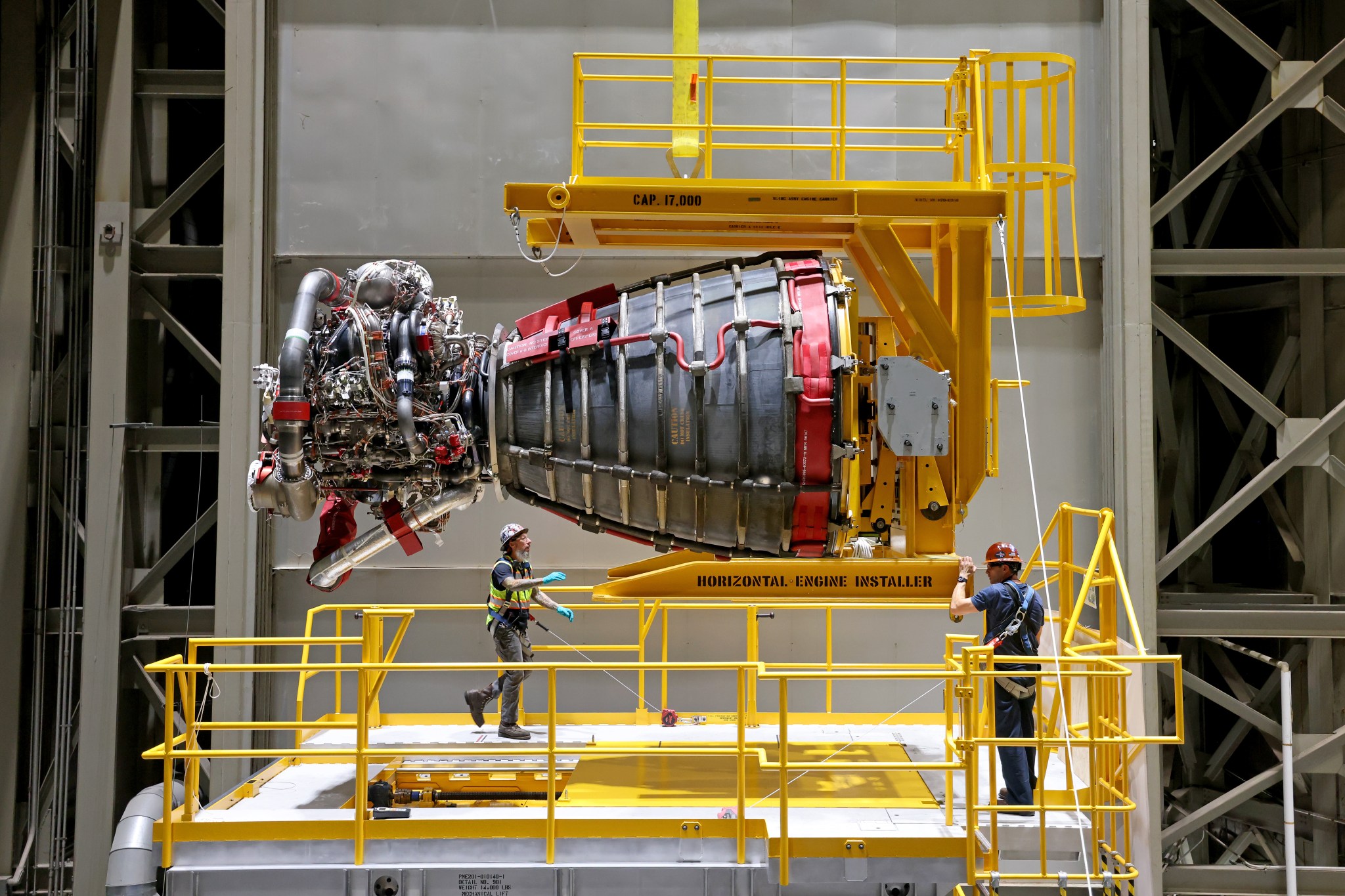
The event, scheduled for Friday, October 2, at 2 p.m. EDT, centers on the RS-25 engine, the workhorse that has powered humanity to the Moon and beyond for decades. For a community that relies heavily on audio descriptions, tactile feedback, and synthesized speech to navigate a visual world, standard webinars often fail to convey the nuances of complex engineering. This session is different. It is not merely a translation of visual data into audio; it is a reimagining of the presentation itself, designed from the ground up to ensure that the intricate mechanics of the engine's combustion chambers and the strategic trajectory of future lunar missions are felt and understood without the need for sight.
Consider the RS-25 engine for a moment. It is a marvel of metallurgy and thermodynamics, a beast capable of generating massive thrust while maintaining extreme efficiency. Visualizing its internal geometry—the swirl injectors, the cooling channels, the intricate nozzles—usually requires a keen eye and a library of detailed diagrams. By stripping away the visual dependency, this webinar forces a different kind of engagement, one that relies on rich narrative description and spatial reasoning. It challenges the audience to construct a mental model of the machine, proving that the awe inspired by engineering does not require vision to be fully appreciated.
This initiative reflects a broader shift in how space agencies approach public outreach. Historically, the space race was a competition of spectacle, where the visual dominance of a launch or a landing defined the narrative. Today, the definition of success is expanding to include who gets to participate in that narrative. By prioritizing the blind and low-vision audience, NASA acknowledges that the future of exploration belongs to everyone, regardless of their ability to see the horizon. It is a recognition that the cosmos is not a visual privilege but a shared human inheritance.
The two-hour duration of the session suggests a deep dive into the subject matter, allowing for a level of detail that is rarely afforded in press releases or quick media briefings. This patience is essential. Explaining the future of Artemis missions involves complex timelines, orbital mechanics, and international partnerships that benefit from a slower, more deliberate pace. For an audience accustomed to navigating information through sound and touch, this deliberate pacing allows the concepts to land with clarity, transforming passive observers into active participants in the dialogue of discovery.
Ultimately, the success of the Artemis program will depend not just on the reliability of its engines or the strength of its rockets, but on the diversity of the minds and voices that help drive it forward. When NASA ensures that the stories of space are told in ways that are accessible to all, it strengthens the bond between the agency and the public. It reinforces the idea that the stars belong to no one and everyone, and that the path to the Moon is a journey we take together, listening as carefully to the silent voices as we watch the bright lights of the sky.