New Revelations About the Origin of Interstellar Comet 3I/ATLAS
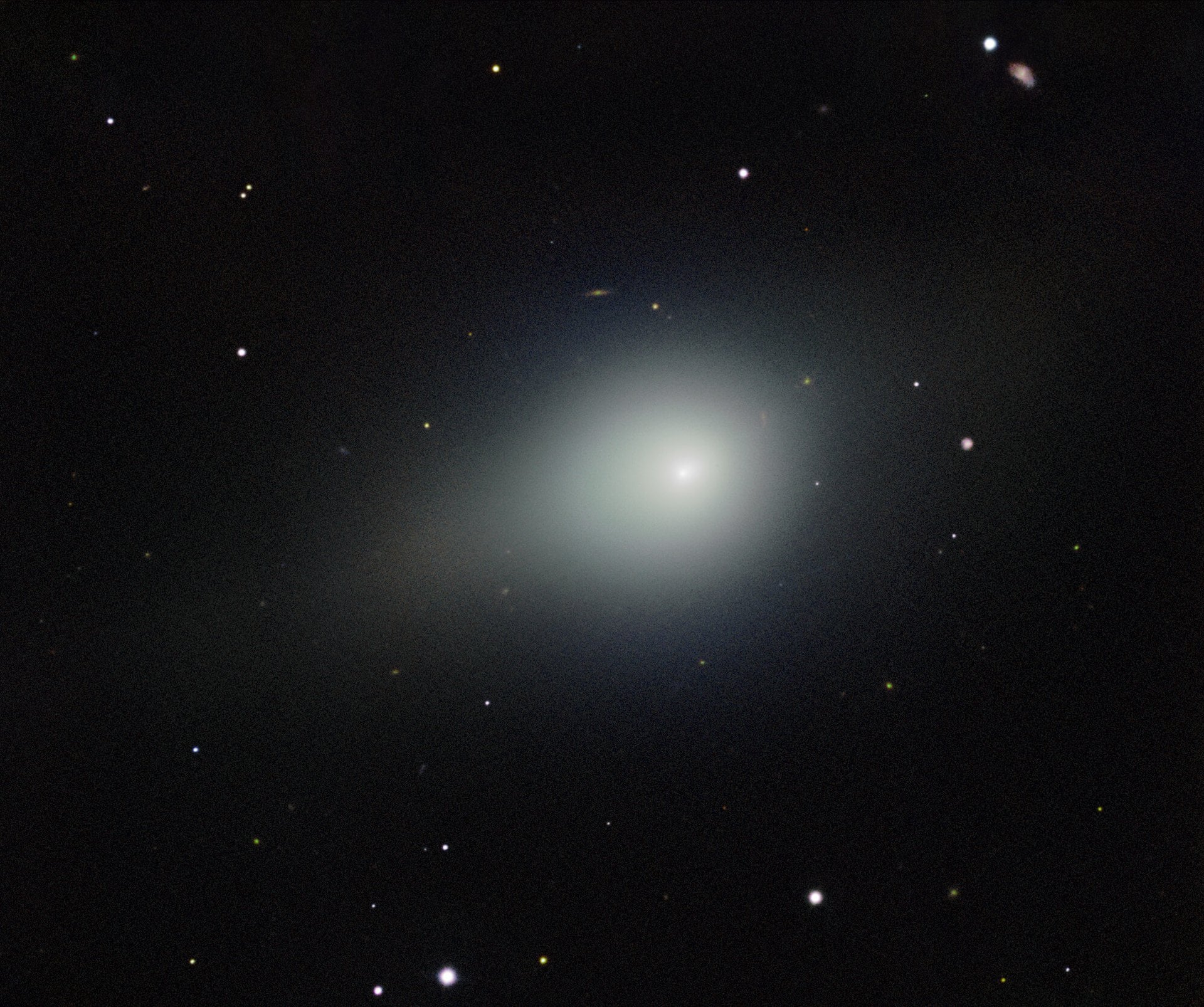
For decades, the night sky has served as a quiet archive of our cosmic neighborhood, filled with comets that hail from the icy fringes of our own Solar System. But recently, a celestial visitor arrived that defies this comfortable classification, challenging our understanding of where matter originates in the galaxy. This object, designated 3I/ATLAS, is the third known interstellar comet to pass through our system, and new revelations from astronomers in the United Kingdom are shedding light on its mysterious journey. Unlike its predecessors, which had orbits that hinted at a distant but local origin, 3I/ATLAS possesses a hyperbolic trajectory that definitively proves it originated outside our gravitational well, likely having spent eons drifting among the stars before its brief, fleeting encounter with us.
The identification of this object was not merely a matter of tracking a bright streak against the backdrop of darkness; it required a deep dive into the complex physics of cometary activity. As UK astronomers analyzed data, they uncovered subtle irregularities in the comet's dust tail and gas emission that did not match the behavior of typical Solar System visitors. These anomalies serve as forensic evidence, suggesting that 3I/ATLAS may have formed under vastly different conditions than those that birthed our own comets. The composition and dynamics of its nucleus offer a unique snapshot of the chemical environment of a star system billions of years older and potentially more evolved than our own, providing a rare window into the diversity of planetary formation across the galaxy.
What makes this discovery particularly significant is the timing and rarity of such an event. Interstellar objects are incredibly scarce, appearing only once every few decades, yet each one offers an irreplaceable opportunity to study material that has never been touched by our Sun's heat or radiation. The fact that we are witnessing this specific comet now means we are observing a primitive relic from the early universe, untouched by the gravitational perturbations that have shaped our local Oort cloud. By studying 3I/ATLAS, scientists are essentially holding a piece of another world in their hands, analyzing its structure to deduce the history of its home system and the processes that led to its ejection into the interstellar void.
The implications of these findings extend far beyond the immediate thrill of discovery; they touch upon fundamental questions about the architecture of our galaxy. If the characteristics of 3I/ATLAS differ significantly from what we expect based on our own history, it suggests that the rules of star and planet formation might vary wildly depending on the local galactic environment. The UK team's analysis indicates that this comet may have been ejected from a system undergoing a violent phase of stellar evolution, perhaps the result of a close encounter with a giant planet or a binary star interaction. Understanding these ejection mechanisms helps us piece together the dynamic and chaotic history of exoplanetary systems, revealing that the journey of a comet is often a story of survival and displacement.
As we continue to refine our models and prepare for future encounters, the story of 3I/ATLAS serves as a powerful reminder of our place in the cosmos. We are not the center of the universe, nor are we the only guardians of planetary systems. The arrival of this interstellar wanderer is a testament to the vast, interconnected nature of the galaxy, where stars and their cometary debris drift in a grand, silent ballet across light-years. The new clues uncovered by our astronomers are just the beginning of a long-term investigation that will reshape our textbooks and perhaps even alter our philosophical view of what it means to be human in a universe teeming with similar, if unknown, stories.