OpenShot video editor is now (officially) available as a snap
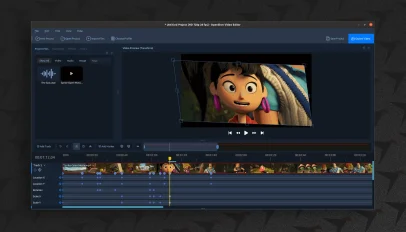
For years, the Linux community has watched OpenShot evolve from a modest, open-source experiment into a robust contender for video editing, yet distribution has remained a patchwork of PPAs and manual installs. This fragmentation was not merely an inconvenience; it was a barrier to entry that kept casual users at bay and forced power users to constantly hunt down specific dependencies. The recent arrival of an official Snap package changes the equation fundamentally, moving OpenShot from a tool that requires technical finesse to one that is as accessible as any other application on the Ubuntu desktop.
The significance of this shift extends beyond simple convenience. By packaging the Qt-based editor as a Snap, Canonical effectively decouples the software from the specific versions of libraries that often break on older Ubuntu Long Term Support releases. In the past, users on legacy systems were stuck with outdated versions of OpenShot because their underlying Qt libraries were too old to compile with the newer code found in the official PPAs. The Snap bundle carries its own runtime environment, ensuring that a user on Ubuntu 18.04 or even 16.04 can access the latest features without fear of breaking their system or forcing a difficult upgrade path.
This architectural decision highlights a growing trend in Linux packaging where universal compatibility trumps the purity of the native repository. While the traditional Debian package in the Ubuntu archives remains the gold standard for security updates and system integration, the Snap offers a different value proposition: longevity and consistency. It allows the distribution to support aging hardware and software configurations that might otherwise be abandoned by upstream developers. It is a pragmatic solution to the problem of software obsolescence, ensuring that the tool remains viable long after the operating system it runs on has reached its end of life.
For the everyday user, the experience is seamless. The presence of the package in the Snap Store means it appears alongside familiar applications like Firefox or GIMP, ready to be launched with a single click. This eliminates the need to navigate obscure websites, add external repositories, or worry about dependency hell. The barrier to entry has been lowered to the point where a non-technical user could theoretically install the tool and start editing a family vacation video within minutes, a scenario that was significantly more complex in the past.
From a community perspective, this move validates the maturity of OpenShot. Maintaining a Snap package requires a level of stability and forward compatibility that smaller projects often struggle to achieve. It signals to the wider Linux ecosystem that OpenShot is a permanent fixture, worthy of the same level of support and distribution as the desktop's core applications. It bridges the gap between the enthusiast who builds their own ISOs and the average user who expects a unified app store experience.
Ultimately, the official Snap is more than just a new installation method; it is a statement about the future of open-source software on Linux. It acknowledges that while the command line will always have its place, the future of mass adoption lies in packaging formats that prioritize ease of use and universal compatibility. As OpenShot continues to grow, this distribution model will likely serve as a blueprint for how other powerful, Qt-based applications can reach their widest possible audience without sacrificing the integrity of the open-source ecosystem.
On Bluesky? Meet HomeSky.
Follower analytics, a growth toolkit, scheduling and AI posting — built for Bluesky. Connect your account and use everything free for 60 days.
Try HomeSky free →