Practicing for Safe Landings on the Moon and Beyond
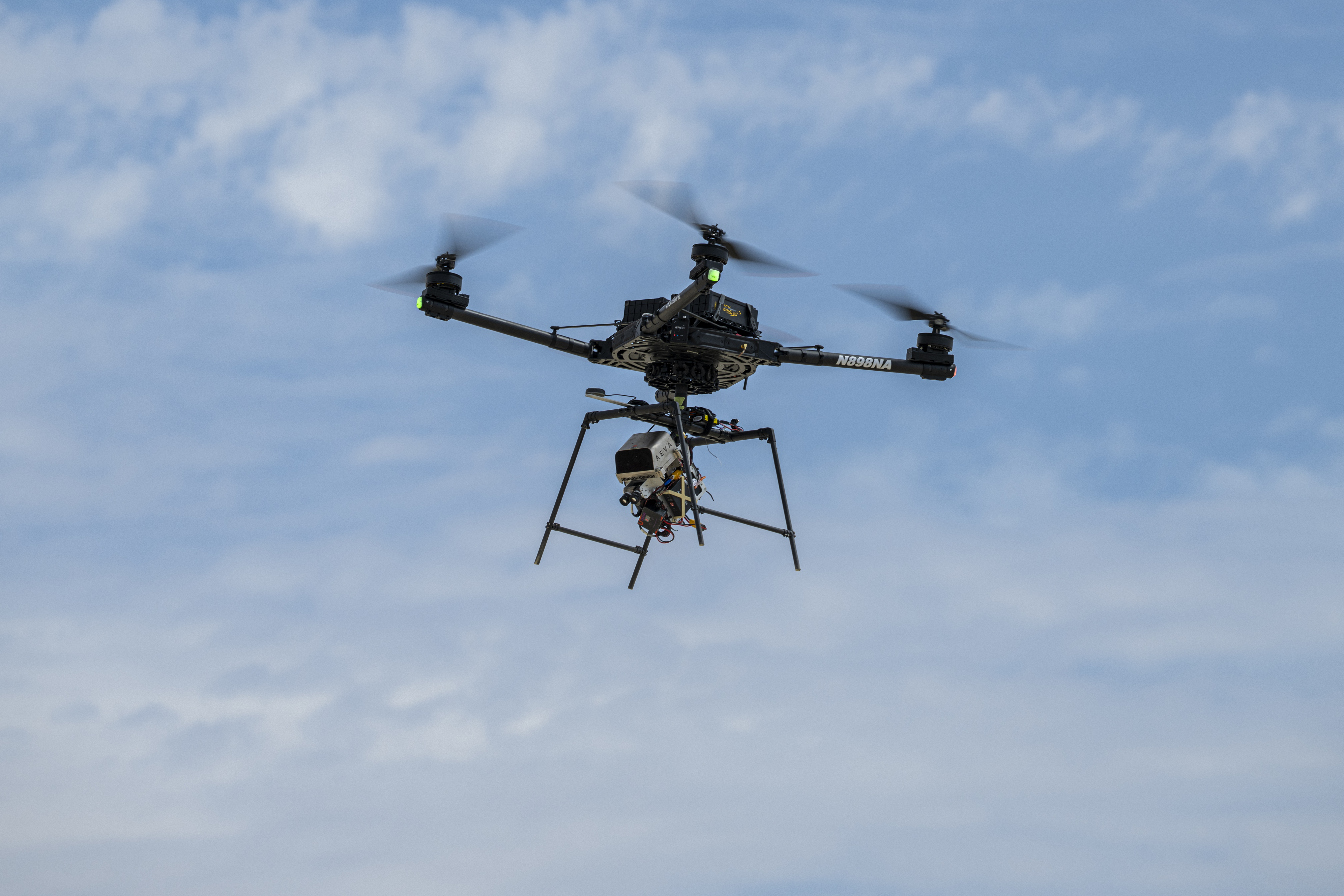
The silence of the Armstrong Flight Research Center is often broken only by the hum of wind tunnels and the distant roar of test engines, but on Thursday, August 27, 2026, the air vibrated with a different kind of anticipation. It wasn't the thunderous blast of a rocket booster, but the quiet, deliberate thud of an Alta-X drone touching down on the tarmac. This was not merely a test of altitude or speed; it was a critical rehearsal for the most difficult maneuver in spaceflight: landing safely on a world that doesn't want you to be there. As the drone settled, its guidance system, known as the Safe and Precise Landing – Integrated Capabilities Evolution, or SPLICE, had successfully navigated the chaotic variables of wind, terrain, and atmospheric density with a precision that mirrors the requirements for future lunar and Martian missions.
The significance of this experiment extends far beyond the confines of California. When we think of lunar landings, we often picture the dramatic final moments of the Apollo missions, but the reality of returning to the Moon with the Artemis program demands a new level of autonomy. Unlike Earth, the Moon offers no rescue crews, no immediate communication delays, and a surface riddled with hazards like boulder fields and uneven regolith. The SPLICE system represents a paradigm shift from reliance on ground-based telemetry to onboard, real-time decision-making. It is the digital brain that must calculate a touchdown point in milliseconds, adjusting for engine thrust and wind shear without human intervention, a capability that is absolutely non-negotiable for the next generation of exploration.
What makes this specific iteration of the technology so fascinating is its evolution. The name itself, "Integrated Capabilities Evolution," suggests a lineage of failures and refinements. Early autonomous landing systems often suffered from sensor noise or computational lag, leading to crashes that halted progress. The Alta-X drone, flying this advanced version, embodies the result of years of data assimilation. It integrates laser altimetry, visual odometry, and inertial navigation into a single, cohesive stream of consciousness for the aircraft. This integration is the key; by treating all sensors as a unified network rather than isolated inputs, the system can cross-verify data instantly, filtering out the noise of a dusty atmosphere or the glare of the sun to maintain a lock on the safest possible landing zone.
The implications of mastering this technology ripple out into the broader tapestry of human history. We are not just building machines to drop rocks on a distant satellite; we are engineering the reliability required for humanity to become a multi-planetary species. Every successful test at Edwards is a brick laid in the foundation of a future where astronauts can disembark from a lander with confidence, knowing the vehicle did not just land, but landed perfectly. The adrenaline of the engineers watching the telemetry scroll down, the collective holding of breath as the descent rate approaches zero, is the human side of this cold, hard calculation. It is a testament to the fact that the most profound achievements in space exploration are often the quiet, unglamorous victories of getting the landing gear to fold without a hitch.
As we look toward the horizon of deep space, the lessons learned from this August day in 2026 will serve as our blueprint. The Moon is our proving ground, a place where we can fail, learn, and iterate without the catastrophic cost of a failed Mars mission. The Alta-X drone has proven that the technology exists, that the algorithms can handle the complexity of an extraterrestrial environment, and that the path forward is clear. The sky above Armstrong was clear that day, but the true clarity lies in the data streaming back from the flight, illuminating the way for the next generation of explorers who will one day walk on a surface millions of miles away, guided by the same sophisticated logic that touched down safely in California.
On Bluesky? Meet HomeSky.
Follower analytics, a growth toolkit, scheduling and AI posting — built for Bluesky. Connect your account and use everything free for 60 days.
Try HomeSky free →