Project HydraFusion: Frontier quality via multi-model orchestration
Imagine a world where the cost of genius is decoupled from the sheer volume of computational power required to achieve it. For years, the holy grail of software engineering has been that elusive balance between frontier-class intelligence and economic viability. We have watched models like Opus 5 dominate benchmarks, delivering solutions that feel magical, yet the hidden price tag of generating every line of code with a single, massive neural engine has begun to weigh heavily on the industry. The industry's realization is stark: brute force intelligence is not always the path to efficient engineering.
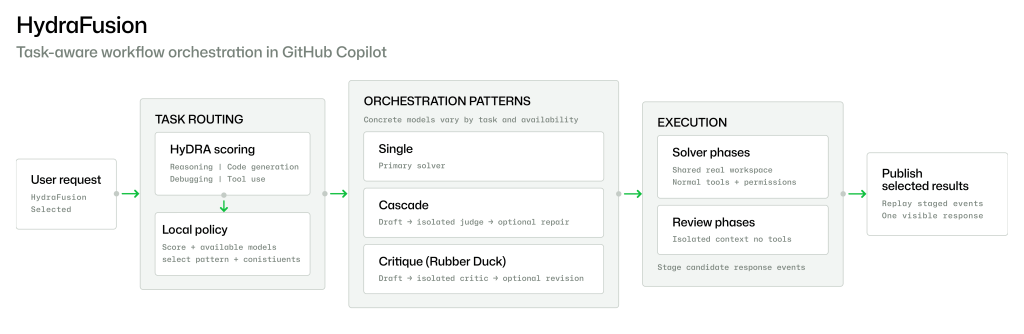
Enter HydraFusion, a new approach to coding assistance that fundamentally rethinks the architecture of generation. Instead of relying on a monolithic model to handle every task from scratch, HydraFusion acts as a sophisticated conductor, orchestrating a symphony of different models. It knows when to call upon the heavyweight champion for complex architectural reasoning and when to deploy a nimble, cost-effective specialist for routine implementation. This selective workflow is not merely a tweak; it is a paradigm shift that prioritizes the specific strengths of each model within the context of the actual work being done.
In controlled offline evaluations, the results were telling. HydraFusion did not simply match the Opus 5 baseline; in many scenarios, it exceeded it. Yet, the true victory lies not just in the quality of the code produced, but in the estimated reduction of workflow costs. By avoiding the overkill of deploying a frontier model for every simple refactoring or documentation task, developers can now access top-tier intelligence without the prohibitive expense. It is a system that understands that context is king, and that the right tool for the job is often a smaller, sharper one working in tandem with the giant.
This matters profoundly because the future of software development is not about having access to the most powerful model in the universe, but about having a system that knows how to use tools effectively. The friction of cost has always been a silent killer of innovation, forcing teams to settle for less complex solutions or abandon ambitious features due to budget constraints. HydraFusion removes that friction, allowing engineers to focus on solving hard problems rather than managing the economic trade-offs of their AI assistants. It democratizes high-quality code generation, making it sustainable for teams of all sizes.
Now available as a research preview in GitHub Copilot, this technology invites developers to step into this new era of orchestration. It represents a maturation of the industry, moving beyond the hype of "bigger is better" toward a mature understanding of "smarter is best." As we move forward, the competition will not be defined by who has the largest model, but by who has the most intelligent workflow. HydraFusion is not just a new feature; it is a blueprint for how the next generation of software will be built—efficiently, intelligently, and collaboratively.