Quiet Black Holes With a Stellar Companion Raise Questions About How They Form
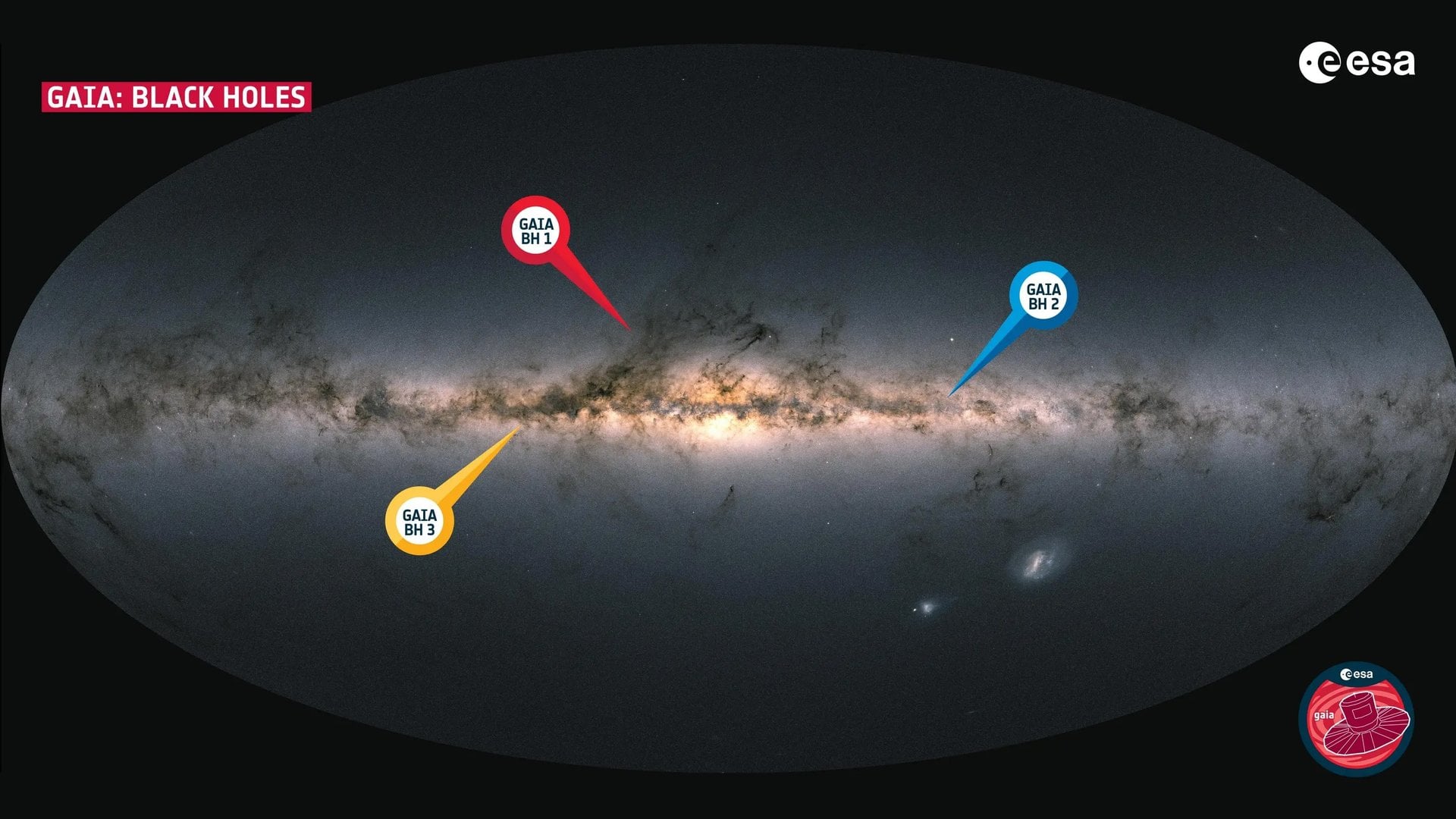
For decades, the most violent stage in the cosmic theater has been the realm of binary systems where a black hole devours its stellar partner. These cosmic accretion disks spin at breakneck speeds, emitting X-rays that pierce through the darkness, alerting astronomers to the monster's presence. It is a dramatic and noisy existence, a standard operating procedure for our understanding of stellar-mass black holes. However, a new discovery from the Gaia space mission suggests that the universe may be hiding a quieter, more enigmatic chapter in this story. Three new systems have been identified where a black hole shares a bed with a small star, and in two of them, that companion is orbiting significantly closer than our current formation models would allow.
The anomaly lies in the architecture of these systems. If these black holes formed alongside their companion stars in the same dense cluster of gas and dust, physics dictates a specific minimum distance between them. As the massive star evolves and dies, it should leave the black hole behind at a certain separation from its surviving partner. Yet, in these newly found pairs, the companion is hugging the black hole much tighter. This proximity implies that the systems were not born as binaries but were forged later, through a process of gravitational capture. It suggests that a lone black hole, wandering the galaxy in isolation, somehow snagged a passing star, pulling it into a tight orbit where it can now be studied.
Why should we care about a black hole that isn't screaming in X-rays? The answer lies in the sheer number of them we have yet to find. Estimates suggest that the Milky Way could harbor tens of millions of stellar-mass black holes, most of which are completely dark and invisible to us because they are not actively eating. By studying these relatively rare, quiet systems, we gain a unique window into the behavior of the dormant majority. If we can understand how these tight binaries form and evolve, we might finally develop a method to locate the hidden millions that have been slipping through our telescopic fingers, changing the census of the galactic underworld.
The implications extend beyond mere counting; they touch on the fundamental life cycle of stars and the dynamics of the galaxy itself. The existence of these captured systems challenges our models of stellar dynamics and binary evolution. It forces us to reconsider how common such capture events might be across the history of the galaxy. Are these anomalies, or are they a hint that the galaxy is far more chaotic and dynamic in its formation of binary pairs than we previously thought? The silence of these black holes is not an absence of data, but rather a different kind of signal—one that requires us to listen to the subtle gravitational tugs rather than the loud cries of accretion.
As we continue to refine our models based on the Gaia data, the mystery of these quiet companions deepens. They serve as puzzle pieces in a much larger picture of how black holes interact with their environment. Whether they are the result of a violent ejection from a crowded star cluster or a gentle capture from the dark fields of interstellar space, their existence proves that the cosmos is full of surprises. In the quiet dark, the universe is still writing its story, and these systems are the authors of a new chapter, one that demands we rewrite our textbooks on black hole formation.