Survivors recount panic and struggle to breathe in Nigerian prison cell where 37 died
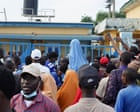
The air in the cell block of Minna last Thursday was not merely thick; it was a suffocating weight, a physical manifestation of a system broken beyond repair. Thirty-seven lives were extinguished within these walls, many of them children whose small bodies found no sanctuary in a place meant to hold adults. The scene that unfolded was not one of orderly detention but of a chaotic nightmare where the line between custodial duty and lethal negligence had been obliterated. Survivors who managed to crawl out of the smoke and darkness describe a panic so primal it stripped away their ability to think, leaving only the desperate, clawing need to find air that would not burn their lungs.
The tragedy is compounded by the fact that these were not hardened criminals but suspected illegal gold miners, a demographic that often represents the most vulnerable in Nigeria's resource-rich yet economically fractured regions. Gold mining is often a lifeline for the desperate, yet the state's response to those caught engaging in it has frequently been punitive rather than protective. The presence of children among the dead highlights a grim reality: when the law fails to distinguish between a seasoned operator and a child trying to survive, the cost is measured in the smallest members of society. It raises a harrowing question about the intent behind their confinement and whether the conditions were accidental oversights or calculated indifference.
As the initial shock of the discovery settled, the city of Minna erupted in a different kind of violence. Protests broke out, fueled by the righteous anger of families who lost their sons and daughters to the very institution sworn to protect them. Police responded with teargas, turning the streets into a battlefield where the grieving were treated as insurgents. This escalation reveals a dangerous pattern in local security responses: the use of overwhelming force against communities in distress, creating a cycle of trauma where the state is perceived not as a protector but as an aggressor. The imposition of an overnight curfew further isolated the populace, sealing off a city already reeling from the loss of its young people.
The Nigeria Security and Civil Defence Corps, the paramilitary group responsible for the detainees, now faces a reckoning that extends far beyond the immediate inquiry into the deaths. Their role in this tragedy underscores a broader systemic failure within the country's security architecture, where gaps in oversight and training can lead to mass casualties in custody. When a paramilitary unit becomes the site of such a catastrophic loss of life, it suggests that the mechanisms meant to check their power are either absent or complicit. The survivors' accounts of struggling to breathe are not just personal testimonies; they are indictments of a system that allows such horrors to occur in plain sight.
The implications of the Minna tragedy ripple outward, touching on issues of human rights, the treatment of vulnerable populations, and the credibility of the state itself. In a nation grappling with economic hardship and resource scarcity, the treatment of those who mine illegally—often out of necessity—must be reevaluated. The conflation of poverty with criminality, coupled with a punitive security response, creates a breeding ground for such disasters. Without a fundamental shift in how the state approaches these issues, the Minna prison will not be an anomaly but a recurring event, haunting the collective memory of a nation that has yet to find a humane path forward.
On Bluesky? Meet HomeSky.
Follower analytics, a growth toolkit, scheduling and AI posting — built for Bluesky. Connect your account and use everything free for 60 days.
Try HomeSky free →