The Secret No One Tells You About Lighting Great Night Portraits
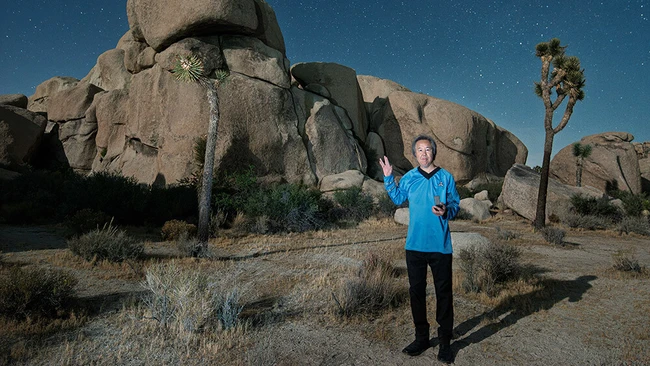
Want to photograph portraits that don't look like they were taken by a robot with a sleepwalking photographer? The answer lies not in buying a more expensive lens or chasing the moon, but in understanding the invisible geometry of light and shadow. Most photographers assume that night portraits are about balancing the exposure of the stars against the subject, a technical juggling act that often results in a muddy foreground or a blown-out sky. The secret, the one truly nobody tells you, is that the subject does not need to be lit by the same light that illuminates the world around them.
Think about the last time you took a portrait in a city park at midnight. The ambient light is flat, cool, and devoid of character; it is the kind of light that makes skin look like grey plastic. When you try to freeze a human face under those conditions, the result is often lifeless. The breakthrough comes when you stop fighting the environment and start orchestrating a private scene just for your subject. You are no longer a documentarian of the night; you are an architect of a moment, using artificial light to carve out a world of warmth and depth that the moon simply cannot provide.
This approach requires a fundamental shift in how you view your light meter. Instead of measuring the scene to find a happy medium, you must measure the background to place your subject in it. By exposing for the stars or the distant city lights first, you ensure that the cosmic spectacle is rendered with detail and vibrancy. Once that exposure is locked, your subject appears as a silhouette against the grandeur of the universe. This is where the magic happens: you introduce a dedicated light source, a small portable strobe or even a carefully modified LED, to reveal the details of their face.
The beauty of this technique is in its subtlety. If the light on the face is too harsh or matches the color temperature of the ambient moonlight, the image feels staged and artificial. The goal is to create a separation that feels organic. Use a light with a warm, tungsten-like quality to mimic the glow of a lantern, contrasting sharply with the cool blues of the night sky. This creates a three-dimensional effect that pulls the viewer's eye directly to the emotion in the subject's eyes, anchoring the human element amidst the vastness of the cosmos.
Furthermore, this method liberates you from the tyranny of shutter speed. When you light your subject separately, you can use a slower shutter speed to capture the movement of clouds or the rotation of stars without letting the subject's light bleed into the frame. It is a dance of timing and positioning where the light source acts as a beacon, guiding the eye through the composition. The result is an image that feels both intimate and epic, a portrait that captures not just the likeness of a person, but their presence within the larger narrative of the night.
Ultimately, mastering night portraits is about realizing that the darkness is not an enemy to be conquered, but a canvas to be painted upon. By decoupling the illumination of the subject from the illumination of the scene, you unlock a level of creativity that traditional daylight photography simply cannot offer. It forces you to slow down, think critically about light physics, and engage with your subject in a way that feels almost magical. The stars become the backdrop, but the human story remains the focus, illuminated by a secret that changes everything.
On Bluesky? Meet HomeSky.
Follower analytics, a growth toolkit, scheduling and AI posting — built for Bluesky. Connect your account and use everything free for 60 days.
Try HomeSky free →