There's More to Background Blur Than Aperture
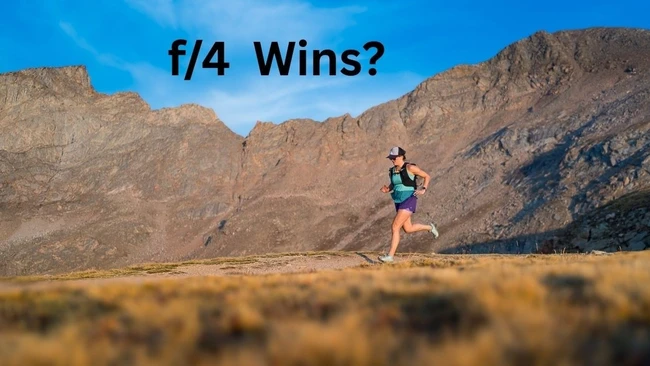
You can shoot at f/1.4 and get almost no background blur, or shoot at f/4 and get plenty of it. That single fact upends how most people spend money on lenses, and it explains why some photographers with cheap glass create ethereal portraits while others with expensive, fast primes struggle to separate their subjects from the world around them. The obsession with maximum aperture is a relic of an older photographic mindset, one where the lens was purchased solely as a tool for light gathering and depth of field control. But the reality of optics is far more nuanced, governed by geometry and perspective as much as by the physical hole in the middle of the lens.
The key lies in the relationship between the camera-to-subject distance and the subject-to-background distance. When you stand inches away from a person's face, even a razor-thin blade of light at f/4 can render the background into a creamy, abstract wash of color. Conversely, if you stand several yards away from your subject to capture a full-body shot, the same f/4 aperture will render the background with startling sharpness because the background is now effectively at infinity relative to the plane of focus. The physical size of the blur circle is not determined by the f-stop alone; it is a function of the geometry of the scene itself.
This geometric truth forces us to reconsider the very nature of portraiture and how we approach it. Many photographers waste thousands of dollars chasing lenses that allow more light in, believing this will automatically grant them a more professional look. They do not realize that the "look" is often created by their feet, not their eyes. Mastering the art of proximity is a fundamental skill that often yields greater results than any piece of glass. By moving closer to the subject, you force the background to recede into the blur, regardless of the aperture setting, effectively turning a standard kit lens into a portrait powerhouse.
Of course, aperture still plays a critical role, particularly in low light and when shooting landscapes where depth is essential. But its utility is frequently overstated in the context of isolating a subject. The most compelling images often come from a deliberate manipulation of space rather than a brute-force setting on the camera body. Understanding this dynamic empowers photographers to make better decisions in the field, allowing them to adapt to challenging lighting conditions while maintaining their desired aesthetic separation.
Ultimately, the camera is just an extension of the photographer's intent, and understanding the mechanics of background blur is about controlling that intent. It is a lesson in patience and spatial awareness, reminding us that the best photography is not just about the equipment we carry, but how we move through the world with it. When you understand that the blur is a result of your position in space, you stop fighting the physics of the lens and start working with them, creating images that feel less like technical exercises and more like genuine observations of the moment.