A New Catalog of Close to 3,000 Supernova Challenges Theories on Dark Energy
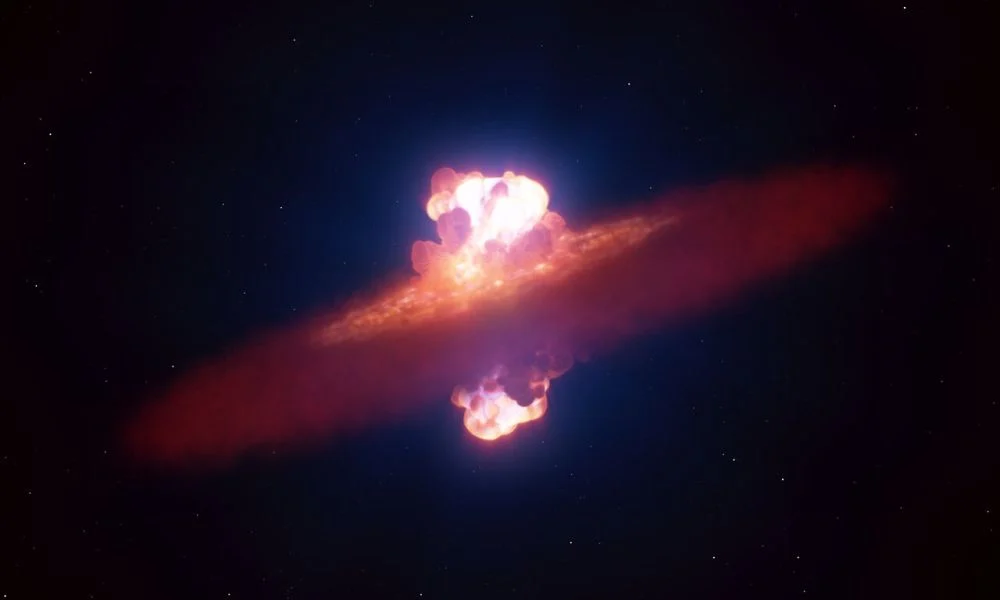
Imagine standing on a cosmic shoreline, watching the ocean of space recede not just into the distance, but away at an accelerating pace. For decades, the universe has been a mystery wrapped in a paradox, expanding faster the longer it exists. This runaway acceleration is the domain of dark energy, a ghostly force that fills the cosmos yet refuses to be understood. Now, a new catalog containing nearly 3,000 supernovae acts like a powerful new lens, bringing this phantom force into sharper, albeit still blurry, focus.
The study behind this monumental compilation represents the most comprehensive assembly of exploding white dwarf stars ever undertaken. These stellar fireworks are not merely spectacular light shows; they are the universe's most reliable yardsticks. By measuring how much their light dims as it travels across billions of years, astronomers can calculate the rate at which space itself is stretching. The sheer volume of data provided by this new catalog offers a level of statistical confidence that previous, smaller datasets simply could not match, allowing scientists to peer deeper into the fabric of cosmic history.
What emerges from this deluge of data is a challenge to some of our most cherished theories. The results suggest that the behavior of dark energy might not be as constant as the simplest models propose. Instead of a uniform pressure pushing everything apart with equal intensity forever, the data hints at subtle variations over time. This is a profound shift; it suggests that the "cosmological constant" we have relied upon for thirty years might be an oversimplification, and that the ultimate fate of the universe may be far stranger than we ever imagined.
The implications ripple outward, touching the very foundation of modern physics. If dark energy changes strength or evolves over time, it forces us to rethink the interplay between gravity and the quantum vacuum. It suggests that the universe is not a static stage where we play out our drama, but a dynamic, breathing entity whose rules might be shifting right before our eyes. This discovery doesn't just tweak the numbers; it demands a rewrite of the textbook regarding how the cosmos will end, whether in a cold, empty freeze or a chaotic tear in reality.
Yet, amidst the grandeur of the discovery, there is a humbling reminder of how much we still have to learn. The catalog reveals gaps, anomalies, and questions that were previously hidden beneath the noise of observational error. It is a testament to the relentless nature of scientific inquiry, where every answer seems to unlock a door to a larger, more complex room. We are not the masters of the universe who have solved the puzzle; we are merely the cartographers marking new territory on a map that is constantly being redrawn.
As we stand at this threshold of understanding, the next few years promise to be incredibly busy. New telescopes are already lining up to catch the next generation of supernovae, ready to test the edges of this new model. The journey to comprehend dark energy is far from over, but thanks to this new catalog, we finally have a clear enough view to see the path ahead. The universe is expanding, yes, but we are finally learning to measure the expansion with the precision it deserves.
On Bluesky? Meet HomeSky.
Follower analytics, a growth toolkit, scheduling and AI posting — built for Bluesky. Connect your account and use everything free for 60 days.
Try HomeSky free →