APOD: 2026 September 14 – Where Your Elements Came From
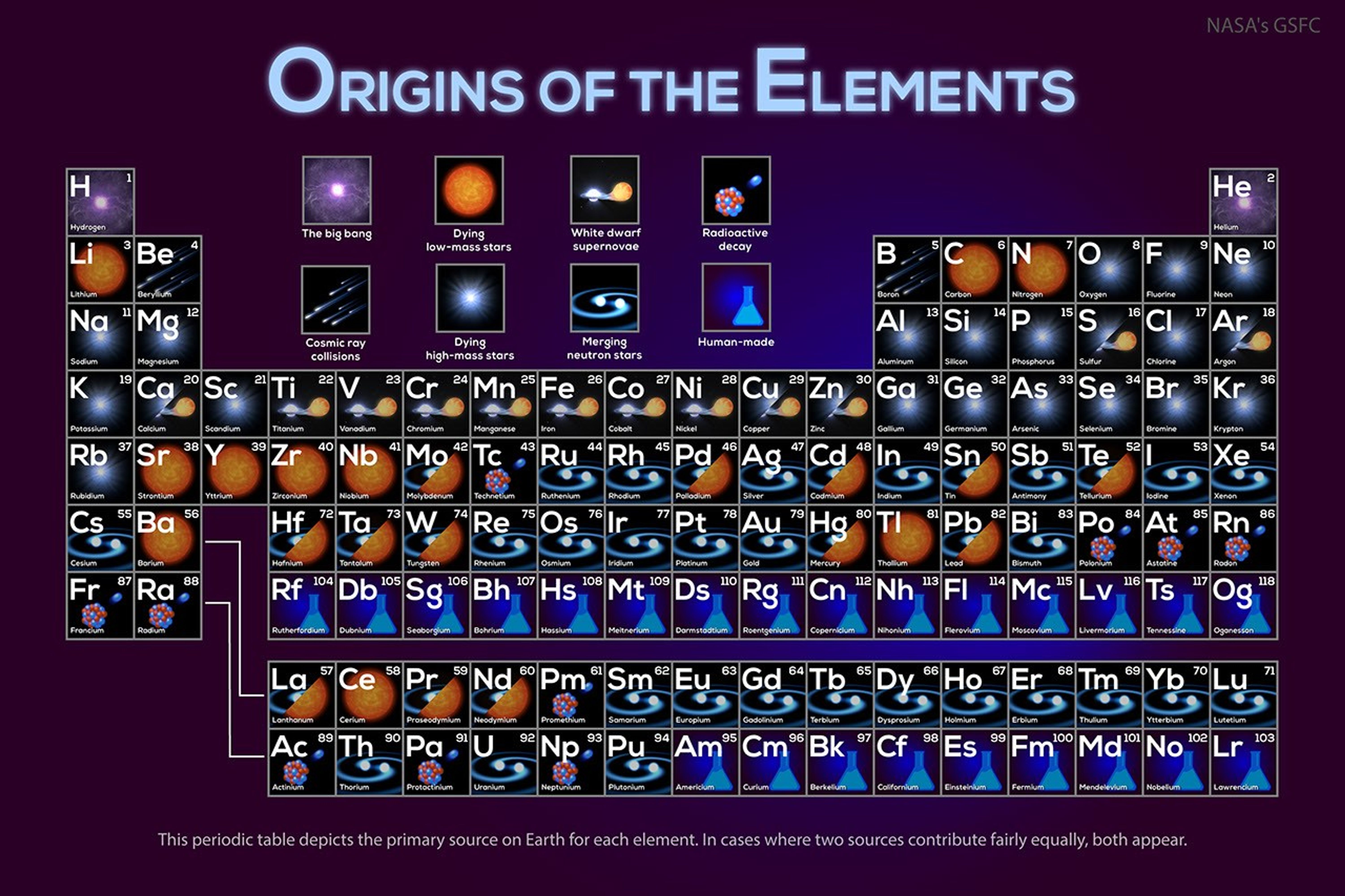
In the quiet hum of a modern particle accelerator or the silent burn of a fusion reactor, one might assume that the matter composing us is merely a fundamental given, a static backdrop to the drama of our lives. Yet, this perception is a profound illusion. The very atoms that form your bones, the iron in your blood, and the carbon in the DNA of every living thing did not exist at the moment of the Big Bang. They were forged in the violent, chaotic hearts of dying stars, scattered across the cosmos like cosmic shrapnel, and eventually coalesced into the rocky cradle of our solar system.
The image featured today serves as a visual reminder of this stellar alchemy, capturing a remnant of a supernova or a nebula where these heavy elements are still being cooked and dispersed. When a massive star exhausts its nuclear fuel, it cannot hold itself together against gravity any longer. The core collapses with unimaginable speed, rebounding in a cataclysmic explosion that blows the star apart. It is in this brief, blinding second of death that the universe creates everything heavier than iron, scattering gold, silver, uranium, and lead into the interstellar medium, seeding the void with the ingredients necessary for complexity.
This process is not just a historical footnote; it is an ongoing cycle that defines our existence. The gas clouds that collapsed to form our Sun and the planets orbiting it were enriched by generations of previous stars that had lived and died before our own. Without these stellar explosions, the universe would be a cold, dark place composed almost entirely of hydrogen and helium, incapable of forming rocks, water, or life. We are, in the most literal sense, made of stardust, the children of long-dead suns whose final acts created the very substance of our reality.
Consider the iron in your hemoglobin, the element essential for transporting oxygen. It was created in the core of a star much larger and shorter-lived than our own, only to be ejected when that star went supernova billions of years ago. That same iron lies within the Earth's molten core, generating the magnetic field that shields our planet from solar winds, a protective bubble that allows life to persist on the surface. The connection between a distant stellar explosion and the safety of your own biology is a direct, unbroken chain of causality stretching back across eons.
This perspective shifts the way we view our own lives. We are not separate observers looking out at a distant, indifferent universe; we are intimately woven into its fabric. Every breath we take is a reminder of the fiery deaths that occurred long before time began to keep our lungs filled with oxygen. The universe has a way of recycling its most precious resources, ensuring that the energy and matter released by destruction are the seeds for future creation, a perpetual engine of transformation that drives the cosmos forward.
As we gaze at the night sky, we are not just seeing light from distant points; we are witnessing the aftermath of those ancient events, seeing the scattered debris of stellar furnaces that built the world we know. The next time you look at your hand or feel the weight of your own existence, remember that you are a walking monument to the power and creativity of the cosmos. We are the universe becoming conscious of itself, made possible by the glorious, terrible deaths of the stars that came before.
On Bluesky? Meet HomeSky.
Follower analytics, a growth toolkit, scheduling and AI posting — built for Bluesky. Connect your account and use everything free for 60 days.
Try HomeSky free →