Artemis II Crew at NASA Marshall
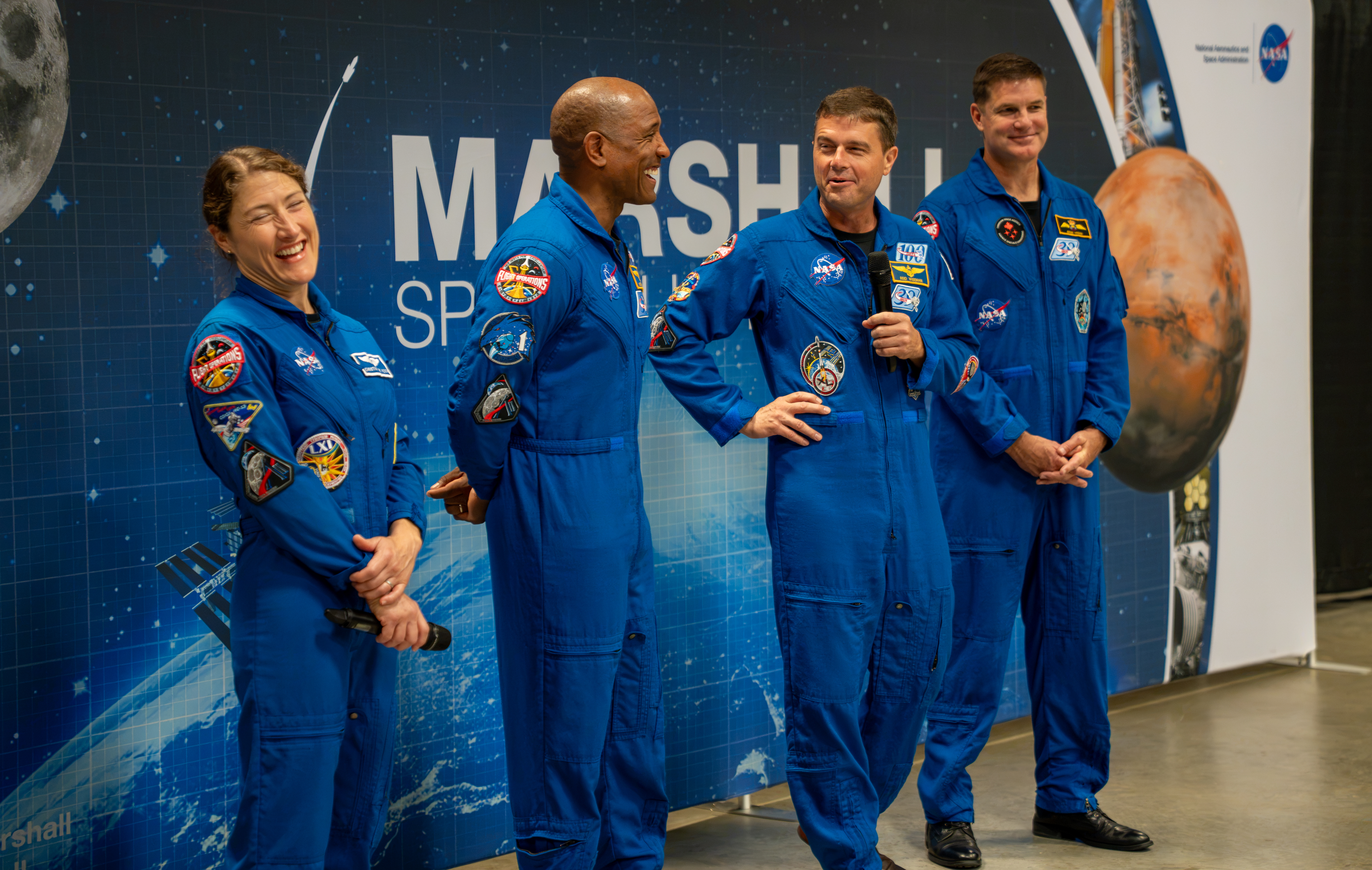
When the crew of NASA's Artemis II mission stepped off their aircraft in Huntsville, Alabama, on September 1, 2026, they were not merely visiting a facility; they were walking into the spiritual home of American rocketry. Marshall Space Flight Center, with its sprawling complex and the iconic red-and-white rocket test facility looming in the background, has long been the birthplace of the Saturn V and the space shuttle, but this time the atmosphere was charged with something different: the promise of a lunar return that is both historic and intensely personal. The crew, clad in their white flight suits, moved through the corridors with a quiet intensity, a stark contrast to the usual bustling industrial activity that defines a NASA center.
What made this visit distinct from previous delegations was the specific focus on the Orion capsule's integration with the Space Launch System. Marshall is the lead center for the SLS, the heavy-lift vehicle that will carry Artemis II's four astronauts into deep space. Seeing the engineers, who have spent decades refining the rocket's core stage and solid rocket boosters, shake hands with the crew members created a tangible bridge between the hardware and the humans who will ride it. It was a moment of profound convergence, where the abstract concepts of orbital mechanics and thermal shielding transformed into a shared responsibility for the safety of those traveling beyond low Earth orbit.
The significance of this stop cannot be overstated when viewed through the lens of the Artemis program's timeline. While the first crewed mission to the Moon since 1972 is the primary objective, the success of Artemis II depends entirely on proving that the crew can survive a high-energy trajectory and return safely. Marshall's team has been instrumental in validating the heat shield and the abort systems, ensuring that even in the worst-case scenarios, the crew has a chance to make it back. This visit underscored the rigorous scrutiny they face; every valve, every circuit, and every software line of code has been inspected with a microscope, knowing that the margin for error is zero.
Beyond the technicalities, the visit highlighted the human element that often gets lost in the noise of space exploration. The crew members spent hours with Marshall's veteran engineers, listening to stories of the Apollo era and sharing their own anxieties and hopes. These conversations served as a vital morale booster, reinforcing the idea that they are part of a lineage of explorers stretching back fifty years. The engineers, too, found renewed purpose in seeing the faces of the first people to travel to the Moon since the 1970s, reminding them that their work is not just about metal and fuel, but about expanding the boundaries of human experience.
As the delegation prepared to depart, the mood was one of cautious optimism tempered by the weight of history. The journey to the Moon has always been fraught with danger, but the Artemis II mission represents a new chapter where international collaboration and modern technology converge to tackle the challenges of deep space. The crew's presence at Marshall was a testament to the fact that space exploration is a team sport, requiring the seamless integration of diverse skills, from astrophysicists to welders, all working toward a singular, noble goal.
In the end, the visit to Marshall Space Flight Center was more than a stop on a flight path; it was a reaffirmation of the agency's commitment to the future. As the crew flew away from Huntsville, they carried with them the blessings of the engineers who built the vehicle and the memories of a place where the dream of returning to the Moon was turned into a reality. This mission will not just be a technical achievement; it will be a cultural reset for humanity, proving that we are still capable of looking up, dreaming big, and reaching for the stars.