Astronomers Hear the Faint Whispers of Cosmic Hydrogen from the Distant Past.
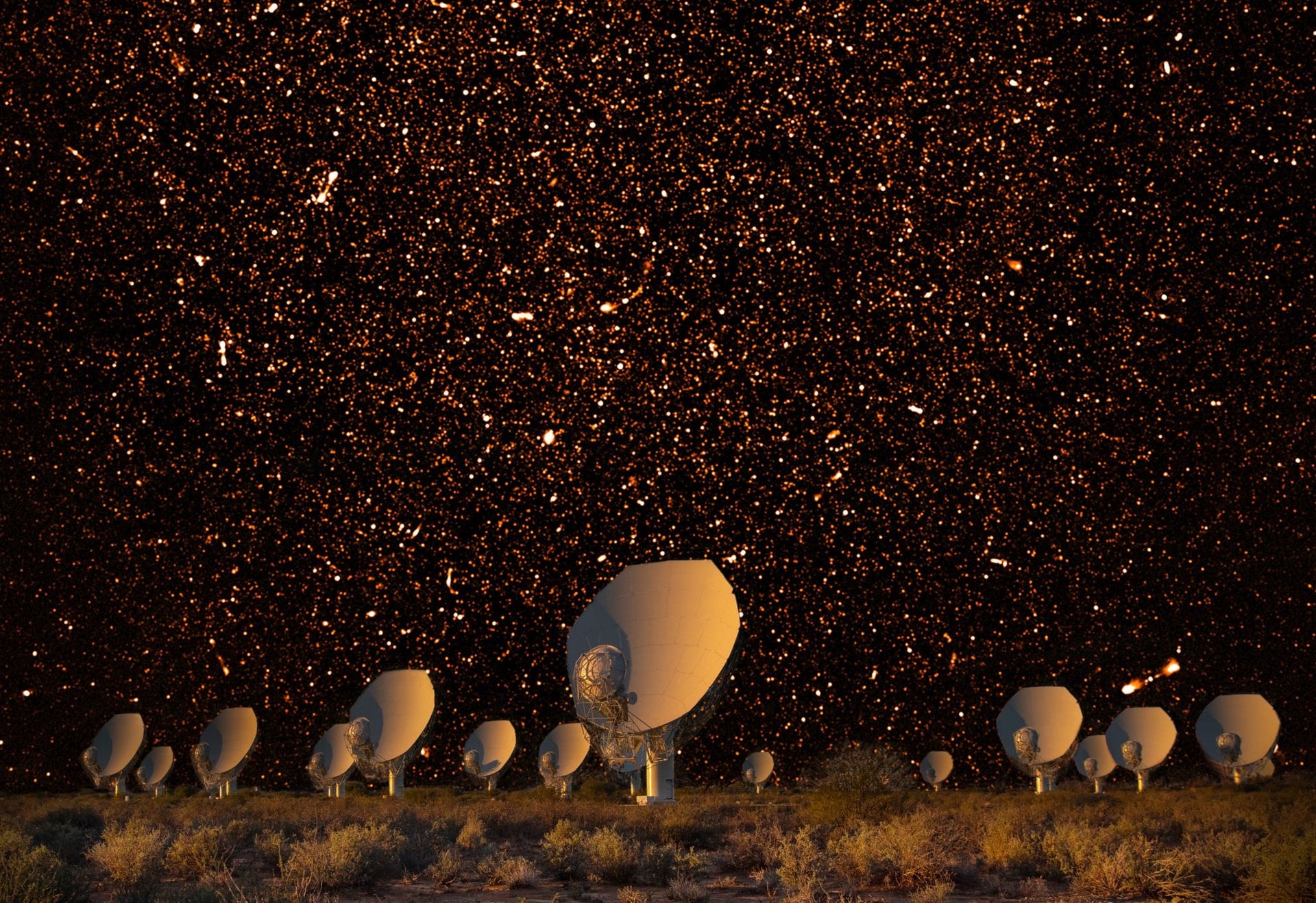
For decades, astronomers have chased the echoes of the early universe, listening for the ghostly afterglow of the Big Bang. Yet, for all our technological triumphs, we have remained blind to the vast, neutral hydrogen clouds that filled the cosmos billions of years ago. These clouds were the silent architects of the stars we see today, but their radio whispers were too faint, too diffuse to pierce the noise of our modern world until now. A new breakthrough finally allows us to hear them directly, turning a deafening void into a detailed map of cosmic history.
This achievement is not merely a matter of building a bigger telescope; it is a fundamental shift in how we perceive the fabric of reality. By detecting the specific radio signal emitted by neutral hydrogen, researchers have effectively lit a lighthouse in a dark ocean. This signal, known as the 21-centimeter line, is a universal constant that has been drifting through space since the universe was less than a billion years old. Capturing it required overcoming the overwhelming static of our own planet and the interference of radio waves generated by human activity and the cosmos itself.
The implications of this detection are profound because they offer a direct window into the "Cosmic Dark Ages." This was a period following the Big Bang but before the first stars ignited, an era where the universe was filled with neutral hydrogen that absorbed and scattered light. Without this new method of detection, that era remained a theoretical construct, a gap in our timeline filled only with mathematical models. Now, we have a physical record of that time, allowing us to trace the transition from a smooth, featureless soup to the clumpy, star-filled universe we inhabit today.
What makes this signal particularly remarkable is its extreme weakness. The researchers had to isolate a whisper so faint that it was nearly indistinguishable from the background noise of the universe. It required an unprecedented level of sensitivity and a novel approach to data filtering to separate the ancient signal from the contemporary clutter. This success demonstrates that even the most elusive parts of the cosmos are accessible if we are willing to listen with the right ears and refine our instruments with enough patience and ingenuity.
Beyond mapping the distribution of matter, this technique promises to revolutionize our understanding of the universe's evolution. By creating a three-dimensional map of neutral hydrogen across vast distances, astronomers can track how gravity pulled gas together to form the first galaxies. It provides a timeline of cosmic structure formation, showing us exactly when and where the universe began to take shape. This is akin to watching a movie of the cosmos being built, frame by frame, rather than just looking at a single still image.
As we stand on the shoulders of this discovery, the sky no longer feels so empty. What was once a silent, impenetrable expanse is now revealed to be a rich tapestry of history, waiting to be read. The faint whispers of cosmic hydrogen are no longer just theoretical echoes; they are a tangible connection to the distant past, a reminder that the universe is not just a collection of objects, but a dynamic, evolving story that we are finally learning to read.