At least six dead and 130 missing after Indonesian ferry capsizes, officials say
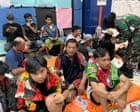
The Java Sea, a vast body of water stretching between the islands of Java and Borneo, has long been a critical artery for Indonesia's archipelagic life, yet it remains a treacherous expanse where weather can shift from calm to catastrophic in the blink of an eye. On a Sunday marked by fierce winds and towering waves, this maritime corridor turned into a scene of profound tragedy when the Virgo Transport 8 ferry capsized. The vessel, carrying 243 souls including passengers and crew, was sailing from Surabaya in East Java when the storm claimed its stability, leaving a chaotic aftermath where the line between life and death was drawn by the mercy of the rescuers and the cruelty of the elements.
The immediate response highlighted the relentless nature of search and rescue operations in such volatile conditions. Basarnas, Indonesia's national search and rescue agency, reported that 107 individuals were brought to safety, a figure that stands as a testament to the bravery of the crews who braved the churning waters. However, the numbers tell a somber story as well; at least six people have died, while 130 others remain missing, their fates currently suspended in a state of agonizing uncertainty. For the families left behind, these missing figures represent a terrifying void, a statistical category that transforms a person into a question mark during the most vulnerable moments of human existence.
This disaster underscores the persistent challenges of maritime safety in Southeast Asia, where ferry traffic is dense and weather patterns can be unpredictable. Ferries like the Virgo Transport 8 serve as the lifeblood of inter-island connectivity, moving workers, students, and families across the archipelago. Yet, the sheer volume of these crossings often outpaces the infrastructure and emergency preparedness required to handle natural disasters of this magnitude. When bad weather strikes, the margin for error shrinks to zero, exposing the fragility of life against the indifferent forces of nature.
The context of the incident also raises urgent questions about vessel maintenance and operational protocols in the face of deteriorating forecasts. Officials noted that the ferry set sail on Saturday, a day that may have offered a false sense of security before the storm fully matured. In the high-stakes environment of commercial shipping, the decision to depart can hinge on a complex interplay of schedules, passenger needs, and meteorological data. When that data proves insufficient or when the vessel's capacity is exceeded, the consequences are measured not just in financial loss, but in human lives lost.
As rescue teams continue their work, the focus remains on locating those who remain missing. The Java Sea's depth and the intensity of the waves make recovery efforts incredibly difficult, turning every hour into a critical race against time. The community watches with bated breath, aware that the waters may eventually reveal more victims or, perhaps, bring news of survival. Until then, the incident serves as a stark reminder of the precariousness of life at sea and the enduring hope that drives those who dedicate their lives to saving others.
In the end, the capsizing of the Virgo Transport 8 is more than a headline; it is a narrative of human resilience and vulnerability. It highlights the necessity of robust safety measures and the need for continuous vigilance in one of the world's most populous and maritime-dependent regions. As the sun sets over the Java Sea, the hope remains that technology and improved protocols can prevent such tragedies in the future, ensuring that the waters remain a bridge rather than a barrier.
On Bluesky? Meet HomeSky.
Follower analytics, a growth toolkit, scheduling and AI posting — built for Bluesky. Connect your account and use everything free for 60 days.
Try HomeSky free →