Developers want more efficient software. Here’s what over 1000 GitHub users told us they need.
We often hear that software is the new electricity, a foundational utility that powers everything from global banking to medical research. Yet, just as the industrial revolution left behind mountains of coal ash, the digital age is generating a staggering amount of computational waste. Every unnecessary query, every redundant calculation, and every poorly optimized loop is not just a technical inefficiency; it is a physical cost measured in megawatts and carbon. When developers write code without a keen eye for efficiency, they are inadvertently contributing to a massive, invisible drain on our planet's energy resources.
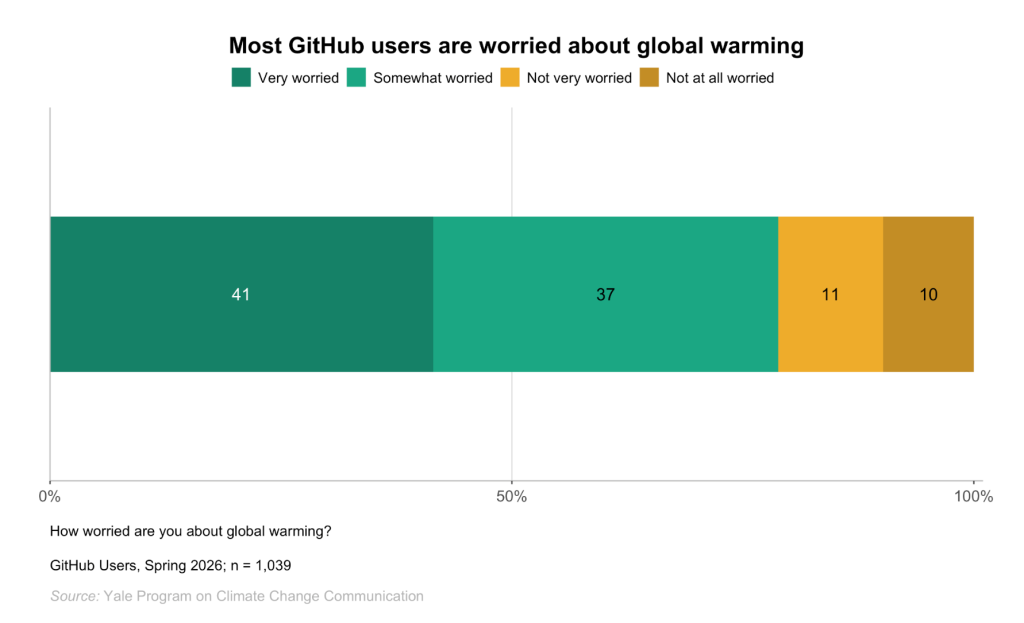
The urgency of this issue has shifted from a niche concern among optimization enthusiasts to a critical imperative for the industry at large. A recent collaboration between GitHub and the Yale Program on Climate Change Communication sheds light on this growing crisis, revealing that the demand for greener computing is no longer optional. In a survey of over 1,000 GitHub users, a clear and consistent signal emerged: developers are actively looking for the tools, metrics, and practical guidance necessary to reduce wasted compute. They are not waiting for a silver bullet; they are demanding the infrastructure to build it themselves.
The data points to a specific gap in the developer experience. While many engineers understand the theoretical importance of efficiency, they lack the practical frameworks to implement it at scale. The survey highlighted a profound need for better measurement tools that can quantify the environmental impact of code, similar to how modern applications track memory usage or latency. Without concrete data, efficiency remains an abstract ideal rather than a tangible goal. Developers need to see the cost of their decisions in real time, translating lines of code into kilowatt-hours and carbon emissions.
Furthermore, the call for action extends beyond mere measurement to actionable solutions. The respondents expressed a strong desire for practical guidance on how to refactor legacy systems and design new architectures with sustainability in mind. This is not about writing "green code" as an afterthought; it requires a fundamental shift in how we approach software engineering. It demands that we treat energy consumption as a primary constraint, alongside speed and scalability. When teams prioritize efficiency early in the development lifecycle, the cumulative savings in energy and resources become exponential.
This movement toward efficient software is ultimately about responsibility. As our digital footprint expands, so does our collective impact on the environment. The developers surveyed represent the architects of our digital future, and their willingness to engage with these challenges signals a maturing of the profession. They recognize that writing efficient code is not just a way to save money or improve performance; it is an ethical obligation. By providing the right tools and fostering a culture of mindful coding, the industry can begin to reverse the trend of growing digital waste.
The path forward requires a concerted effort from the entire ecosystem. It involves platform providers offering robust APIs for carbon tracking, open-source communities sharing best practices, and organizations adopting sustainability standards for their engineering teams. The research underscores that the solution is already within reach; what is missing is the unified focus to deploy it. As these developers continue to push for more efficient software, they are helping to ensure that the technology we build today does not compromise the ability of future generations to thrive. The code we write today literally powers the world tomorrow, and making that power cleaner and more efficient is the defining challenge of our time.
On Bluesky? Meet HomeSky.
Follower analytics, a growth toolkit, scheduling and AI posting — built for Bluesky. Connect your account and use everything free for 60 days.
Try HomeSky free →