Healthcare in Africa ‘under growing strain’ after US withdrawal from aid programs, report warns
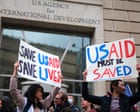
The sudden retreat of the United States from its longstanding commitments to global health aid has not merely created a budgetary gap; it has fractured a fragile ecosystem that has sustained millions across the African continent and the broader Global South. For decades, USAID served as a critical stabilizer, funding vaccines, training medical staff, and building infrastructure in regions where national budgets were too thin to carry the weight of public health alone. The withdrawal of these resources, accelerated by the administration's aggressive fiscal tightening, has turned a manageable challenge into an existential crisis, leaving hospitals under-staffed and supply chains in disarray just as the world grapples with the lingering aftershocks of the pandemic.
The urgency of this situation is compounded by a perfect storm of economic headwinds that the region was never designed to withstand in isolation. Inflation has eroded purchasing power, and the cost of living crisis has siphoned funds away from essential services even in nations that managed to maintain some level of self-sufficiency. When you layer these domestic struggles atop the vacuum left by international donors, the result is a healthcare system teetering on the brink of collapse. The report highlights that this is not a temporary dip in performance but a structural shift that demands an immediate and radical reimagining of how health development is approached, moving away from reliance on foreign charity toward robust, sovereign control.
Historically, the model of Western-led aid has been effective but often paternalistic, dictating priorities that did not always align with local realities or long-term sustainability goals. The new reality demands a paradigm shift where African nations and other Global South partners take the reins of their own health destinies. This requires more than just writing new policies; it necessitates the cultivation of deep, endogenous capacity. It means investing heavily in local pharmaceutical production, training indigenous medical leaders, and creating funding mechanisms that are immune to the geopolitical whims of superpowers. The era of waiting for a check to arrive from Washington must end, replaced by an era of strategic autonomy.
The implications of this withdrawal extend far beyond the borders of Africa, sending shockwaves through the global health architecture. As the Global South struggles to maintain basic sanitation and disease prevention, the risk of viral mutations and health crises spreading to wealthier nations increases exponentially. In an increasingly interconnected world, the health of the continent is inextricably linked to the health of the globe. A failure in Accra or Nairobi is not a distant tragedy; it is a potential domino effect that could destabilize global markets and security. The withdrawal of US aid has effectively lowered the guard for the entire international community, reminding us that there are no safe havens in a biosphere where pathogens do not respect borders.
Moving forward, the path to recovery will be steep and fraught with political friction. It will require a coalition of nations to forge new partnerships, perhaps bypassing traditional diplomatic channels to focus purely on technical cooperation and resource sharing. It will also demand a psychological shift among policymakers who have long viewed aid as a moral obligation or a tool of soft power, reclassifying it instead as a matter of national and planetary security. The time for hesitation is over; the growing strain on healthcare systems is a clarion call for immediate action, urging the world to recognize that the future of global health depends on a fundamental redistribution of responsibility and a collective commitment to sovereignty.
On Bluesky? Meet HomeSky.
Follower analytics, a growth toolkit, scheduling and AI posting — built for Bluesky. Connect your account and use everything free for 60 days.
Try HomeSky free →