Indonesia's Anak Krakatau
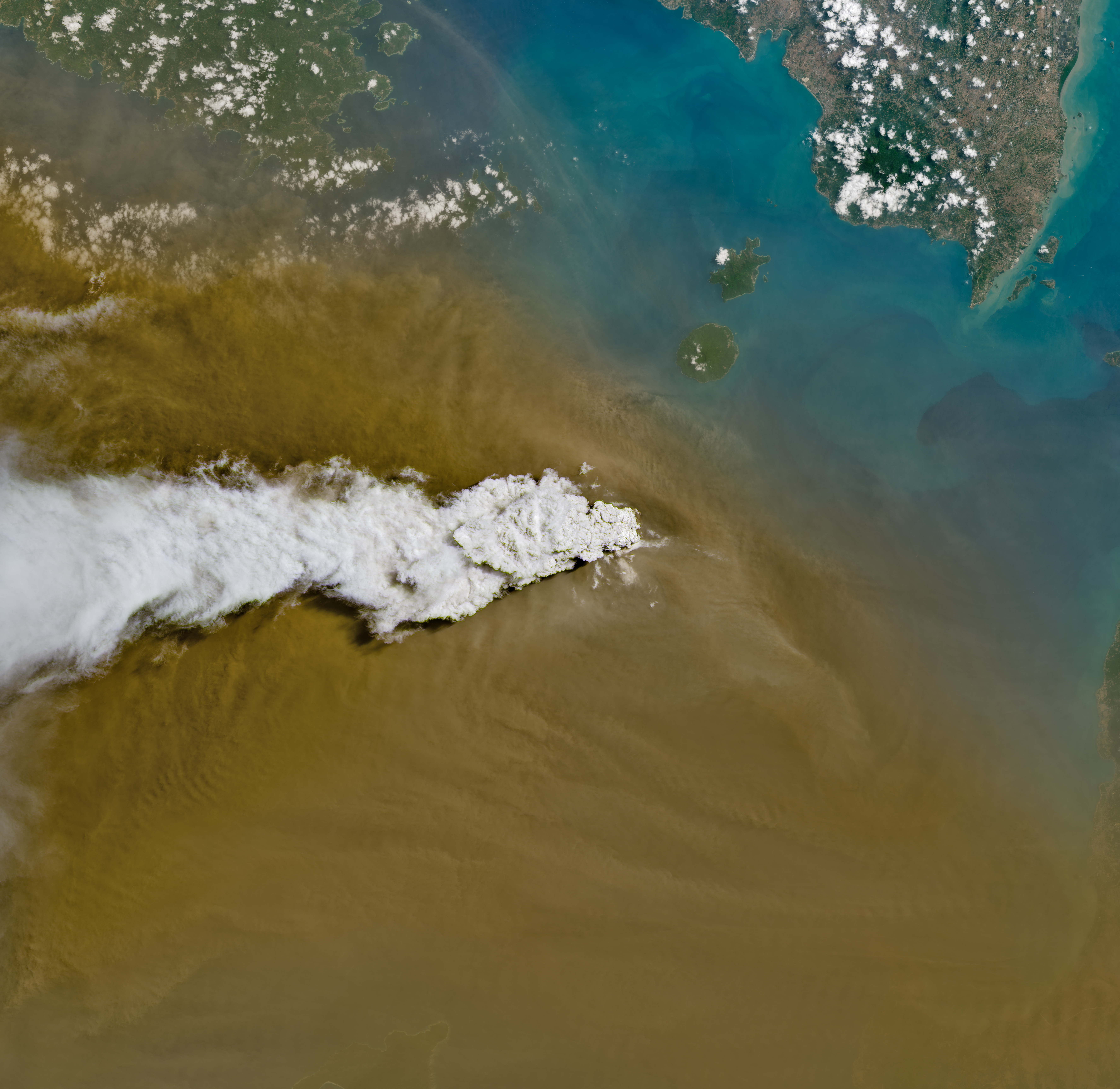
There is a profound humility required when observing the Earth from orbit, a perspective that strips away our human arrogance and reveals a planet in constant, dynamic flux. On September 5, 2026, the Operational Land Imager aboard the Landsat 8 satellite captured a scene that would have been visible from the back of an envelope to anyone watching the equator: the violent birth of Anak Krakatau, the "Child of Krakatoa." This is not merely a geological event; it is a testament to the raw, indifferent power of plate tectonics reshaping our world, a reminder that the ground beneath our feet is a living, breathing entity with a violent memory.
To understand the drama of this specific image, one must first comprehend the history of the mother volcano. The 1883 eruption of Krakatoa was one of the most catastrophic events in recorded history, obliterating the original cone and sending tsunamis across the Indian Ocean that claimed hundreds of thousands of lives. Yet, nature is rarely finished with its work. From the rubble of the cataclysm, a new vent emerged in the caldera, rising relentlessly from the sea. For over a century, Anak Krakatau has been the focal point of the Sunda Strait, a restless giant that has grown by roughly 100 meters in height since its first appearance in 1927, occasionally threatening to breach the surface and challenge the legacy of its predecessor.
The OLI instrument, with its multispectral capabilities, provides a unique window into the physics of this eruption. The ash and volcanic gases captured in the image are not just gray clouds; they are complex aerosols interacting with sunlight in ways that reveal the temperature and composition of the atmosphere. When we see the plume rising from the island in the satellite data, we are witnessing the injection of particulate matter into the stratosphere, a process that can influence global climate patterns by reflecting solar radiation. This image is a snapshot of a chemical reaction on a planetary scale, a reminder that what happens in the Sunda Strait ripples out to affect weather systems thousands of kilometers away.
However, the technical beauty of the Landsat data cannot obscure the very real human stakes involved. The islands of Java and Sumatra, teeming with millions of people, sit directly in the line of fire. The proximity of the population to the active vent means that the eruption is not just a scientific curiosity but an existential threat. The ashfall can paralyze agriculture, damage infrastructure, and create hazardous flying conditions, while the potential for pyroclastic flows or tsunamis remains a terrifying possibility. The image serves as a stark warning: the boundary between the safety of civilization and the chaos of the volcano is often measured in mere kilometers.
As we analyze these spectral signatures, we are also engaging in a critical exercise in risk management. The ability to monitor Anak Krakatau from space allows scientists to track the growth of the cone and the intensity of the eruptions, providing crucial lead time for evacuation and disaster preparedness. This synergy between advanced remote sensing and ground-based observation is the modern equivalent of a lighthouse beam, guiding us through the darkness of uncertainty. It represents the best of human ingenuity applied to the most volatile environments, turning potential catastrophe into manageable risk.
In the end, the image of Anak Krakatau in September 2026 is more than a record of a volcanic event; it is a meditation on time and resilience. The volcano is young, still forging its shape against the crushing pressure of the ocean floor. We, too, are fleeting observers of a process that has been unfolding for eons. While we may fear the destruction, we must also recognize the creative power of these forces, the same forces that build the mountains we climb and the islands we visit. The Landsat 8 image stands as a bridge between the ancient, grinding tectonic plates and the modern human need to understand and coexist with them.
On Bluesky? Meet HomeSky.
Follower analytics, a growth toolkit, scheduling and AI posting — built for Bluesky. Connect your account and use everything free for 60 days.
Try HomeSky free →