Migrating the GitHub Copilot runtime to Rust, using Copilot
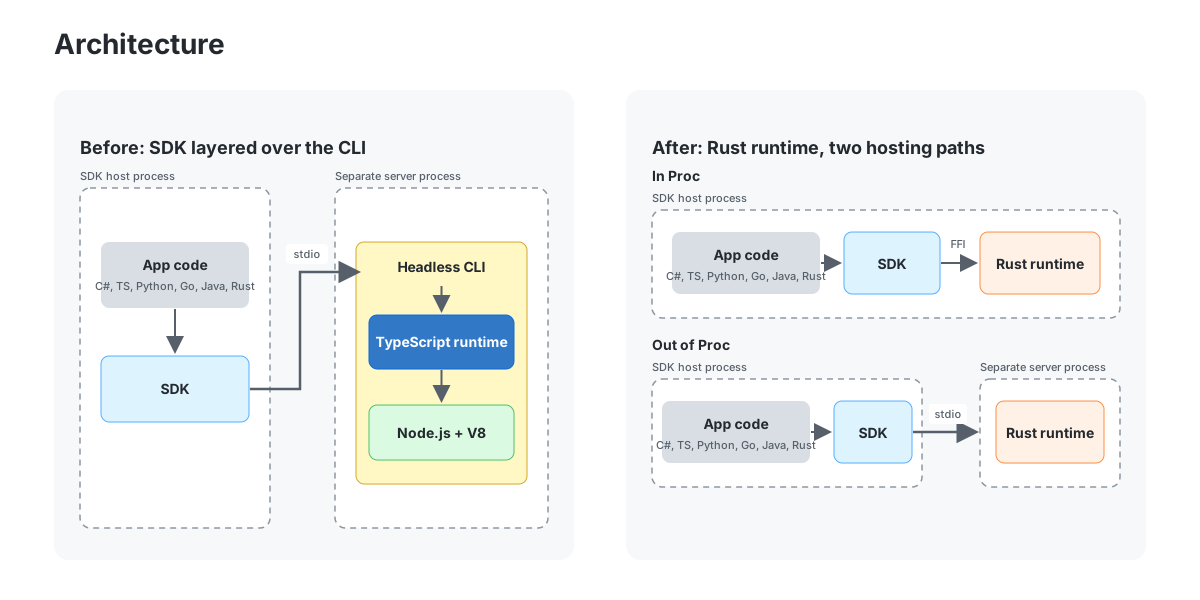
For a long time, the sheer scale of maintaining a high-performance AI runtime felt like an impossible architectural debt. We were juggling millions of requests per minute, complex language model orchestration, and the need for absolute reliability, all while clinging to a codebase that was becoming increasingly difficult to reason about. The decision to migrate the GitHub Copilot runtime to Rust wasn't just an exercise in swapping syntax; it was a fundamental shift in how we approached system stability and performance at scale. Before the arrival of AI agents, the cost of rewriting such a massive system was prohibitive, not just in financial terms but in the opportunity cost of the engineering time required to do it safely.
Porting eight hundred thousand lines of production Rust code is not something you do with a weekend hackathon. It required a strategy that leveraged the very technology we were building to make the build possible. By utilizing Copilot agents to generate the boilerplate, handle the translation of idioms, and maintain the structural integrity of the new codebase, we effectively turned the migration into a collaborative effort between human intent and machine precision. This approach allowed us to tackle the monolith in small, manageable chunks rather than attempting a risky "big bang" rewrite that could have derailed the entire service.
The results speak to the tangible value of this architectural evolution. The transition unlocked significant performance gains, reducing latency and resource consumption in ways that were previously unachievable with the prior stack. More importantly, it restored confidence in the system's long-term maintainability. By moving to a language known for its memory safety and strict type system, we eliminated entire classes of runtime errors that plague interpreted or garbage-collected environments. The new runtime feels leaner, faster, and more predictable, providing a solid foundation for the next generation of AI features we plan to ship.
However, the journey wasn't without its quirks. There were moments where the generated code needed heavy human intervention to align with the specific safety constraints and edge cases inherent to our domain. It became clear that while AI agents are phenomenal at generating patterns and handling repetitive logic, the final review must remain a deeply human process. The synergy we found was not about replacing engineers but about amplifying their ability to navigate a codebase of that magnitude, allowing us to focus on high-level architecture rather than getting bogged down in low-level syntax.
Looking back, this migration stands as a testament to what is possible when modern development tools meet ambitious engineering goals. We took a system that was struggling under its own weight and gave it a new lease on life, proving that even the most entrenched technical debts can be resolved with the right tools and a clear vision. As we continue to evolve the Copilot experience, the Rust runtime serves as the silent, reliable engine powering it all, ready to adapt as our ambitions grow even larger.
On Bluesky? Meet HomeSky.
Follower analytics, a growth toolkit, scheduling and AI posting — built for Bluesky. Connect your account and use everything free for 60 days.
Try HomeSky free →