Social Media Engagement: summer 2026
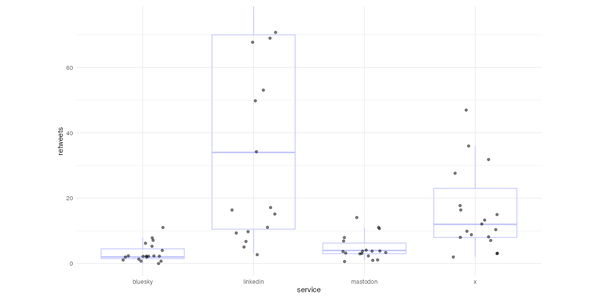
The landscape of digital discourse has shifted dramatically in the last few years, and if you are still measuring your success by the metrics of early 2025, you are likely looking at a map of a continent that no longer exists. There is a distinct precipitous decline in one major platform that once seemed like the undisputed capital of developer conversation, where the once-loud roar has been replaced by a near-silent hum. This isn't just a fluctuation in algorithmic favor; it represents a fundamental cultural drift where the tools built for connection have become so bloated with friction that the very act of sharing an idea feels like wading through molasses.
In contrast, another service has surged with a velocity that feels almost organic, capturing the attention of the community with a grace that the declining giant could never muster. It is not merely about higher numbers, though the data is undeniable; it is about the quality of the interaction. The engagement here feels less like a broadcast into a void and more like a conversation in a crowded room, where everyone is finally listening to each other rather than shouting over one another. This shift suggests that the future of technical communication lies not in louder volume, but in better resonance.
The reason this matters extends far beyond vanity metrics or personal brand building. When a community fragments or retreats into a single, dying echo chamber, the collective intelligence of that group suffers. We lose the cross-pollination of ideas that happens when diverse platforms intersect. The precipitous drop in engagement on the older platform signals a loss of trust and utility, while the rise of the newer contender indicates a hunger for speed, simplicity, and genuine human connection. Understanding these trends is essential for anyone trying to stay relevant in a field that evolves at the speed of light.
There is a narrative arc here that mirrors the lifecycle of many technologies: rapid adoption, peak hype, and a slow, painful decline as the initial novelty wears off and the underlying flaws are exposed. The platform that is fading did not fail because the ideas were bad, but because the medium itself became an obstacle to the message. In the summer of 2026, the winners are those who have adapted to the new rhythm of interaction, realizing that attention is a finite resource that must be earned through relevance and clarity, not just persistence.
For the practitioners of software, the lesson is clear: do not build your strategy on sand. The tides of social engagement are moving faster than ever, and clinging to the past is a luxury no one can afford. The data from this summer paints a picture of a community reorganizing itself around services that respect the user's time and attention. It is a call to action to be agile, to experiment, and to recognize that the tools we choose to amplify our voices are just as important as the content we create.
Ultimately, the story of these platforms is the story of us. We are constantly seeking better ways to connect, to learn, and to solve complex problems together. The shift from one dominant hub to a more distributed, perhaps more efficient network, reflects a maturing of our digital maturity. As we move forward, the focus must remain on substance over style, and connection over noise. The community that survives and thrives will be the one that adapts to these new currents rather than trying to dam them.
On Bluesky? Meet HomeSky.
Follower analytics, a growth toolkit, scheduling and AI posting — built for Bluesky. Connect your account and use everything free for 60 days.
Try HomeSky free →