22 years of science! NASA's Roman Space Telescope doubles its lifetime with super-precise engine burn
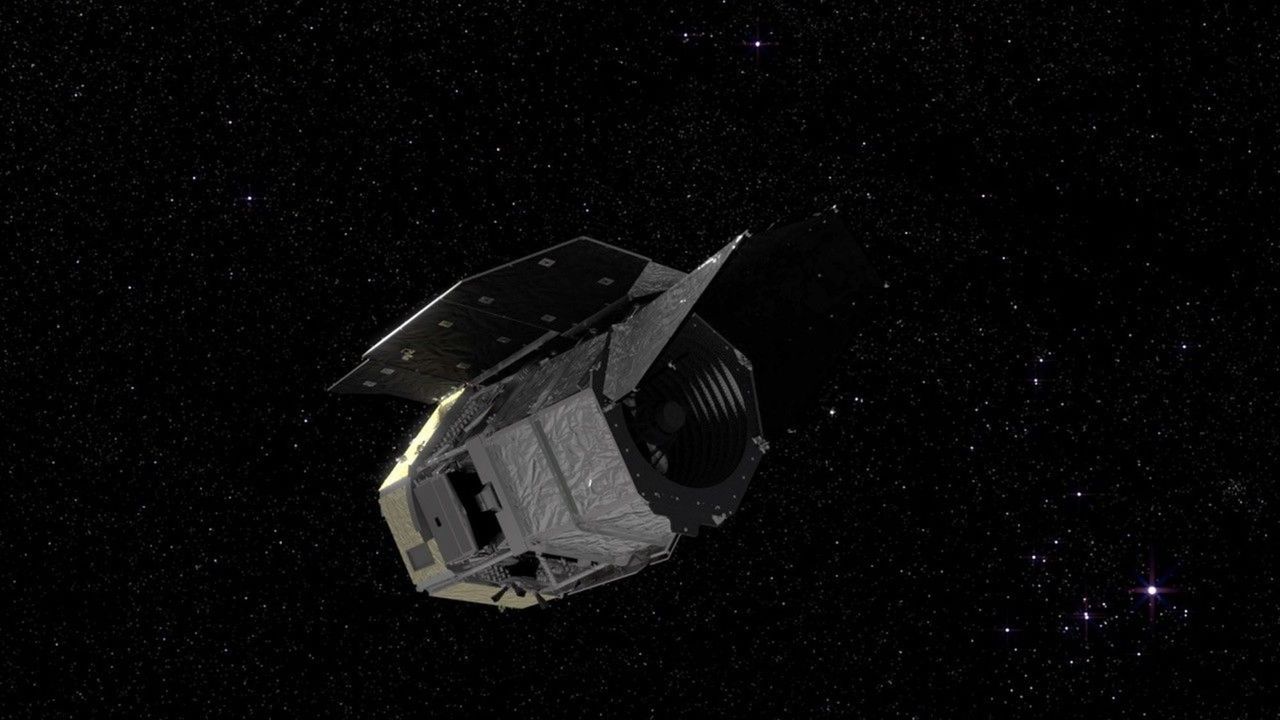
It is a profound statement of human resilience when a machine, built with the expectation of a single decade of service, is found to be capable of far more. The Nancy Grace Roman Space Telescope, originally designed for a primary five-year mission followed by a potential five-year extension, has now officially secured a trajectory that stretches beyond twenty-two years. This dramatic extension, achieved through a series of super-precise engine burns, is not merely a bureaucratic adjustment to a flight plan; it is a testament to the robustness of engineering and the enduring nature of scientific curiosity that refuses to be bound by initial projections.
The journey to this milestone began with a complex dance of mechanics and mathematics, where the Roman team had to navigate the subtle forces acting upon the spacecraft to maintain its precise orbit around the L2 Lagrange point. By executing these delicate maneuvers with an accuracy that borders on the miraculous, the engineers have effectively turned the telescope into a long-term sentinel for the cosmos. This level of precision is no small feat; it requires a deep understanding of orbital dynamics and the ability to predict the behavior of the spacecraft with a certainty that defies the chaotic nature of space. The result is a machine that has proven it can outlast its own design specifications, offering a window into the universe that was once thought to be fleeting.
The implications of such an extended lifespan are staggering for the field of exoplanet research and dark energy exploration. The Roman telescope was never just about taking pretty pictures; it was a statistical powerhouse, designed to survey hundreds of millions of galaxies and characterize thousands of exoplanets. Every extra year of operation translates directly into a deeper catalog of cosmic data, pushing the boundaries of what we know about the universe's expansion and the potential for life elsewhere. The extra time allows for more comprehensive surveys, enabling scientists to refine their models and perhaps even uncover anomalies that could rewrite our understanding of astrophysics.
In a world where technological projects often face the specter of early retirement due to budget constraints or mechanical failure, the Roman telescope stands as a beacon of reliability. Its success serves as a reminder that the cosmos rewards those who dare to look long and hard. The telescope's ability to function for over two decades suggests that the future of space-based science may be more expansive than we ever imagined, potentially paving the way for even more ambitious missions that rely on similar levels of precision and durability.
As the Roman Space Telescope continues its vigilant watch over the stars, it becomes clear that the universe is a place of infinite patience, waiting for us to catch up. The doubling of its lifetime is a victory for the entire team of scientists and engineers who have worked tirelessly to keep it aloft. It is a story of triumph over the limitations of time, a narrative that resonates with the very heart of the scientific endeavor: the relentless pursuit of knowledge, no matter how long the road may be.
Ultimately, the Roman telescope is more than a piece of hardware; it is a vessel for human wonder. Its extended life ensures that we will continue to have the tools necessary to explore the deep questions that have haunted us since the dawn of civilization. As we look forward to the next twenty years of discovery, we are reminded that the best science is often the science that keeps going, finding new depths in the familiar and new mysteries in the unknown.
On Bluesky? Meet HomeSky.
Follower analytics, a growth toolkit, scheduling and AI posting — built for Bluesky. Connect your account and use everything free for 60 days.
Try HomeSky free →