The Roman telescope has enough gas for 22 years, double NASA's expectations
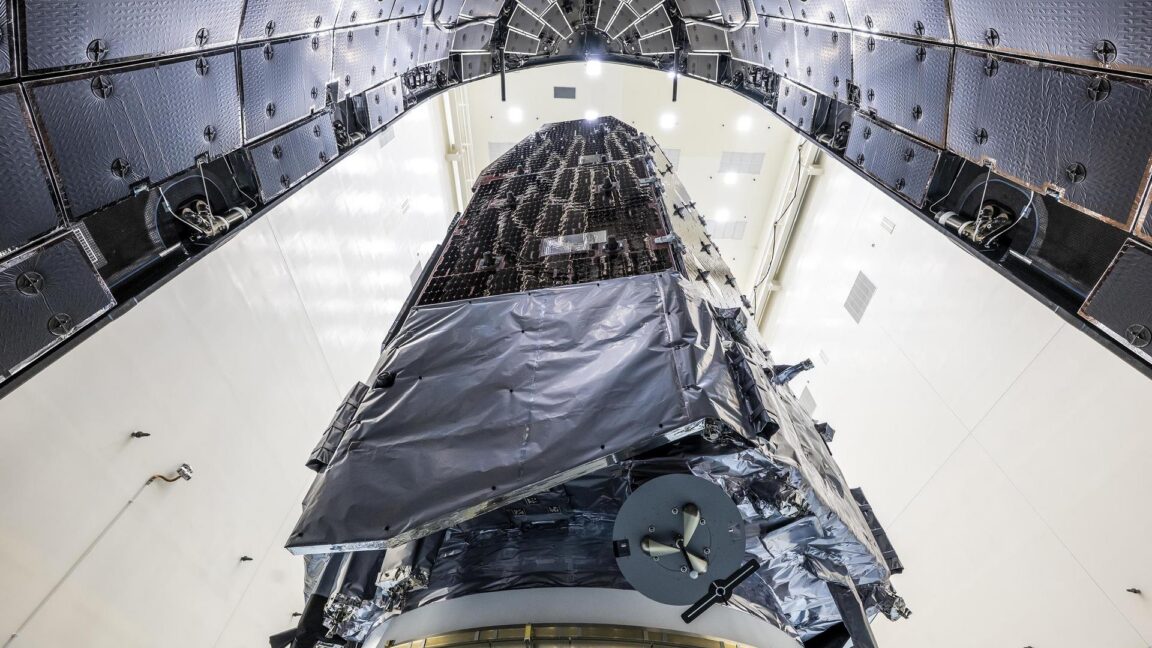
For decades, space telescopes have been the lonely sentinels of the cosmos, bound by the harsh reality that once their onboard fuel is spent, their vision is permanently extinguished. They are essentially disposable luxury items, built with exquisite precision but designed to die after a decade or two of service. The Nancy Grace Roman Space Telescope shatters this architectural constraint, standing as the first NASA observatory conceived from the ground up with in-space refueling as a core requirement. This is not merely an afterthought or a patch applied to an existing design; it is a fundamental shift in how we approach the longevity of our scientific eyes in the dark.
The engineering challenge of delivering fuel to a telescope orbiting hundreds of miles above Earth is staggering, involving complex rendezvous maneuvers, robotic docking, and the precise management of propellant in a microgravity environment. Yet, the Roman team has successfully modeled scenarios where a tanker spacecraft can visit the observatory, transfer cryogenic fluid, and depart safely, ensuring the telescope can operate for significantly longer than its original design life. This capability transforms the Roman from a temporary visitor into a permanent resident of the solar system's observatory network, capable of witnessing phenomena that would otherwise fade from our view before we could study them in depth.
With enough gas to sustain operations for twenty-two years, the Roman telescope has effectively doubled the expectations set by its predecessors, including the Hubble and Kepler missions. This extended lifespan allows for the observation of transient events that occur on timescales previously impossible to capture, such as the slow evolution of galaxy clusters or the rare, fleeting flashes of gamma-ray bursts from the distant edge of the universe. It also provides a crucial buffer against the unpredictability of space, ensuring that if a critical system requires repair or if scientific goals need to be pivoted based on new discoveries, the observatory has the resources to adapt and continue its work.
The implications of this extended reach extend far beyond the specific capabilities of the Roman instrument; it represents a paradigm shift for the entire field of astrophysics. By proving that refueling is a viable and reliable strategy, we open the door for a new generation of missions that can be designed with decades of operational time in mind, rather than the frantic race against a failing battery. This approach could eventually lead to the construction of even larger, more powerful telescopes that would be prohibitively expensive or impossible to build if they were limited to a single launch and fuel load, effectively turning the sky into a playground for long-term, deep-space exploration.
As we gaze into the stars, we are no longer just recording history; we are committing to a future of continuous observation where the questions we ask today can be answered with the same instruments tomorrow, and the day after that. The Roman telescope serves as a testament to human ingenuity, proving that with the right planning and engineering, we can defy the natural limitations of our hardware and keep our windows to the universe open for generations to come.
On Bluesky? Meet HomeSky.
Follower analytics, a growth toolkit, scheduling and AI posting — built for Bluesky. Connect your account and use everything free for 60 days.
Try HomeSky free →