Canon Has Grown Crystals in a Furnace Since 1967 to Fix a Color Error Ordinary Glass Cannot Correct
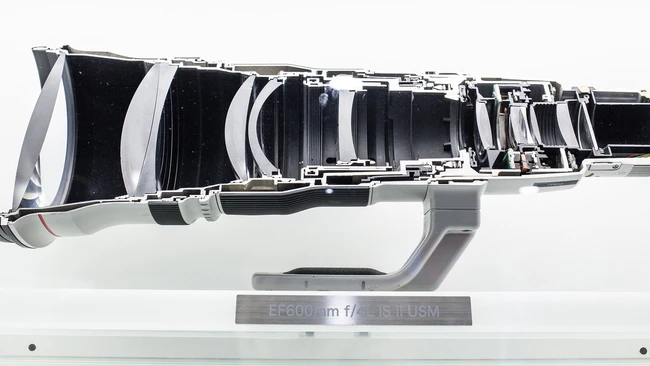
In March 1967, a team of Canon researchers pulled the first synthetic fluorite crystals from a high-temperature furnace, an act that would quietly redefine the physics of light itself. While ordinary glass bends light, it does so with a flaw inherent to its chemical structure: dispersion. When white light passes through standard glass, it splits into a rainbow of colors, creating that annoying purple haze known as chromatic aberration. For decades, photographers have lived with this imperfection, accepting it as an unavoidable trade-off for the clarity of glass. But Canon realized that if they could engineer a material that bent light differently than glass yet shared its refractive index, they could cancel out the color fringing without sacrificing transparency.
The solution was not a new lens design or a clever coating, but a fundamental shift in material science. Fluorite, a naturally occurring mineral, possesses the unique optical property of low dispersion, meaning it handles color separation with grace that glass simply cannot match. However, natural fluorite is scarce, inconsistent in quality, and often contains impurities that ruin its optical performance. By growing these crystals in a controlled furnace environment, Canon removed the randomness of nature. They created a uniform, pure material where every atom was placed with precision, ensuring that the light passing through a lens element remained true to its color rather than bleeding into a spectrum of ghosts.
This breakthrough allowed engineers to place fluorite elements directly into the optical path of lenses, a feat that was previously impossible with natural stones of such size. The result was a reduction in chromatic aberration that was so profound it seemed almost magical to those who had never seen it. Lenses equipped with these synthetic crystals could resolve fine details with a sharpness that bordered on clinical, free from the softening edges that plagued earlier designs. It was a triumph of patience and chemistry; the process required maintaining extreme temperatures and perfecting the crystal growth environment, a delicate dance between heat and time that yielded results far superior to anything mined from the earth.
The implications extended far beyond mere technical specifications; it changed the very expectation of what a photograph could be. Before this innovation, the pursuit of ultimate sharpness often meant compromising on color fidelity or accepting a certain level of softness to avoid color fringing. With fluorite, the compromise vanished. Photographers could now push the boundaries of telephoto lenses and fast apertures, capturing images where every leaf, every eye, and every distant star appeared exactly as the human eye intended to see them, without the interference of glass-induced color errors.
Today, the legacy of that 1967 furnace experiment is visible in the crisp lines of modern photography. The synthetic fluorite elements remain a hallmark of high-end optical engineering, a reminder that the best tools are often born from a deep understanding of the natural world and the courage to replicate its wonders in a laboratory. It serves as a testament to the idea that sometimes, to correct a flaw in the world of glass, you must reach back into the earth's ancient chemistry and forge something new.
On Bluesky? Meet HomeSky.
Follower analytics, a growth toolkit, scheduling and AI posting — built for Bluesky. Connect your account and use everything free for 60 days.
Try HomeSky free →