German company becomes first in Europe to launch fully commercial orbital rocket
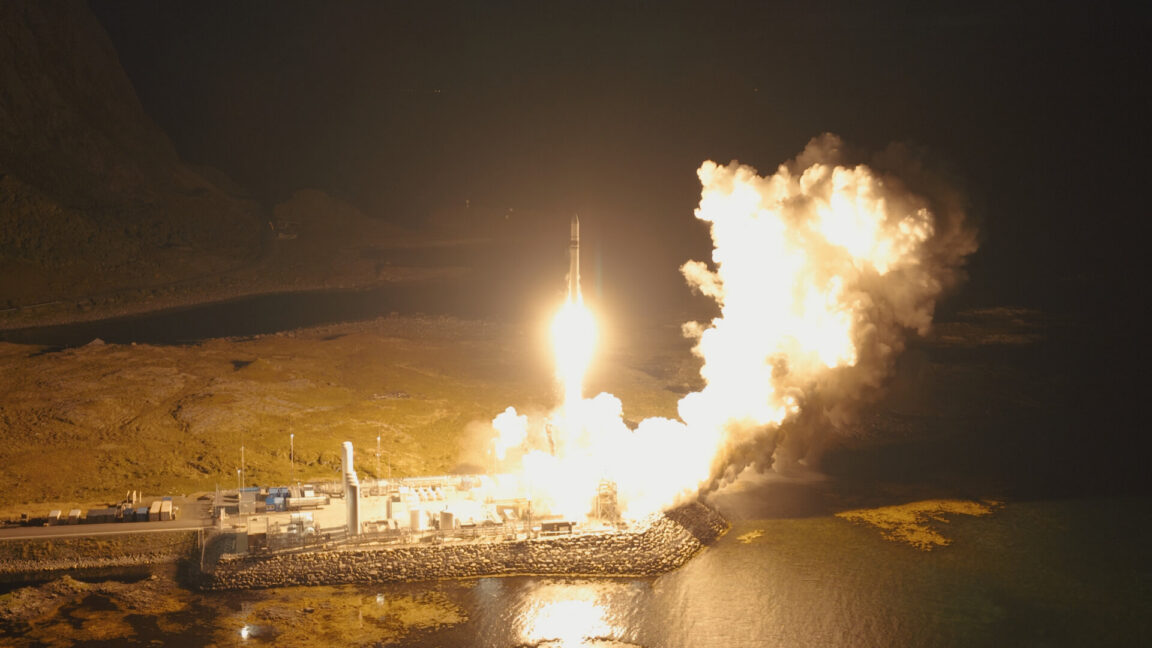
The quote "We achieved within a few years what had taken the European space industry decades before" carries the weight of a hard-won victory, but it also whispers of a deeper frustration that has long plagued the continent's aerospace ambitions. For years, Europe watched its peers in the United States and China race to the stars, building commercial constellations and securing lucrative satellite contracts, while their own attempts at orbital launch remained tethered to the limitations of heritage systems or costly government subsidies. The sudden emergence of a fully commercial German company breaking this deadlock is not merely a technical milestone; it is a psychological shift that suggests the era of passive observation is over.
To understand the magnitude of this feat, one must look at the structural inertia that has historically held the European space sector back. Unlike the American model, which saw a rapid, organic evolution from military surplus technology to a booming private sector driven by venture capital, Europe's approach has been characterized by cautious state-led development. Projects often stall due to bureaucratic hurdles, fragmented regulatory landscapes, and a cultural hesitation to embrace the "fail fast" mentality essential to modern commercial aerospace. The German company's success indicates that they have successfully navigated these treacherous waters, replacing decades of iterative, government-dependent development cycles with a streamlined, market-driven roadmap.
This achievement fundamentally alters the geopolitical and economic landscape of European space access. For decades, nations across the continent have been dependent on Russian or European-led launch vehicles that were often over budget, delayed, or politically fraught. By establishing a fully commercial, domestic capability for orbital insertion, Germany ensures that its strategic assets—communications, Earth observation, and eventually deep space probes—remain under sovereign control. It transforms space from a realm of external dependency into a pillar of national infrastructure, securing supply chains and reducing the vulnerability to foreign embargoes or geopolitical instability.
On a purely economic level, the implications are even more profound for the broader European ecosystem. A reliable, commercial launch provider creates a vibrant market for satellite manufacturing, fostering a cluster of innovation that can ripple out to other high-tech industries. Just as the rise of SpaceX catalyzed a new generation of American aerospace engineers and startups, this German success could attract investment, talent, and research from across the continent. It signals to investors that the European market is not a backwater but a viable frontier for high-stakes technology, potentially unlocking billions in capital that had previously been viewed as too risky or too slow to yield returns.
However, the path forward remains fraught with challenges that will test the resilience of this new pioneer. The transition from a successful first launch to a sustainable, repeatable service involves a level of reliability and cost efficiency that few have yet to master. The initial triumph is a proof of concept, but the true test lies in the next fifty flights, where the company must demonstrate the ability to launch frequently, safely, and at prices that make space accessible to a wider array of customers. The industry is now watching closely to see if this is a one-off anomaly or the beginning of a new, more agile era for European spaceflight.
Ultimately, the story of this German company is a testament to the power of adapting old ambitions with new methods. It proves that when the right combination of technical expertise, commercial acumen, and political will aligns, even the most entrenched obstacles can be dismantled in a matter of years rather than decades. As Europe looks up at its own rocket soaring into the night sky, the message is clear: the future of space is no longer something to be negotiated with distant superpowers, but a domain to be built, owned, and controlled right here at home.