Heather Cox Richardson has been awarded the inaugural Gitlin-Auster Defender of Democracy Award.
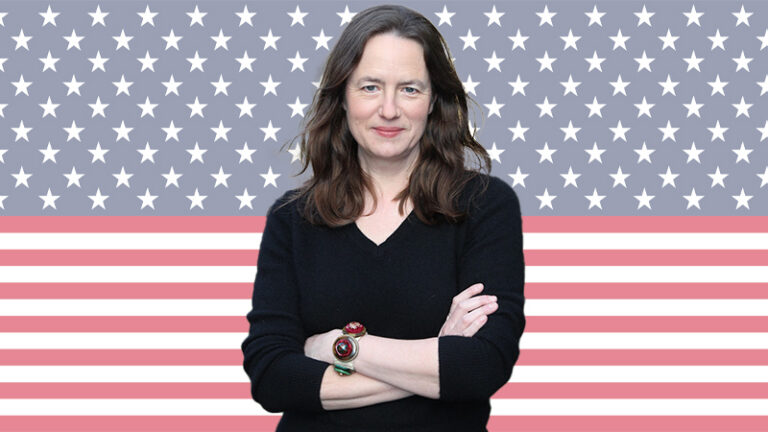
There is a specific kind of weight that settles on the shoulders of a historian when the pen is swapped for a shield, and few figures in the modern landscape carry it quite like Heather Cox Richardson. Over the weekend, the Writers for Democratic Action presented her with the inaugural Gitlin-Auster Defender of Democracy Award, a gesture that acknowledges something profound: her career has effectively been an act of preservation. This honor, established to celebrate a writer whose voice embodies the wisdom, courage, and steadfastness of giants like Norman Mailer and Noam Chomsky, is not merely a trophy; it is a validation of a decade-long project to keep the record straight when the narrative was trying to be rewritten.
The award itself carries the legacy of two titans of radical journalism. Norman Mailer and Noam Chomsky were men who understood that democracy is not a static monument but a fragile ecosystem, vulnerable to the erosion of truth and the manipulation of language. By naming this award after them, the WDA signals that they are looking for a successor who can wield history as a weapon against authoritarianism. Richardson, a historian by training and a digital native by necessity, stepped into that role not by waiting for a podium, but by turning the pages of the past into a mirror for the present, forcing readers to see the continuities between the crises of the past and the emergencies of today.
What makes Richardson's work uniquely potent is her refusal to separate the academic rigor of history from the visceral need for political clarity. In an era where information is often weaponized to create artificial realities, she has maintained a discipline that borders on the obsessive: she reads the news with a historian's eye, cross-referencing every claim against the archival record. This is not dry academia; it is a form of civic service. When she posts an analysis of a speech or a policy shift, she is doing the heavy lifting that would otherwise remain invisible, exposing the mechanisms of power before they can fully solidify into dogma.
The significance of this award extends beyond Richardson herself; it is a signal to the broader community of writers and thinkers that the fight for democracy is still being won through the written word. The Gitlin-Auster Award was created to honor those who stand in the line of fire, to protect the space where difficult truths can be articulated. Richardson has spent years standing in that line, often facing down not just political opponents but the algorithmic incentives that reward outrage and confusion over nuance. Her acceptance of this honor serves as a reminder that the most dangerous thing to a free society is not necessarily violence, but the slow, quiet death of shared reality.
As we look forward, the mantle of the "Defender" will likely pass to others, but the principle remains intact. The award ensures that the names of those who refused to look away are etched into the history books, right alongside the architects of the democracy they defended. It is a testament to the idea that while empires may rise and fall, and while the headlines of the day may change with the wind, the commitment to truth and the courage to speak it out loud are the bedrock upon which a functioning democracy stands.
On Bluesky? Meet HomeSky.
Follower analytics, a growth toolkit, scheduling and AI posting — built for Bluesky. Connect your account and use everything free for 60 days.
Try HomeSky free →