I spent $4,000 on a robot dog from China
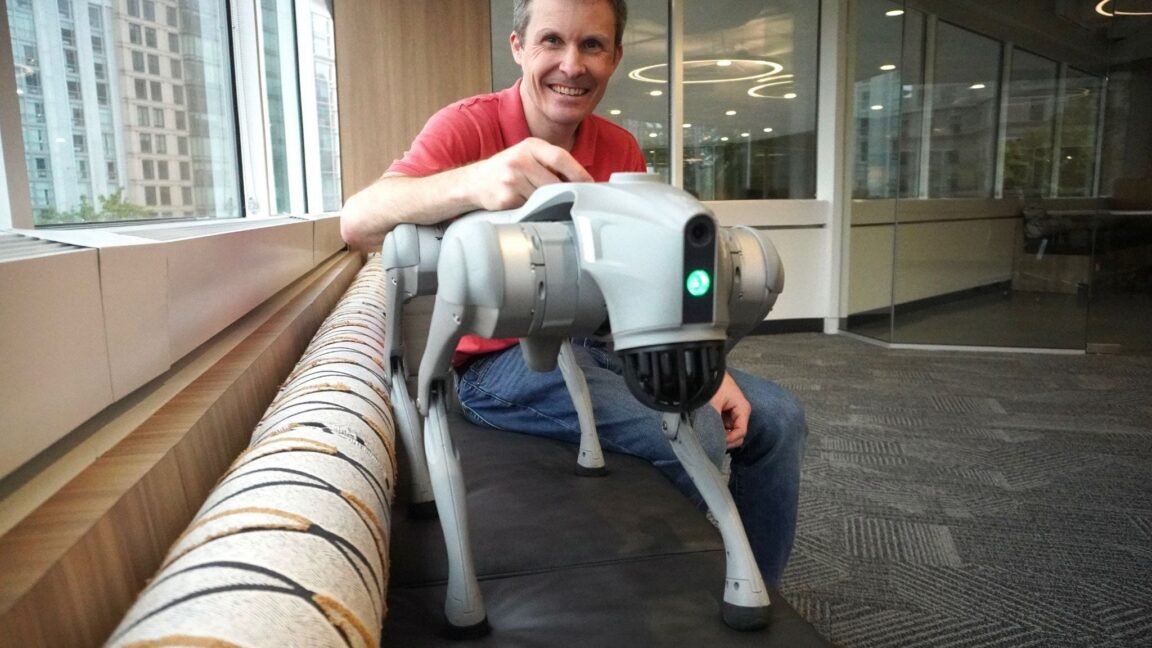
Four thousand dollars. That is the amount of hard-earned currency I parted with to acquire a Unitree Go2, a bipedal robot dog that looks less like a sci-fi prop and more like a piece of high-end consumer electronics that accidentally gained legs. The unboxing experience was a masterclass in modern manufacturing efficiency; the unit arrived in a compact, well-padded crate that felt lighter than its chassis should allow, hinting at the advanced carbon fiber and aluminum alloys that make up its frame. When I first powered it on, the silence was deafening. In an age where the expectation of AI is often accompanied by the whirring of servos and the groan of hydraulic systems, the Go2's ability to move with such quiet, fluid grace feels like a significant departure from the clunky, over-engineered industrial units we saw a decade ago.
The immediate allure of the device, however, goes beyond its aesthetic elegance or its surprisingly responsive gait. It represents a seismic shift in the robotics landscape, specifically signaling the rise of Chinese engineering as a global powerhouse that is rapidly overtaking Western incumbents. For years, the narrative was that robotics was a domain reserved for Silicon Valley giants and top-tier university labs with budgets in the millions. Unitree has shattered that ceiling by democratizing access to high-fidelity hardware. The Go2 isn't just a toy; it is a platform capable of running complex computer vision tasks, navigating uneven terrain, and even mimicking human movement patterns, all while costing a fraction of the price of a Boston Dynamics unit or a custom-built academic prototype.
What makes this purchase particularly fascinating is the sheer density of technology packed into such a small, affordable package. Under the hood, the robot relies on a sophisticated stack of sensors and processors that allow it to perceive the world in three dimensions, process that data in real-time, and adjust its balance with millisecond precision. I watched it leap over a low hurdle, twist its body mid-air to adjust its landing, and then recover from a near-slip with a reflex that would make an elite gymnast jealous. This is not magic; it is the result of years of iterative design, where engineers are likely pushing the boundaries of battery density, motor torque, and sensor fusion to create machines that are robust enough for real-world chaos but smart enough to understand it.
The implications of this cost-performance ratio cannot be overstated. If a university lab can deploy a fleet of these robots for a fraction of the cost of a traditional dog squad, the trajectory of research in autonomous systems accelerates exponentially. We are no longer limited by the budget of a single corporation; startups, hobbyists, and researchers worldwide can now touch the cutting edge of robotics without needing to write a venture-backed business plan first. The Go2 becomes a testbed for software, a platform for developers to build their own algorithms, and a proof-of-concept for industries ranging from logistics and inspection to search and rescue.
Yet, there is a sobering reality that accompanies this technological leap. The rapid ascent of companies like Unitree challenges the established geopolitical and economic narratives surrounding advanced manufacturing. It forces us to confront the idea that the future of automation is not the exclusive province of the West, but a global competition where speed of iteration and supply chain efficiency are the true currency. The $4,000 price tag is an entry fee into a future where robots are ubiquitous, but it also raises questions about safety, regulation, and the long-term economic impact of a workforce that can be augmented—or replaced—by machines that are increasingly indistinguishable from their organic counterparts.
As I walked the robot around my apartment, watching it navigate the clutter of daily life, I realized that we are standing at the precipice of a new era. The robot dog is more than just a gadget; it is a harbinger of a world where the line between biological and mechanical intelligence blurs, and where the tools we build to assist us are becoming more capable, more accessible, and more transformative than we ever imagined. The $4,000 investment was small in the grand scheme of things, but the insights it provided into the future of robotics were worth every penny.