Trump is proposing a US Space Academy — if created, it could blur the lines between NASA and the military (op-ed)
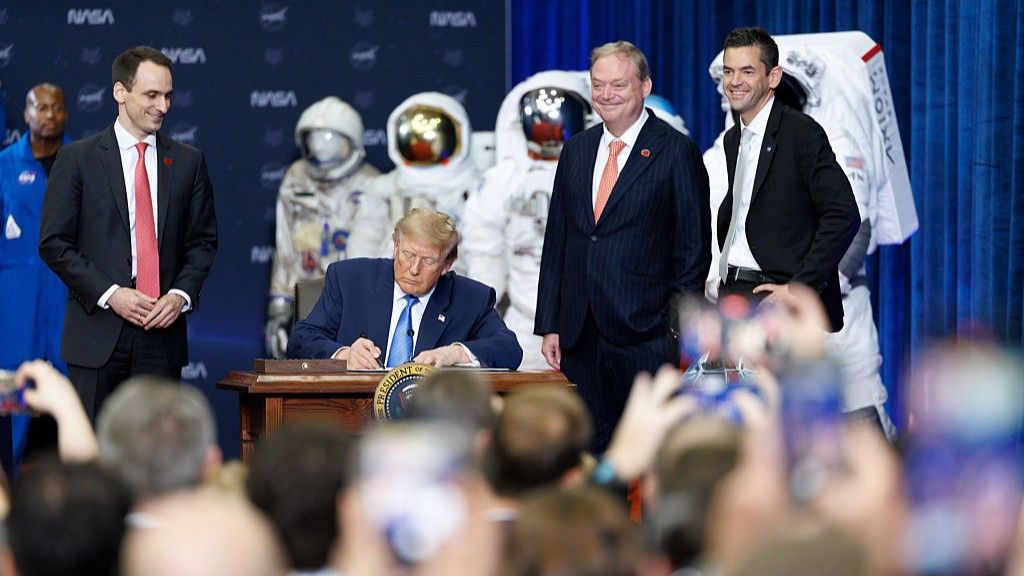
The vision of a standalone U.S. Space Academy, recently outlined in an executive order, presents a bold ambition that could fundamentally alter the architecture of American space governance. While the stated goal is to cultivate a new generation of leaders capable of navigating the complexities of the orbital domain, the structural implications risk creating a parallel universe where civilian science and military might become dangerously intertwined. The separation of powers that has defined the relationship between NASA and the Department of Defense for decades might erode, replaced by a hybrid entity that struggles to answer to whom it truly serves.
Historically, the distinction between the "civilian" realm of exploration and the "national security" realm of defense has been the bedrock of U.S. space policy. NASA was founded with a mandate to push the boundaries of human knowledge for the betterment of all humanity, free from the immediate pressures of tactical warfare. Conversely, the military has operated under a mandate of protection and dominance. Merging these two distinct cultures into a single academy, or worse, a single operational command structure, invites a friction that could stifle innovation. If the primary metric of success shifts from scientific discovery to strategic utility, the very spirit of open inquiry that fueled the Apollo missions may be suffocated by the rigidity of national security classifications.
Furthermore, the practical mechanics of such an academy raise significant questions about resource allocation and institutional identity. Will the academy prioritize the training of astronauts for deep-space exploration, or will it focus on producing operators for space-based surveillance and kinetic anti-satellite systems? The budgetary implications are staggering; diverting funds from the civil space program to a military-academic fusion could slow down critical research into propulsion, life support, and planetary science. We risk creating a situation where the most brilliant minds in the room are trained to view the cosmos not as a frontier of wonder, but as a contested theater of war, fundamentally changing the psychological landscape of spaceflight.
There is also the matter of international cooperation, a pillar upon which the International Space Station and global climate monitoring rely. A space academy with overtly military roots may find itself isolated from global partners who view the United States with caution when space policy is dominated by defense imperatives. The Artemis Accords, which aim to establish norms for sustainable lunar exploration, could be undermined if the training pipeline produces leaders who prioritize unilateral advantage over collective stewardship. The space environment is inherently international; it does not respect borders, and a purely militarized approach to education threatens to turn the cosmos into a zero-sum game.
Ultimately, the proposal requires a careful examination of its long-term consequences before any ink is dry on the order. The creation of a Space Academy is not merely an administrative reorganization; it is a philosophical statement about how we wish to engage with the universe. If the lines between NASA and the military blur too deeply, we risk losing the unique strengths of both institutions. The goal should be a space that elevates humanity, not one that fortifies the nation at the expense of the species. Without a clear roadmap to maintain this delicate balance, we may be building a tower of Babel rather than a bridge to the stars.