Michelle Bachelet withdraws from race to become UN secretary general
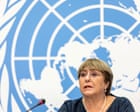
The dust of international diplomacy often settles quickly, revealing the stark reality that even the most decorated leaders cannot force their way into a seat they have not been given. Michelle Bachelet, a titan of the Latin American political landscape and a woman who has weathered coups, dictatorships, and the weight of national recovery, has chosen to step down from her bid to lead the United Nations. Her withdrawal, announced via a video message, is not a retreat born of defeatism, but a pragmatic acknowledgment that the machinery of the Security Council had simply refused to turn in her favor.
The path to the secretary-generalship is notoriously narrow, a gauntlet where consensus is the only currency that holds value. For Bachelet, the collapse of her candidacy in a straw poll among Security Council members served as a final, undeniable diagnostic. These informal votes are the pulse check of the global elite; when a candidate fails to garner the necessary nodding from the permanent powers, it signals a fundamental disconnect in geopolitical alignment. Despite her reputation as a compassionate leader and a former Chilean president who championed human rights, the specific configuration of global power in the coming years demanded a different narrative, one that Bachelet felt she could no longer project.
What makes this moment significant is not just the departure of a specific individual, but the shifting tectonic plates of the UN's future. The race now narrows to seven candidates, a pool from which the next head of the UN Secretariat will be drawn. This competition will likely be defined by the intersection of emerging economic powers, traditional Western influence, and the urgent demands of the Global South. Bachelet's exit leaves a vacuum that speaks to the increasing difficulty of finding a figure who can simultaneously satisfy the veto-wielding nations and the urgent moral imperatives of the current crisis-ridden world.
In her farewell, Bachelet did not speak of bitterness or the end of a dream, but of redirection. She pledged to continue her international work with the same determination that defined her presidency. This is a crucial distinction: it suggests that the mission she championed—social justice, women's rights, and sustainable development—will not die with her candidacy. Instead, it will evolve, carried forward by new hands within the UN system or in independent capacities. The determination she cites is perhaps her most enduring legacy, a force that transcends titles and temporary mandates.
The story of Bachelet's campaign also serves as a microcosm of the modern diplomatic dilemma: the tension between personal moral authority and the cold calculus of realpolitik. Leaders today are expected to be global problem-solvers, yet the systems they inhabit are often fragmented and resistant to change. Her withdrawal is a reminder that in the high-stakes arena of international governance, the will of the people behind a leader, however profound, must eventually be translated into the cold, hard votes of a select group of nations. Without that translation, even the most compelling vision remains unfulfilled.
As the race moves forward, the world watches to see who emerges from this fray. The next secretary-general will inherit a world teetering on the edge of climate catastrophe and geopolitical fracture. The question now is whether the remaining candidates can offer a path forward that transcends the divisions that saw Bachelet fall, or if the struggle for consensus will only intensify. In the silence left by her departure, the UN stands at a crossroads, waiting to see if the next leader can find a way to unite a fractured council, or if the institution will remain divided by the very forces it seeks to manage.
On Bluesky? Meet HomeSky.
Follower analytics, a growth toolkit, scheduling and AI posting — built for Bluesky. Connect your account and use everything free for 60 days.
Try HomeSky free →