Migrating the GitHub Copilot runtime to Rust, using Copilot
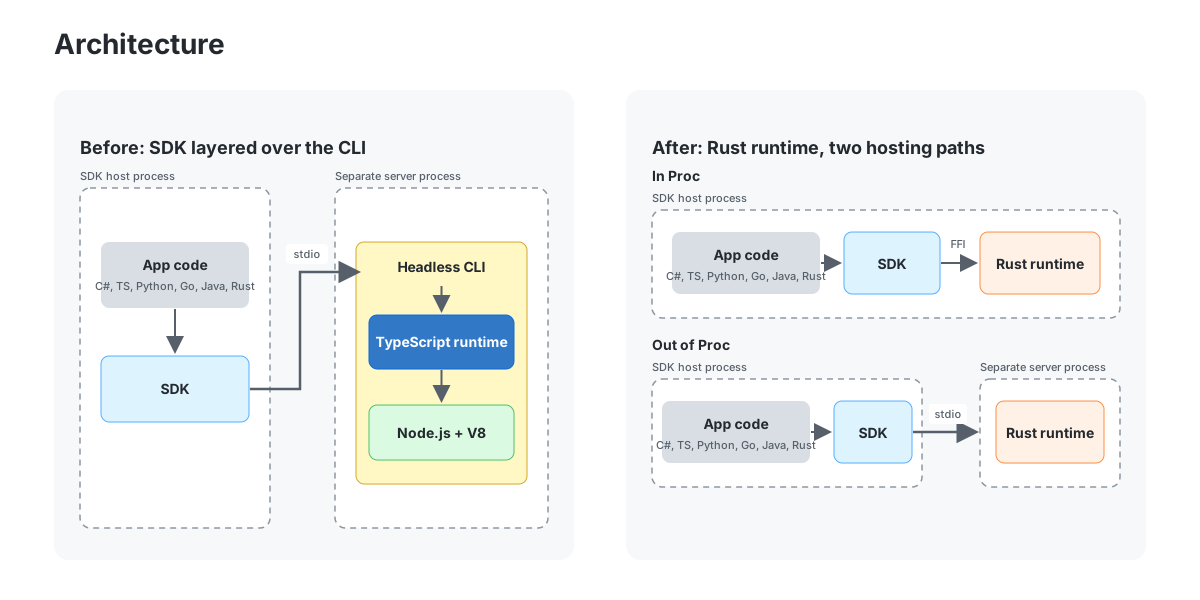
The decision to rewrite the GitHub Copilot runtime in Rust was never just a matter of swapping syntax or optimizing memory footprints; it was an existential test of whether modern software engineering had finally matured enough to handle its own complexity. For years, the idea of porting a massive, production-grade system to a new language seemed like a fool's errand, a luxury reserved for startups with infinite runway. Before the widespread availability of autonomous AI agents, the sheer volume of context required to understand 800,000 lines of legacy C++ code and translate it accurately was a wall that no human team could scale. The old way relied on tribal knowledge, pair programming, and months of manual review, a process so expensive and fragile that it effectively locked the project into its existing technical debt forever.
Then the paradigm shifted, and suddenly the impossible became a manageable project. We didn't just have a tool that suggested the next line of code; we had an agent capable of understanding the intent behind the rewrite, navigating the intricate dependencies of the runtime, and making high-level architectural decisions on the fly. Using Copilot to migrate Copilot itself created a recursive loop of efficiency that defied traditional estimation models. The agent didn't just generate boilerplate; it understood the specific failure modes of the old implementation and proactively ensured the new Rust version handled edge cases that a human developer might have overlooked in the rush to finish the port.
The technical challenges were not merely about language features, but about the fidelity of the translation. Rust's strict ownership model and borrow checker demanded a level of precision that the legacy C++ code often lacked, relying on implicit undefined behavior that modern compilers would happily reject. The agent had to act as a translator of intent, not just a transcriber of logic, stripping away the defensive null checks and manual memory management that had bled into the codebase over decades. It was a surgical operation where the AI identified the core logic and rebuilt the foundation from the ground up, ensuring that every pointer and every resource allocation adhered to the new language's rigorous standards without losing a single ounce of functionality.
What emerged was a system that was not only faster and safer but also significantly more maintainable. The resulting codebase is leaner, with the borrow checker doing much of the heavy lifting that previously required extensive documentation and comments. This shift allows the engineering team to move at a pace previously unimaginable, confident that the runtime will remain robust as it evolves. The migration serves as a powerful testament to the potential of AI in software development, moving us from a model where we simply write code to one where we architect and validate systems with unprecedented speed and accuracy.
Looking back, the rewrite was less about the language and more about the timeline it unlocked. What would have taken years of grueling effort and likely resulted in a buggy, half-finished product was completed in a fraction of the time, with higher quality to boot. It proved that when you equip developers with the right tools, the barriers to entry for high-assurance systems begin to dissolve. The journey from a legacy monolith to a modern, statically typed powerhouse wasn't just a technical victory; it was a validation of a new era where the most complex problems are solved not by working harder, but by working smarter.
On Bluesky? Meet HomeSky.
Follower analytics, a growth toolkit, scheduling and AI posting — built for Bluesky. Connect your account and use everything free for 60 days.
Try HomeSky free →