Migrating the GitHub Copilot runtime to Rust, using Copilot
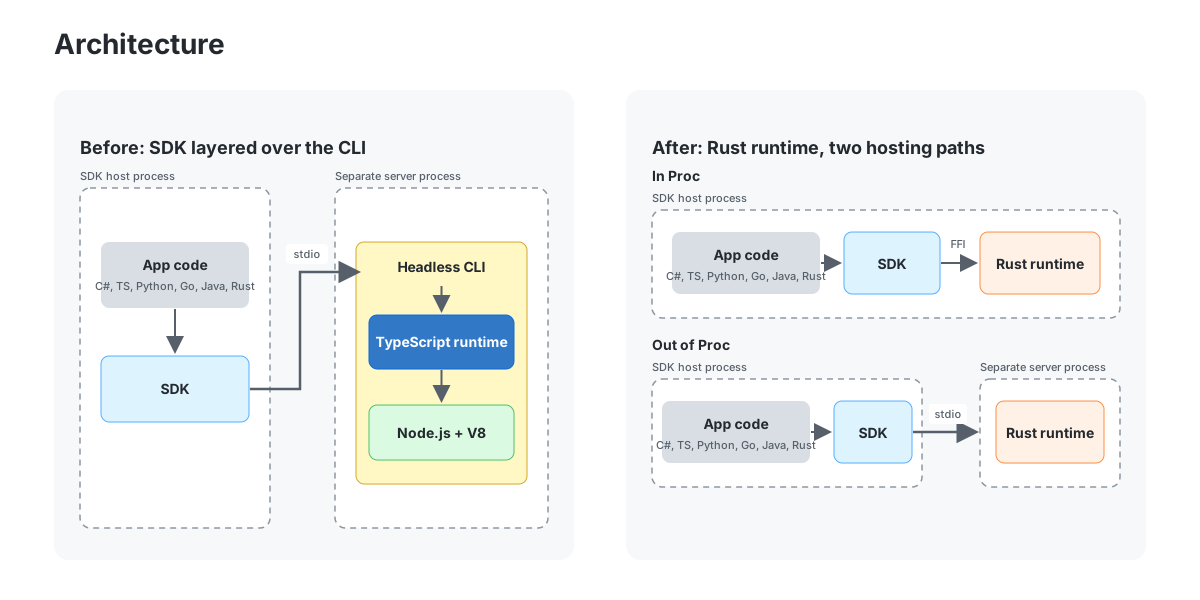
For years, the dream of rewriting the GitHub Copilot runtime in Rust felt like a distant fantasy, a technical ambition that simply wasn't economically viable. The sheer scale of the existing agent logic, buried deep within a massive codebase, meant that the cost of migration outweighed the potential performance gains. Developers could write it, but no one could afford to execute the rewrite. That changed only when the tools evolved, specifically when we handed the very agents we were trying to rewrite the keys to their own refactoring.
Porting eight hundred thousand lines of production Rust code is not merely a matter of translating syntax; it is a profound exercise in understanding intent, context, and architectural nuance. The Copilot agent runtime, which powers the intelligent suggestions developers rely on daily, required a level of precision that manual rewriting could not guarantee. We needed a system that could read its own soul, identify legacy patterns, and restructure them without breaking the delicate ecosystem built around them. The result was a seamless transition that preserved functionality while introducing the speed and safety characteristics inherent to the Rust language.
The narrative of this migration is one of self-correction and recursive intelligence. By leveraging Copilot within the rewrite process, we created a feedback loop where the agent analyzed its own previous suggestions, identified inefficiencies, and iteratively refined the code. This wasn't just about generating boilerplate; it was about guiding a sophisticated AI through the labyrinth of enterprise-grade logic, teaching it to understand the subtle trade-offs between performance, readability, and maintainability. The agent essentially became its own architect, deconstructing the old world and building a new one from the ground up.
What makes this achievement particularly significant is the shift in how we approach large-scale system modernization. Traditionally, such projects involve months of toil, fraught with the risk of introducing bugs during the transition. Here, the process was accelerated and de-risked by the very technology that needed upgrading. It demonstrates a paradigm shift where the tools of development are no longer static instruments but dynamic partners capable of evolving alongside the infrastructure they support.
Looking back, the rewrite feels less like a struggle against time and more like a collaboration with an intelligent force that anticipated the next logical step before we did. The outcome is a runtime that is faster, safer, and more robust, yet the journey there serves as a testament to the power of adaptive technology. It proves that when the right tools meet the right vision, the impossible becomes not just affordable, but inevitable.
On Bluesky? Meet HomeSky.
Follower analytics, a growth toolkit, scheduling and AI posting — built for Bluesky. Connect your account and use everything free for 60 days.
Try HomeSky free →