On Concrete Remnants of London’s Aylesbury Estate, Harriet Mena Hill Preserves a Community
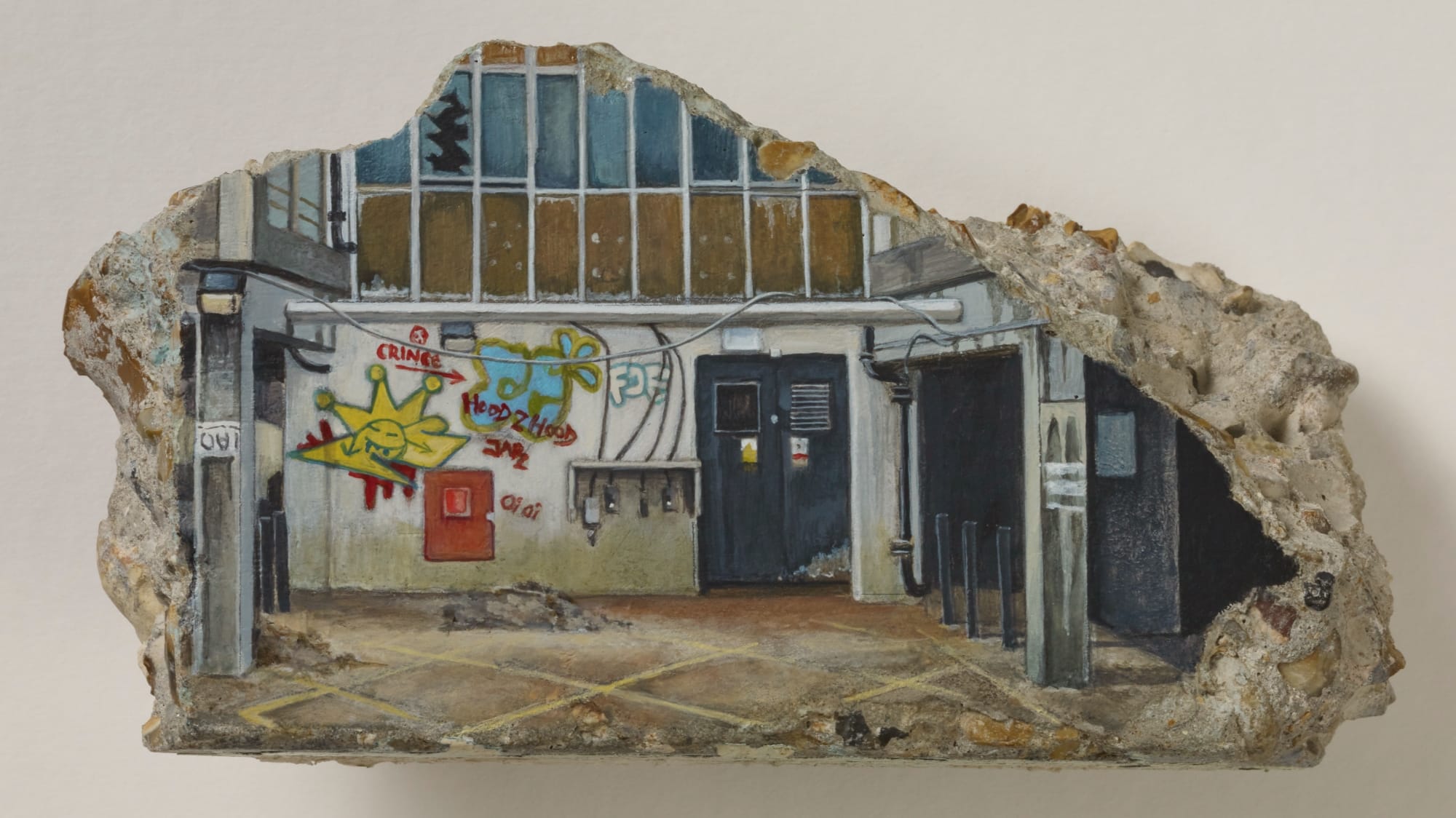
The Aylesbury Estate in London once stood as a monumental experiment in social housing, a sprawling concrete labyrinth designed to house thousands of families with a promise of community and stability. For decades, it was the backdrop to everyday life, a place where neighbors knew each other and the rhythm of the estate dictated the flow of time. Yet, as urban planning theories shifted toward denser, more mixed-use developments, the estate began to face an uncertain future, with plans for demolition hanging over its residents like a grim cloud.
Enter Harriet Mena Hill, an artist and documentarian who decided to confront this impending erasure not with protest, but with preservation. Her project is a quiet act of resistance, a deliberate effort to capture the soul of a community before the bulldozers arrive. She walks the corridors, captures the light, and records the conversations, treating every brick and every face as a vital piece of a narrative that could easily vanish. This is not merely about saving photos; it is about saving a specific way of living, a unique social fabric that has been woven together by shared struggles and triumphs.
The significance of Hill's work lies in its ability to humanize the abstract concepts of urban renewal and gentrification. When cities speak of "progress" or "modernization," they often overlook the human cost, the loss of history, and the displacement of people who have called these spaces home for generations. Hill forces us to pause and ask what we are losing in the name of development. Her documentation serves as a testament to the resilience of the people who inhabit these spaces, proving that a community is defined not just by its architecture, but by the relationships that flourish within its walls.
There is a profound poignancy in the contrast between the cold, imposing nature of the concrete and the warm, chaotic vibrancy of the lives lived within it. The estate is a character in itself, a structure that has weathered storms and witnessed generations of growth and decay. By focusing on these remnants, Hill highlights the tension between the permanence of stone and the fleeting nature of human habitation. She reminds us that while buildings may crumble, the memories and stories they shelter can endure if we take the time to record and honor them.
This kind of artistic intervention matters deeply in an era where independent voices often struggle to be heard amidst the noise of corporate development narratives. It challenges the notion that progress is linear and inevitable, suggesting instead that preservation is an act of care and responsibility. For those who support independent arts publishing, stories like this are not just aesthetic exercises; they are essential tools for maintaining a critical perspective on the world around us, ensuring that the complexities of human existence are never reduced to simple metrics of efficiency.
Ultimately, Harriet Mena Hill's project is a beacon of hope, a reminder that even in the face of destruction, there is power in observation and memory. It invites us to look closer at the places we live and to recognize the invisible threads that bind us to our neighbors and our history. By supporting the work of artists who document these crucial moments, we ensure that the legacy of places like the Aylesbury Estate is not lost to the dust, but kept alive in the collective consciousness of those who care about the stories we share.
On Bluesky? Meet HomeSky.
Follower analytics, a growth toolkit, scheduling and AI posting — built for Bluesky. Connect your account and use everything free for 60 days.
Try HomeSky free →