Webinar 9/23: NASA CSDA Program Update 2026
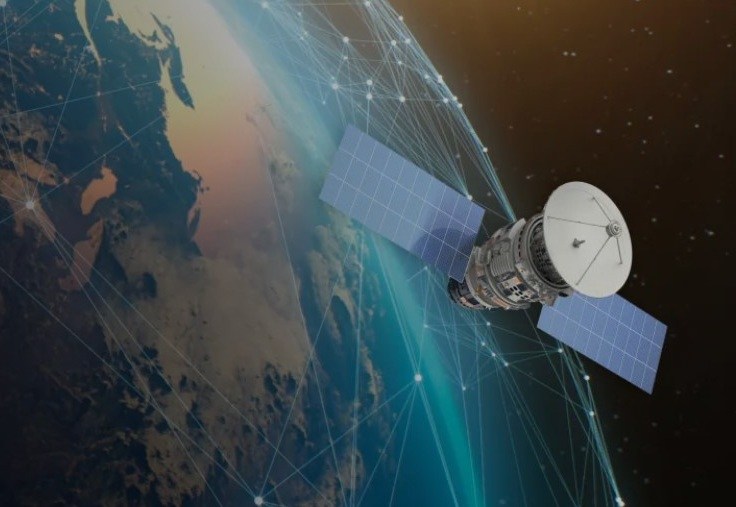
In the relentless race to map the cosmos with increasing precision, the margin between a good dataset and a world-class scientific asset is often found not in the telescope itself, but in the ground-truthing that follows. It is a humble yet critical phase where theoretical models are tested against the messy, beautiful reality of Earth's own atmosphere and surface. The NASA CSDA program, or Climate Science Data Analysis, has long served as the quiet engine room for this process, ensuring that the streams of photons captured from orbit are translated into accurate, actionable climate variables. As we look toward the horizon of 2026, the stakes for this program have never been higher, driving a necessary evolution in how we validate our instruments and understand our planet's changing systems.
The core mandate of the CSDA initiative remains steadfast: to provide the rigorous calibration and validation, or Cal/Val, that underpins every major climate dataset produced by the agency. However, the landscape of remote sensing is shifting beneath our feet, or rather, above our heads. New sensors are being launched with greater sensitivity and novel spectral capabilities, promising to see the world in ways previously impossible. Yet, without a robust framework to verify these new capabilities, we risk building a tower of data on a foundation of unverified assumptions. The upcoming update is less about announcing new discoveries and more about fortifying the infrastructure that allows those discoveries to stand up to the most severe scrutiny.
Central to this upcoming discussion is the introduction of a new Cal/Val initiative, a strategic pivot designed to address the growing complexity of modern sensor suites. Traditional validation methods, while effective for decades, are increasingly struggling to keep pace with the sheer volume and variety of data streams now flooding our servers. The new initiative promises to integrate machine learning algorithms with classical statistical analysis, creating a dynamic feedback loop where model predictions are constantly tested against independent ground measurements. This is not merely a technical upgrade; it is a philosophical shift toward a more agile, responsive science that can adapt in real-time as our understanding of climate dynamics deepens.
Why does this matter to the broader scientific community and the public alike? Because the decisions we make regarding carbon budgets, sea-level rise projections, and extreme weather attribution rely entirely on the integrity of the data we ingest. If the validation is flawed, the policy recommendations built upon that data are, by extension, compromised. The CSDA program acts as the guardian of this integrity, ensuring that the climate models used by policymakers are not just mathematically sound, but physically representative of the Earth we inhabit. The 2026 update represents a commitment to maintaining that trust in an era where misinformation is rampant and the need for undeniable, peer-reviewed truth is paramount.
Looking ahead, the synergy between the CSDA program and the wider NASA ecosystem will be the defining feature of this year's webinar. We are moving toward a future where data analysis is not a siloed activity but a collaborative, cross-disciplinary endeavor involving atmospheric scientists, oceanographers, and glaciologists working in tandem. The new Cal/Val initiative will serve as the common language through which these disciplines speak to one another, breaking down barriers that have historically slowed the pace of climate research. By 2026, we anticipate a networked approach to validation that is faster, more comprehensive, and far more resilient to the uncertainties of a changing climate.
This webinar on September 23rd is not just a status report; it is a roadmap for the next generation of climate science. It invites us to reconsider how we define accuracy and how we build confidence in the numbers that describe our planetary home. As we face the dual challenges of immediate climate impacts and long-term planning, the rigor of our data analysis becomes our most potent tool. The CSDA program's evolution into 2026 signals a maturation of the field, moving from simple observation to a sophisticated, self-correcting system of knowledge that will guide humanity through the coming decades.
On Bluesky? Meet HomeSky.
Follower analytics, a growth toolkit, scheduling and AI posting — built for Bluesky. Connect your account and use everything free for 60 days.
Try HomeSky free →