CubeSat Instrument Extends Solar Storm Warnings 10x
For decades, humanity has watched the Sun with a mix of reverence and trepidation. It is the benevolent guardian that warms our oceans and powers the photosynthesis that breathes life into our atmosphere, yet it remains a volatile neighbor capable of unleashing geomagnetic storms that can fry satellites, disrupt power grids, and endanger astronauts. Historically, our ability to predict these space weather events was limited to a few hours of lead time, often leaving critical infrastructure vulnerable to sudden surges in radiation and charged particles.
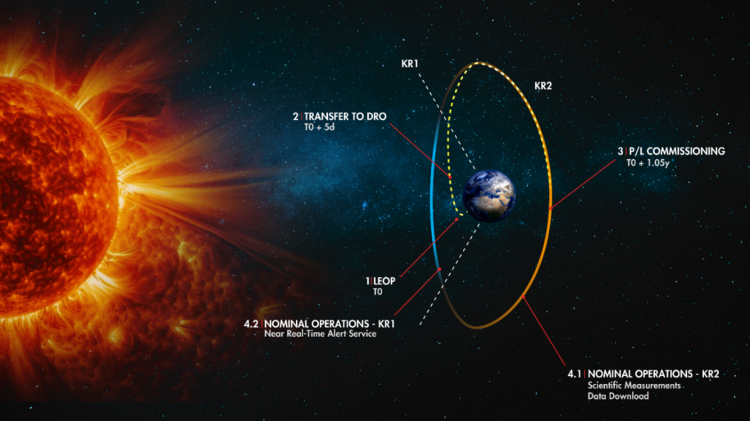
That window of opportunity is now expanding significantly, thanks to a small, inexpensive satellite known as a CubeSat. While these tiny satellites are often dismissed as mere proof-of-concept toys, recent developments show they can carry sophisticated instrumentation capable of detecting solar activity much closer to Earth than previous observatories. By positioning a sensor on a CubeSat in low Earth orbit or even on a spacecraft trailing behind the Moon, scientists can detect solar wind density and magnetic field changes before they impact our planet, effectively multiplying the warning time by a factor of ten.
This tenfold increase in lead time is not merely a statistical improvement; it is a game-changer for global safety. In the world of space operations, a ten-minute difference might be negligible to a layperson, but for a satellite operator managing a constellation of communication or navigation assets, it is the difference between a graceful shutdown and a catastrophic failure. Similarly, for grid operators on the ground, an extra hour to reconfigure transformers and shed load can prevent blackouts that could last for days, ensuring that hospitals, financial centers, and emergency services remain operational during a solar flare event.
The journey to this breakthrough highlights a broader shift in how we approach space exploration and science. For years, the assumption was that high-value scientific data required massive, billion-dollar missions, but the modular design of CubeSats has democratized access to orbital telemetry. By deploying these instruments alongside major missions, researchers can create a dense network of sensors that provides real-time, granular data on the solar wind. This approach turns the vastness of space from a mysterious void into a monitored neighborhood, where we can track the movement of solar energy with the precision of a traffic control system monitoring a busy highway.
As we continue to rely more heavily on technology that orbits the Earth or ventures beyond it, the resilience of our systems will depend on our ability to anticipate the invisible forces that govern our environment. The new data streams provided by these advanced CubeSat instruments will feed into better forecasting models, allowing for more accurate predictions of when and how severe a storm will be. This evolution represents a critical step forward in protecting not just our expensive technological assets, but the delicate fabric of modern society that depends on the stable operation of space-based infrastructure.
On Bluesky? Meet HomeSky.
Follower analytics, a growth toolkit, scheduling and AI posting — built for Bluesky. Connect your account and use everything free for 60 days.
Try HomeSky free →