Astronomy’s Decades-Long Quest To Understand Cosmic Topology
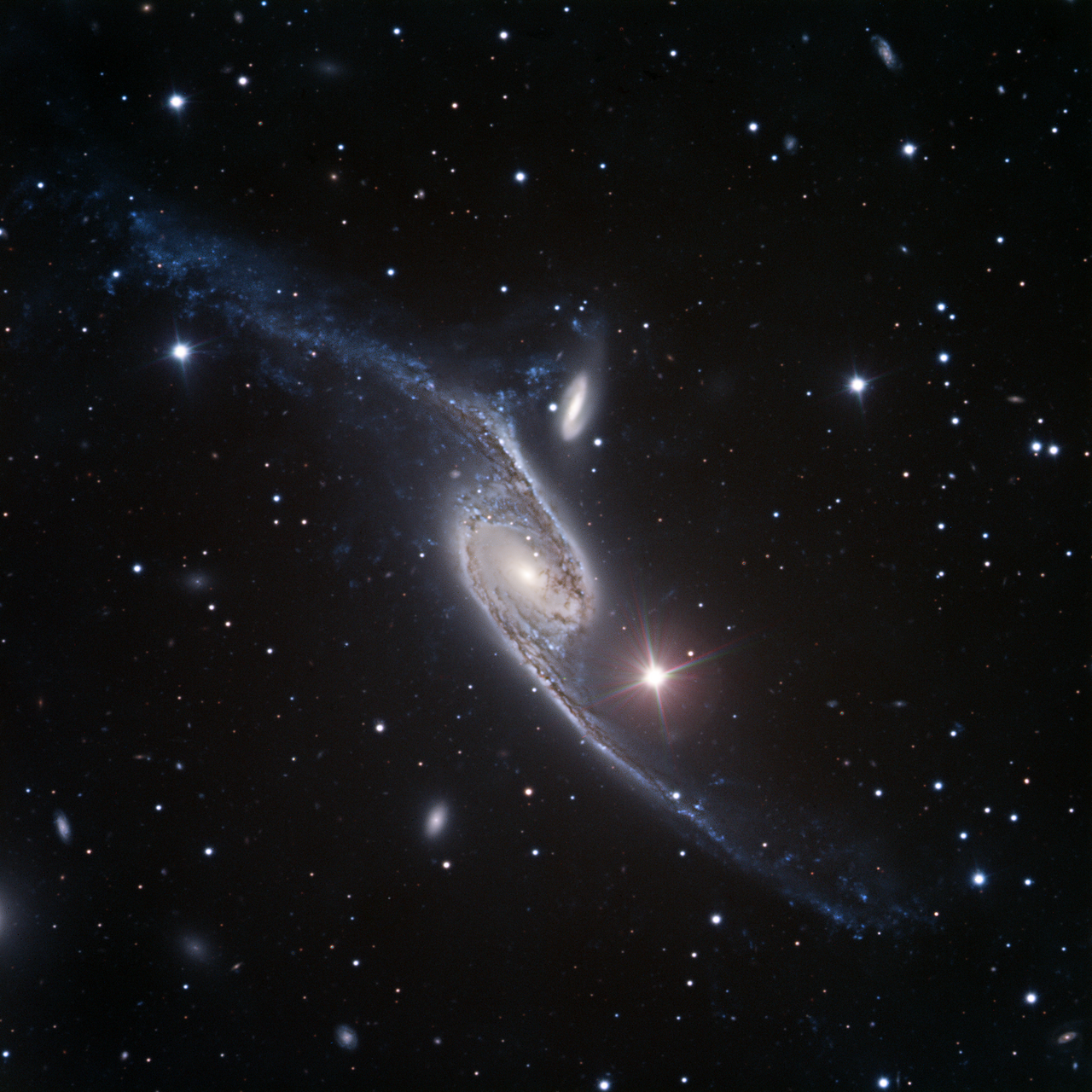
We often imagine the universe as a simple, infinite expanse of stars stretching out forever in every direction, a flat plane where geometry holds true and parallel lines never meet. Yet, for decades, a quiet but fervent debate has simmered among cosmologists regarding the true shape of this cosmic canvas. While standard cosmology assumes a flat, Euclidean geometry on the largest scales, a growing number of astrophysicists argue that the universe might possess a complex topology, perhaps looping back on itself like a donut or a torus, or even curving in ways that challenge our most basic intuitions about space.
The stakes of this inquiry are profound, touching the very foundations of how we perceive reality. If the universe is finite but unbounded, it implies that there is a limit to the total amount of matter and energy in existence, even if that limit is so vast it is practically infinite to our current observational capabilities. This possibility transforms the cosmos from a boundless void into a closed system, a finite gallery where the light from the most distant galaxies could theoretically circle the entire expanse and return to us as a faint, ghostly echo of our own beginning.
Detecting such a cosmic signature is an exercise in finding a needle in a haystack that is both the universe and the needle. The primary evidence sought is known as "circles-in-the-sky," patterns in the cosmic microwave background radiation that would indicate light having traveled around the universe more than once. Despite decades of sensitive observation and increasingly powerful telescopes, these repeating patterns have remained elusive, leading many to favor the simplest model: an infinite universe. However, the absence of evidence is not evidence of absence, especially when the scale of potential loops may exceed the observable horizon.
The philosophical implications of a finite, topologically complex universe are staggering. If space is indeed a closed loop, then in a literal sense, there could be a duplicate version of Earth somewhere in the cosmos, just a journey away in one direction. While the probability of encountering such a duplicate within the observable universe is negligible, the theoretical possibility forces us to reconsider our place in the grand scheme. It suggests that the laws of physics are uniform everywhere, yet the architecture of space itself might be a labyrinthine puzzle waiting to be solved.
As we push the boundaries of our observational capabilities, the question of cosmic topology remains one of the most haunting mysteries in modern astronomy. It is a reminder that even after centuries of looking up at the night sky, the deepest secrets of the cosmos may lie not in the stars themselves, but in the invisible fabric that holds them. Until we find the smoking gun in the cosmic background radiation, the universe retains its mystery, a vast, potentially finite ocean whose true shape remains hidden beneath the surface of our current understanding.
On Bluesky? Meet HomeSky.
Follower analytics, a growth toolkit, scheduling and AI posting — built for Bluesky. Connect your account and use everything free for 60 days.
Try HomeSky free →