Best SaaS Metrics Platforms: 8 Tools Compared for 2026
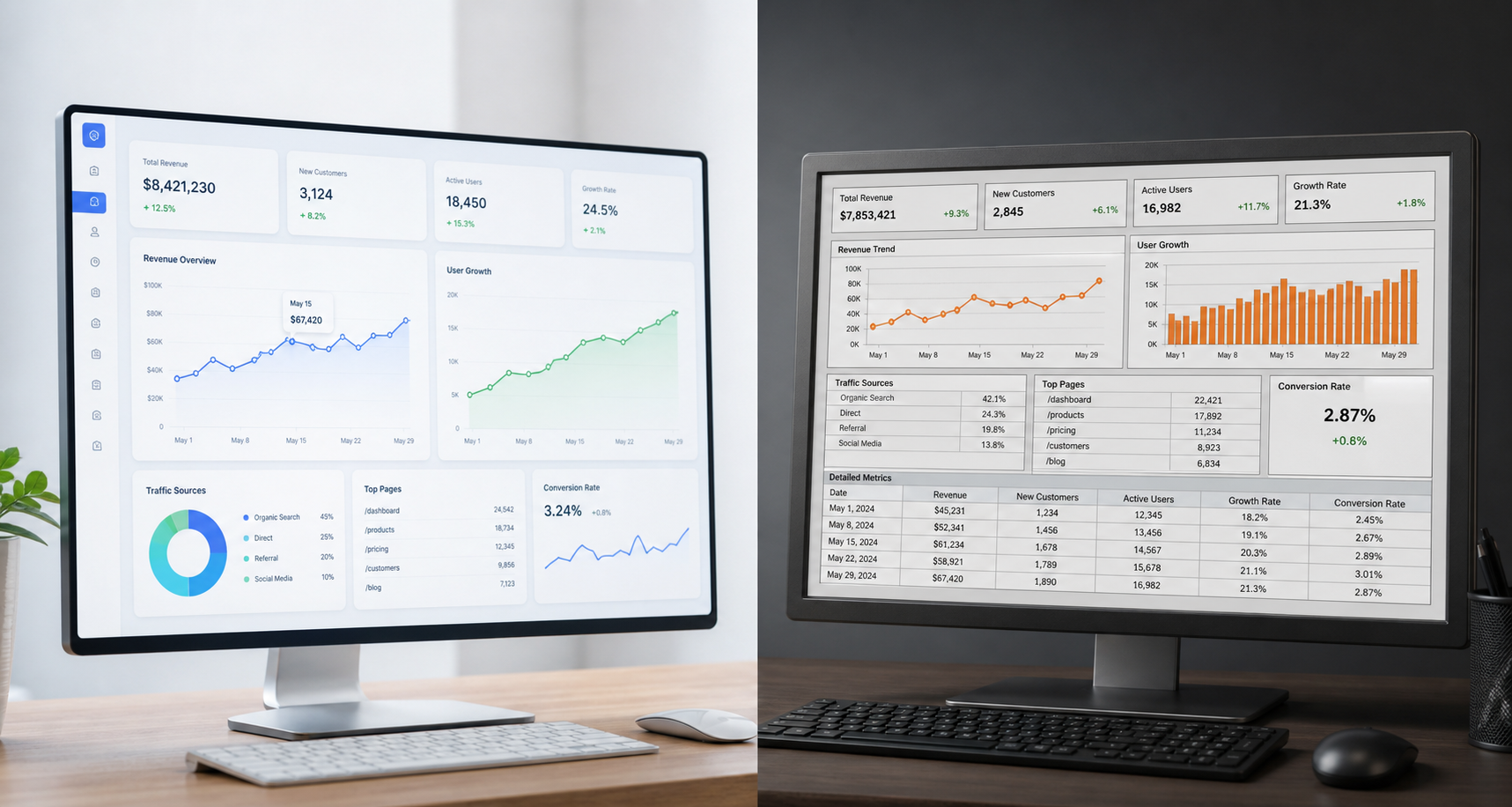
SaaS metrics is not one category. It is three measurement jobs that happen to share a vocabulary, and the best SaaS metrics platforms are each built for one specific purpose. For decades, the industry operated under the delusion that a single dashboard could solve every growth problem, but the reality of modern B2B and B2C markets has fractured the landscape. You have your financial accountability metrics for CFOs, your product health metrics for engineering teams, and your growth levers for marketing and sales. Confusing these three is not just an analytical error; it is a strategic liability that can derail an entire product roadmap.
The friction begins when a company tries to force a complex financial model into a tool designed for simple event tracking. Imagine asking a line-of-business unit to predict cash flow based on a dashboard built for session duration. The data might look nice, but the context is wrong. The tools that succeed in 2026 are those that refuse to generalize. They recognize that a metric like Customer Lifetime Value (LTV) requires a different engine than a metric like Churn Rate, and that the latter needs to be viewed through the lens of product usage, not just revenue.
This segmentation has created a paradox in the market. On one hand, we see a proliferation of all-in-one suites that promise universal analytics. On the other, we see a resurgence of specialized tools that offer deeper, more accurate insights into specific domains. The winners are not the ones with the most features, but the ones with the sharpest focus. A platform that can accurately model cohort retention is useless if it cannot handle the complexity of multi-touch attribution, and vice versa. The best platforms of 2026 are those that understand this distinction and build their architecture to respect it, rather than trying to flatten it.
Choosing the right tool is no longer about picking the cheapest subscription or the one with the flashiest UI. It is about aligning the instrument with the job to be done. If your primary challenge is proving ROI to the board, you need a financial-grade platform that speaks the language of revenue and profit. If your challenge is understanding why users are leaving, you need a product analytics suite that dives into the granular moments of friction. Trying to do both with a single tool often results in a mediocre experience for everyone involved, as the data gets stretched thin across incompatible frameworks.
As we move deeper into the next cycle of software evolution, the ability to switch contexts will become a superpower. Teams that can rapidly pivot from a high-level financial view to a deep-dive product analysis without losing data integrity will outmaneuver their competitors. The future belongs to organizations that treat metrics not as static reports, but as dynamic conversations tailored to the specific audience and the specific question at hand. The technology exists to make this possible; the challenge now is simply having the discipline to use it correctly.
Ultimately, the race is not to the fastest dashboard, but to the deepest understanding. The platforms that define the era of 2026 will be those that help founders and operators see the truth behind the numbers, regardless of whether that truth lives in a spreadsheet, a SQL query, or a real-time event stream. By acknowledging that metrics are diverse and distinct, companies can finally stop guessing and start building with precision.
On Bluesky? Meet HomeSky.
Follower analytics, a growth toolkit, scheduling and AI posting — built for Bluesky. Connect your account and use everything free for 60 days.
Try HomeSky free →