NASA's Hubble Telescope Reaches Milestone, Looks for Elusive Supernova
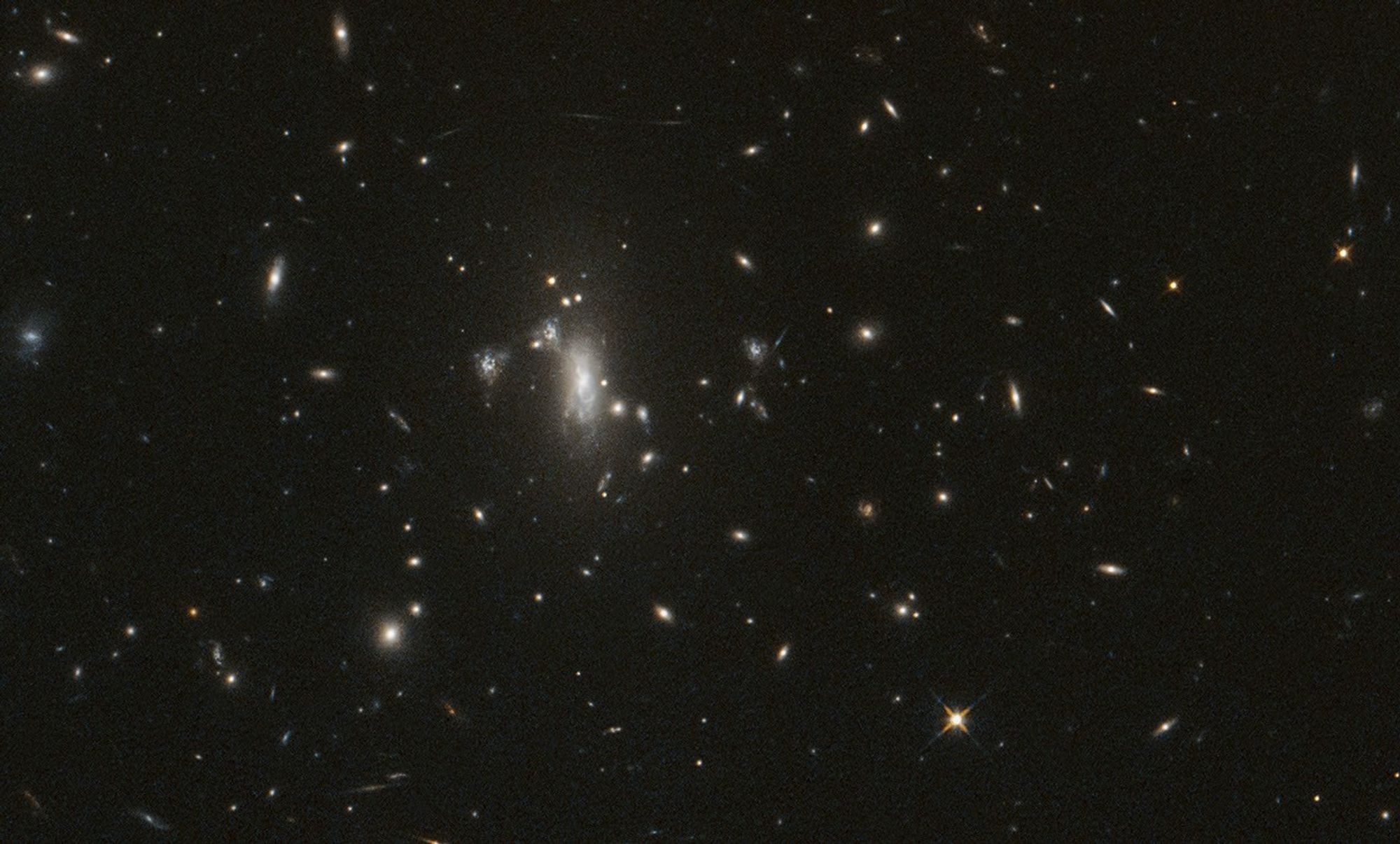
Imagine looking out at the cosmos not as a static tapestry of stars, but as a living, breathing entity where light travels back in time to reveal the universe's history. It is a humbling thought, one that the Hubble Space Telescope has dedicated its life to exploring. Among its many achievements, Hubble recently turned its gaze toward the galaxy cluster MACS J0417, a gravitational lensing masterpiece that acts like a cosmic magnifying glass. This observation is not merely an act of staring into the void; it is a strategic hunt for a specific, elusive event known as Supernova Athena.
Supernova Athena is a rare phenomenon, a Type Ia supernova that has already exploded and faded from view, only to reappear hours later. This reappearance is the key to unlocking a mystery that has plagued astronomers for decades: the precise rate at which the universe is expanding. By measuring the time delay between the first detection of the supernova and its second appearance through the warped light paths of the cluster, scientists can triangulate the expansion rate with unprecedented accuracy. It is a geometric solution to a cosmological problem, turning the distortion of space itself into a measuring tape.
The significance of this milestone cannot be overstated because it directly challenges and refines our understanding of the universe's ultimate fate. If the expansion rate differs from current models, it could imply new physics or require a revision of our knowledge regarding dark energy. The image from Hubble, capturing the intricate arcs and rings of MACS J0417, is not just pretty art; it is the data canvas upon which this calculation is painted. Every pixel in that image represents a calculation of how light bends around massive objects, creating a natural laboratory for testing the fundamental rules of reality.
This pursuit requires a level of patience and precision that defines the very best of scientific endeavor. Astronomers have been waiting for these specific conditions to align, knowing that the opportunity is fleeting. When the supernova does reappear, the team must act with lightning speed, coordinating observations across different filters and instruments to capture the fleeting light before it vanishes into the darkness again. It is a race against time, a race against the laws of physics themselves, driven by the profound desire to know where our home in the cosmos is going.
As we watch the data come in, we are participating in a story that began billions of years ago and continues right now, in real-time. The universe does not care about our schedules or our calendars, yet it provides us with moments of clarity that allow us to grasp its scale. The reappearance of Supernova Athena serves as a reminder that the cosmos is dynamic and mysterious, holding secrets that we are slowly, piece by piece, beginning to understand. Through the lens of Hubble, we are not just observers; we are detectives solving the greatest mystery of all.
On Bluesky? Meet HomeSky.
Follower analytics, a growth toolkit, scheduling and AI posting — built for Bluesky. Connect your account and use everything free for 60 days.
Try HomeSky free →