Could the Clues to Ancient Alien Civilizations Be Hiding in a Bucket of Moon Dust?
For decades, the Search for Extraterrestrial Intelligence has been a game of cosmic telephone, where we eagerly wait for a beep, a hum, or a laser flash across the void. Our entire strategy rests on a fragile assumption: that if intelligent life exists elsewhere, it is currently broadcasting its presence just as we are listening. This approach suffers from a profound synchronicity problem, akin to trying to meet a stranger in a city of billions by shouting their name in a crowded square, hoping they happen to be standing right next to you at that exact second. If an ancient civilization rose and fell a billion years ago, or if they exist in a distant galaxy without a radio spectrum to exploit, our current methods render us deaf to their existence.
The universe is ancient, stretching back thirteen billion years, and the window during which humanity has been actively scanning the skies is a mere blink in that timeframe. We are hoping that we, as a species capable of deciphering complex mathematics and engineering, have stumbled upon another civilization at the precise moment they are also looking back at us. This statistical improbability suggests that we might be missing the most obvious evidence of past life simply because we are looking for the wrong type of signal. We have been so obsessed with active transmission that we have neglected the quiet, silent archives that might hold the answers to our deepest questions.
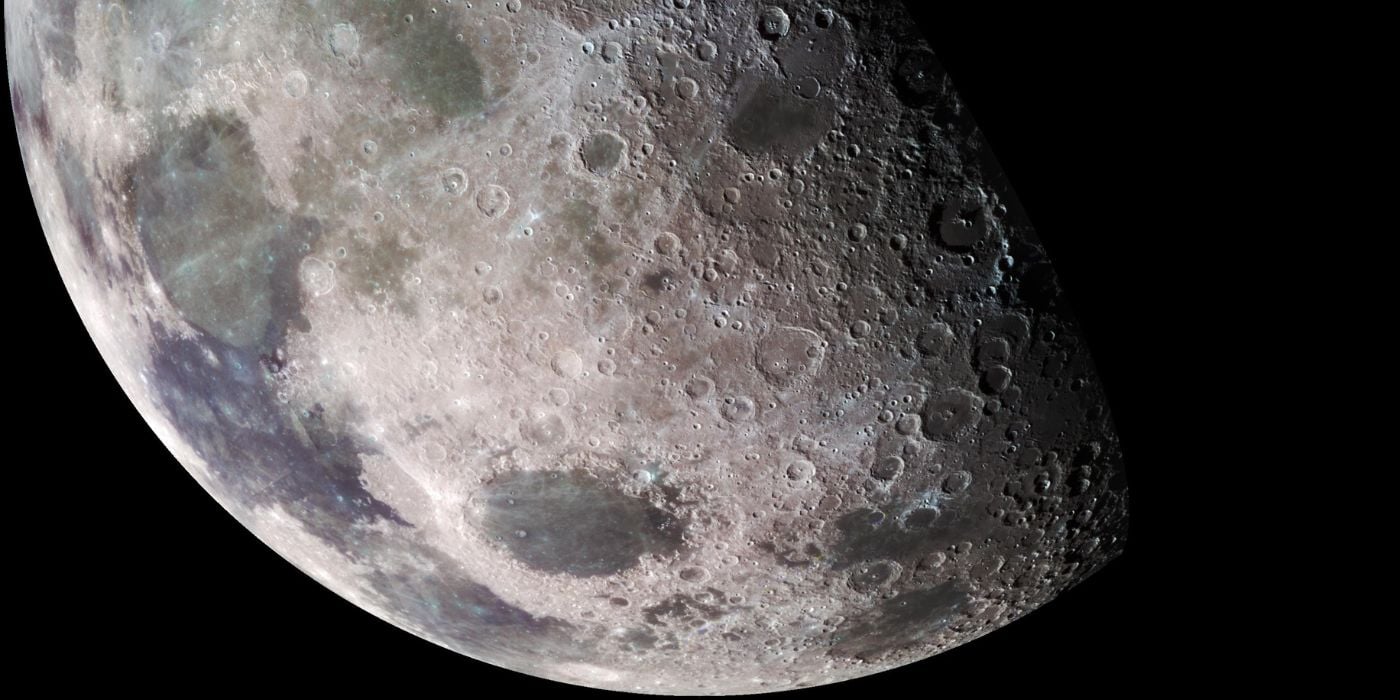
A new perspective emerging from the scientific community suggests that the key to unlocking the secrets of ancient alien civilizations may not be in the sky, but in the dirt beneath our boots. A recent pre-print paper proposes that the dust collected from the Moon could contain the fossilized signatures of long-dead technological societies. Unlike radio waves, which fade into oblivion over vast distances and time, solid matter and chemical byproducts of industry can persist for eons, preserved in the vacuum of space and shielded from the erosive forces that tear apart terrestrial records.
The logic is grounded in the durability of physical evidence versus ephemeral signals. If an advanced species mined asteroids, built megastructures, or conducted atmospheric processing billions of years ago, the chemical fingerprints of their activities could remain embedded in the regolith. These artifacts would not require a conscious effort to transmit; they would simply exist, waiting to be discovered by a future civilization capable of the necessary excavation and analysis. The Moon, with its lack of atmosphere and geological activity, acts as a pristine storage vault, preserving a timeline of cosmic events that Earth's dynamic geology would have long since erased.
This shift in focus represents a paradigm change in astrobiology, moving from a search for active communication to a detective story of forensic astronomy. Instead of tuning our ears to the radio spectrum, we must train our eyes and instruments to read the history written in the composition of lunar soil. It challenges the anthropocentric view that intelligence is defined by its ability to communicate, suggesting instead that intelligence leaves a trail of physical consequences that are far more enduring than any message ever sent.
Ultimately, the discovery of such clues would rewrite our understanding of our place in the cosmos. It would imply that we are not alone, not in the sense of a current neighbor waving hello, but as descendants of a vast, silent forest of civilizations that have long since gone quiet. The bucket of moon dust might not just be soil; it could be the library of a universe we have yet to learn how to read, holding within its grains the profound truth that we are not the first, nor perhaps even the last, to walk the stars.
On Bluesky? Meet HomeSky.
Follower analytics, a growth toolkit, scheduling and AI posting — built for Bluesky. Connect your account and use everything free for 60 days.
Try HomeSky free →