For the first time, the US military confirms it has deployed weapons in orbit
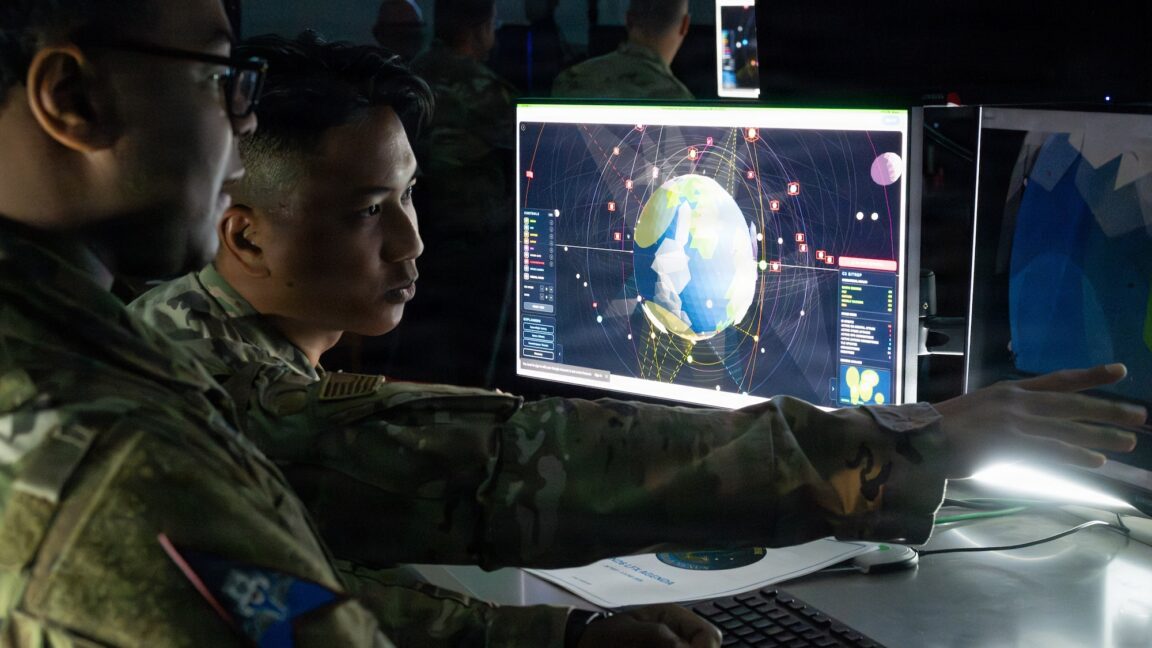
For decades, the concept of a weapon in orbit was the domain of science fiction and the fever dreams of Cold War strategists, a terrifying possibility that remained deliberately unconfirmed by the United States government. Now, that veil has been lifted, as the Pentagon has officially acknowledged the deployment of space control weapons designed to defend the joint force. This admission marks a definitive shift from a policy of ambiguity to one of overt operational reality, signaling that the vacuum of space has transitioned from a domain of passive observation to an active theater of military operations.
The strategic implication is profound because it fundamentally alters the calculus of conflict in the twenty-first century. Historically, space was viewed as a supporting environment for communication, navigation, and reconnaissance; satellites were the eyes and ears of the military, but they were not the fist. By confirming the existence of on-orbit defensive capabilities, the US is effectively declaring that space is now a legitimate domain for the application of force, not merely a conduit for information. This move closes the window of doubt that adversaries, particularly nations with ambitious space programs, have long exploited to question the true extent of American readiness.
The specific nature of these systems points toward kinetic or non-kinetic countermeasures designed to neutralize threats before they can degrade critical assets. While the exact mechanisms remain classified, the confirmation implies a sophisticated integration of sensors, interceptors, and command-and-control networks capable of identifying hostile objects and neutralizing them with precision. This represents a departure from the purely defensive postures of the past, suggesting a new class of warfare where the ability to protect one's own orbital infrastructure is as vital as the ability to project power on the ground or at sea.
Critically, this development forces a re-examination of global stability and arms control. The international community has long operated under the assumption that space weapons were either nonexistent or strictly theoretical. By confirming their deployment, the US is inadvertently accelerating a race that was previously dormant, potentially prompting rival nations to accelerate their own development of anti-satellite technologies or directed energy systems. The strategic balance is no longer just about who can shoot the highest, but about who can ensure their own satellites survive an engagement while denying the same capability to an opponent.
The narrative of space security is being rewritten with every passing year, and this confirmation serves as a stark reminder that the sky is no longer the limit for human ambition, but rather a contested frontier. As nations grapple with the ethical and legal ramifications of weaponizing the cosmos, the US military's decision to speak openly about these deployments suggests a pragmatic acceptance of space as a high-value operational environment. The era of silent observation is over; the age of active defense, and potentially offense, in orbit has officially begun.
On Bluesky? Meet HomeSky.
Follower analytics, a growth toolkit, scheduling and AI posting — built for Bluesky. Connect your account and use everything free for 60 days.
Try HomeSky free →