Laser is a new, modern CD ripper for Linux
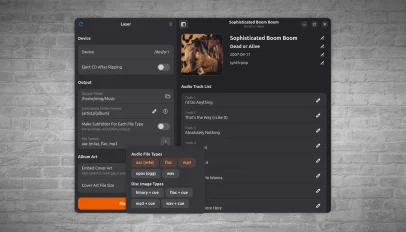
Under my bed lies a digital graveyard, a giant cardboard box filled with the ghosts of my musical past. These are CDs I've been meaning to rip for years, physical artifacts that have quietly accumulated dust while the world supposedly moved on to streaming services. Some of these discs are readily available on Spotify, though usually in versions that feel like pale, sanitized clones compared to the original pressing. Others are rarer finds, perhaps by artists I half-convince myself remember from a different era, triggering a momentary Mandela effect where I question if I ever actually heard them or if my memory has simply glitched.
The decision to finally tackle this mountain of plastic was catalyzed by the arrival of Laser, a new application built on the GTK4 and libadwaita frameworks. Unlike the clunky, decade-old rippers that dominated the Linux landscape for years, Laser feels like a native application of the future. It coaxed me into action not through nostalgia alone, but through a modern interface that respects the user's time and attention. It is a stark reminder that even in an era dominated by cloud-based algorithms, there is a profound value in owning the raw data of music itself.
This isn't just a concern for digital purists or old-timers who remember the days of disc jockeys and spinning vinyl. The landscape of physical media is shifting beneath our feet, with CD sales in the UK reportedly booming. Younger buyers, often put off by the gentrified price point of vinyl records, are turning back to CDs as a cheaper, more accessible entry point into physical ownership. These are not just albums; they are tangible anchors in a digital life, and the tools we use to preserve them matter just as much as the art they hold.
The technical evolution of Laser represents more than just a pretty new GUI. It signifies a broader trend in Linux desktop development where applications are becoming more integrated, responsive, and aesthetically coherent. By leveraging libadwaita, the software taps into a modern design language that provides a consistent user experience across different distributions. This level of polish removes the friction that often prevents users from engaging with open-source media tools, turning a chore like ripping a disc into a seamless, almost meditative process.
There is a specific kind of satisfaction in looking at a progress bar that moves steadily, knowing that the audio being extracted is a lossless copy of the original master, free from the compression artifacts that plague streaming. It is about control. It is about ensuring that the music I love is stored in a format that respects its quality, accessible offline without needing an internet connection or a subscription that might vanish tomorrow. In a world of ephemeral content, Laser offers a way to build a permanent library.
As I finally begin the work of sorting through the box under my bed, the realization hits that this is more than a digital housekeeping project. It is a reclamation of a medium that is slowly being marginalized by its own convenience. With a tool that feels as modern as the rest of my software stack, the barrier to entry has been removed, allowing me to honor my collection without the guilt of neglect. The music is waiting, the software is ready, and the journey from physical disc to digital library begins now.
On Bluesky? Meet HomeSky.
Follower analytics, a growth toolkit, scheduling and AI posting — built for Bluesky. Connect your account and use everything free for 60 days.
Try HomeSky free →