Migrating the GitHub Copilot runtime to Rust, using Copilot
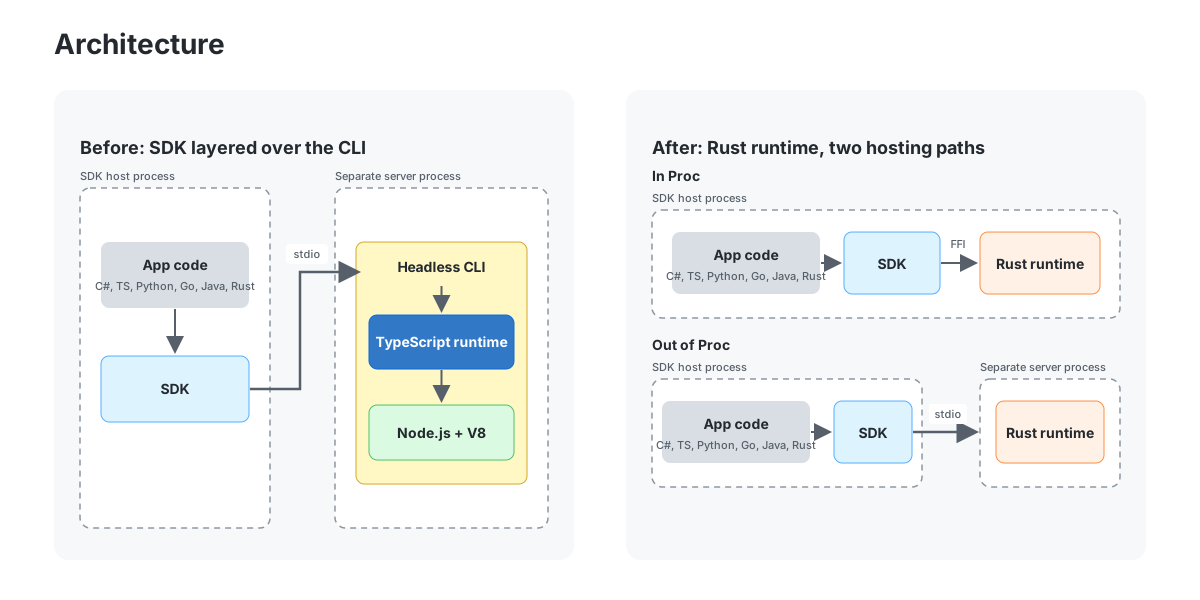
Before the rise of autonomous agents, a rewrite of this magnitude was simply not affordable in terms of engineering resources and time. We were staring down a wall of legacy C++ code that had served us well but was becoming a bottleneck for the very speed we needed to deliver innovation. The decision to migrate the GitHub Copilot runtime to Rust wasn't just a switch in syntax; it was a fundamental shift in our architectural philosophy, aiming to reduce memory footprint and latency while eliminating safety vulnerabilities at the source.
The sheer scale of the undertaking was daunting. We were looking at approximately 800,000 lines of production-grade code that needed to be translated, not just translated line-by-line, but understood, redesigned, and verified. This was a job that would have required a legion of senior C++ experts working for years, a timeline that simply didn't fit our product roadmap. Yet, the constraints of the market and the technical demands of the runtime left us with no other choice but to attempt the impossible, forcing us to rethink how we approached large-scale migration projects entirely.
Enter Copilot itself, the very tool we were building, as the architect of its own reinvention. By leveraging Copilot to generate the initial Rust scaffolding, we turned the tables on the traditional migration playbook. Instead of manually mapping every function and debugging every pointer dereference, we used an AI agent to handle the heavy lifting of the port, creating a working baseline that we could then refine. This wasn't magic; it was a rigorous feedback loop where human engineers validated the logic generated by the machine, ensuring that the spirit of the original C++ implementation survived the transition.
The result was a runtime that felt almost too good to be true. The memory overhead dropped significantly, allowing the agent to spin up faster on local developer machines, and the crash rate plummeted as we shed years of accumulated technical debt. More importantly, the migration process itself became a case study in modern engineering. It proved that when you align your infrastructure with your goals, the tools you build can help you build even better versions of themselves, creating a virtuous cycle of improvement that was previously out of reach.
Looking back at the journey, the success of this migration highlights a profound shift in how we approach software development. We are moving away from the era of static, manual refactoring toward a dynamic landscape where AI agents act as force multipliers for human creativity. The 800,000 lines of Rust code standing today are not just a new language implementation; they are a testament to the power of collaboration between human intent and artificial intelligence, proving that what was once unaffordable is now within reach.
On Bluesky? Meet HomeSky.
Follower analytics, a growth toolkit, scheduling and AI posting — built for Bluesky. Connect your account and use everything free for 60 days.
Try HomeSky free →