MIT Research Could Lead to Refueling Depots on Mars
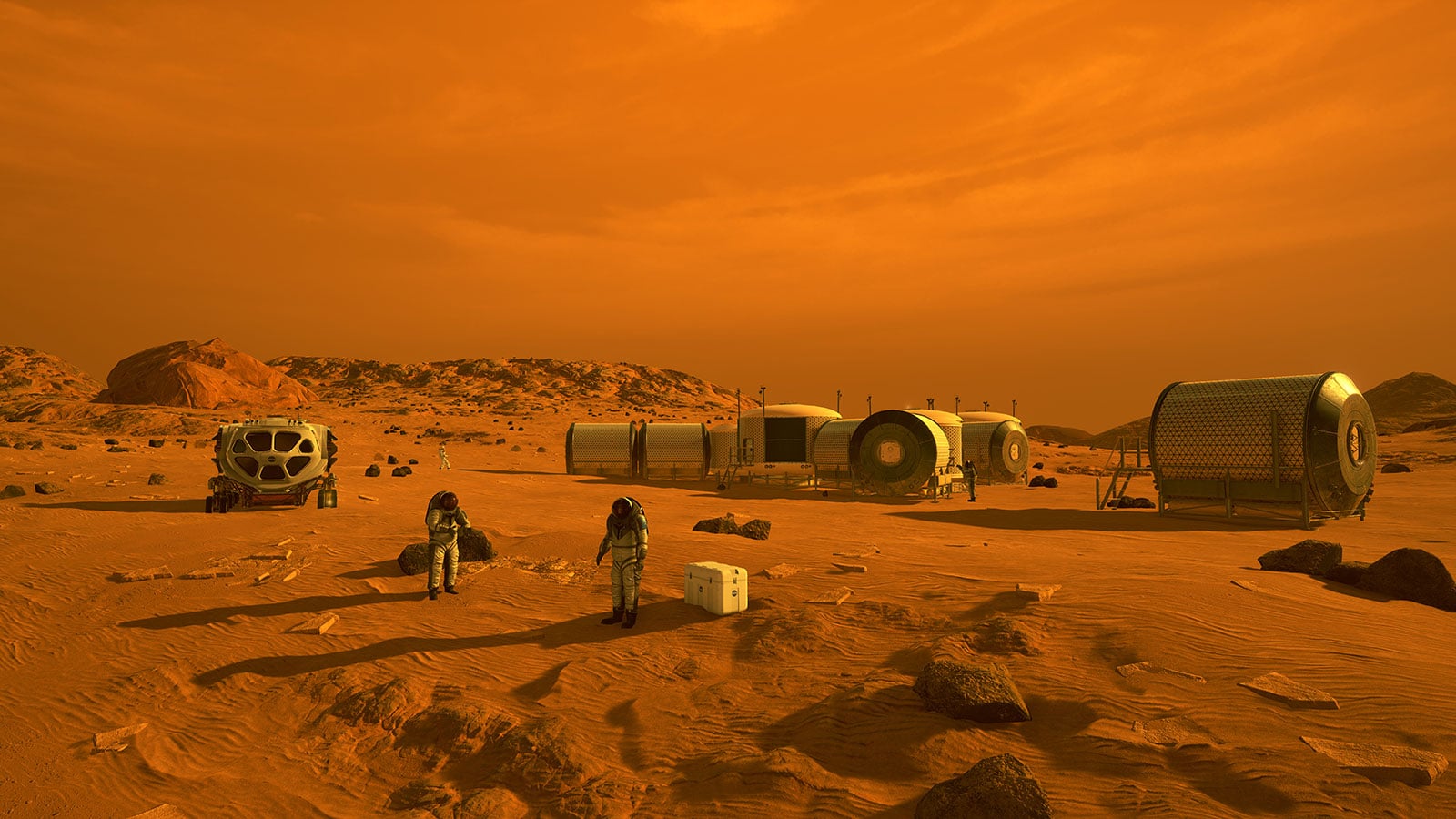
The dream of returning to Mars has long been tethered to a single, daunting logistical hurdle: how do you get three tons of fuel from a planet with a thin, carbon dioxide atmosphere to orbit? For decades, the answer has been to haul everything from Earth, a strategy that turns every step of the journey into an exponentially heavier and more expensive burden. But a new development from the Massachusetts Institute of Technology suggests we might finally be able to break that cycle by turning the Martian air itself into our ticket home.
At the heart of this breakthrough is Lanie McKinney, a PhD candidate whose work moves beyond theoretical physics into the gritty reality of engineering. She is developing a system capable of converting the abundant carbon dioxide in the Martian atmosphere into liquid propellant. This isn't merely a chemical curiosity; it is the key to making the "in-situ resource utilization" concept a practical reality. Instead of viewing the red dust as a hostile barrier, we begin to see it as a reservoir of potential energy, waiting to be tapped.
The implications of this technology ripple far beyond a single mission. If we can manufacture fuel on Mars, we can construct refueling depots that allow spacecraft to top off their tanks before departing. This capability fundamentally alters the economic and physical landscape of interplanetary travel. It means future missions could carry lighter payloads, reducing the cost of launch from Earth while simultaneously increasing the range and flexibility of exploration vehicles. We are no longer limited to missions that must return within the narrow windows dictated by initial fuel loads.
McKinney's approach relies on a sophisticated yet elegant process involving electrolysis and chemical reduction. By splitting the carbon dioxide and hydrogen—likely brought from Earth or extracted from subsurface ice—the system synthesizes methane or other hydrocarbon fuels compatible with existing rocket engines. This mirrors the fuel used by SpaceX's Starship, creating a synergy between current technology and future infrastructure. The challenge, as always, lies in the efficiency and durability of these systems in an environment where maintenance is impossible and failure is not an option.
What makes this research particularly compelling is its timing. As NASA and private entities like SpaceX intensify their efforts to establish a permanent human presence on Mars, the need for self-sufficiency becomes paramount. A mission that cannot produce its own fuel is a mission that is perpetually dependent on the whims of Earth logistics. By mastering the art of Martian chemistry, we are not just solving a problem; we are writing the rules for a new era of solar system exploration.
Ultimately, this work represents a shift in our philosophy toward the stars. It suggests that we are no longer just visitors trying to extract information from a distant world, but architects building a new home within it. The technology McKinney is developing is the foundation upon which a self-sustaining Martian civilization could eventually rest. It transforms the impossible into the inevitable, proving that the resources we need are often right beneath our boots, waiting for us to learn how to use them.
On Bluesky? Meet HomeSky.
Follower analytics, a growth toolkit, scheduling and AI posting — built for Bluesky. Connect your account and use everything free for 60 days.
Try HomeSky free →