In India, a Surge of Solar Is Keeping Coal Power in Check
For decades, the shadow of India's economy has been cast by the black smoke of its power plants, a visual testament to a nation where coal was the undisputed engine of growth. With nearly 1.5 billion people and a hunger for electricity that outstrips global averages, India turned to lignite and bituminous coal with a ferocity that defined its industrial ascent. For years, the narrative was simple and grim: to develop, India must burn; to grow, it must pollute. The smokestacks were not just infrastructure; they were the heartbeat of a civilization refusing to stand still.
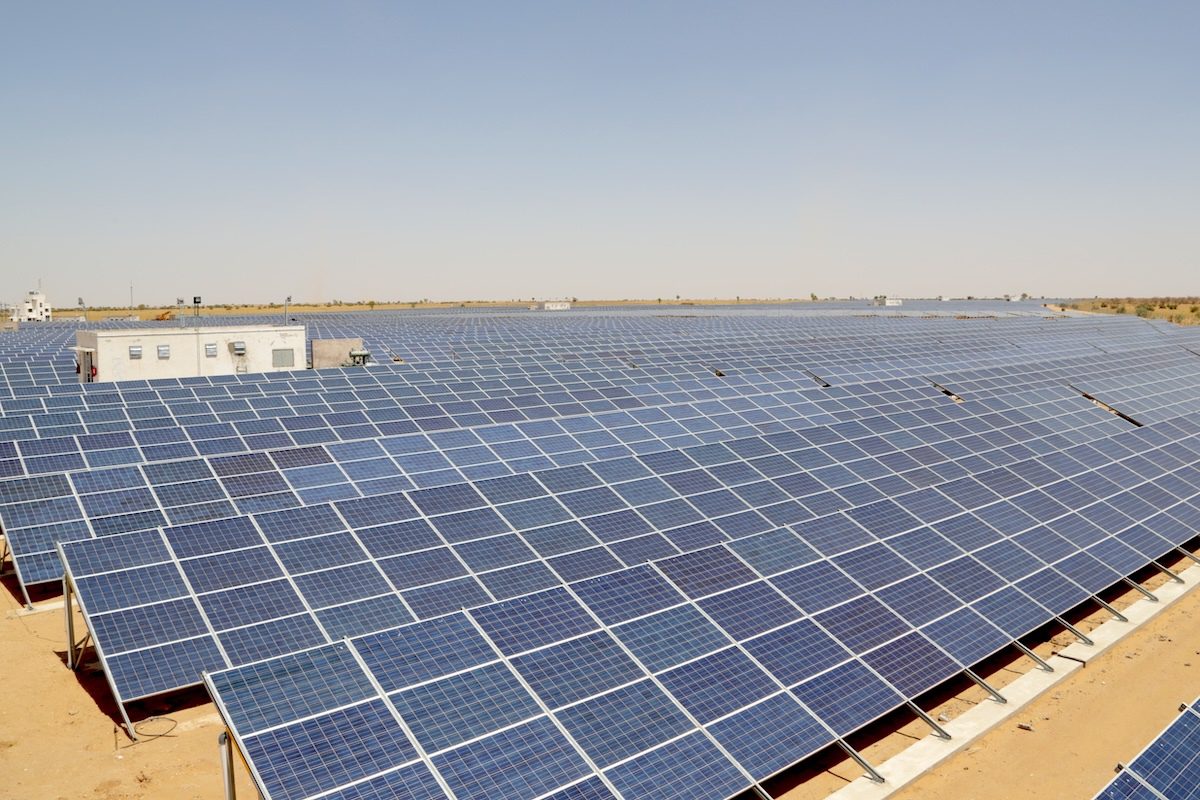
That heartbeat, however, began to stutter with a frequency that defied economic orthodoxy. Over the last two years, a silent revolution has taken place in the subcontinent's grid. The rapid, almost feverish buildout of solar and wind capacity has done something unexpected: it has directly throttled the expansion of coal-fired generation. In a market driven by the relentless pursuit of new capacity, the sudden availability of cheap, abundant renewable energy has rendered new coal projects uncompetitive, leaving megawatts of planned coal capacity stranded before they were ever fired up.
This is not merely a statistical anomaly; it is a fundamental shift in the calculus of energy security. The driving force behind this transition is the staggering cost parity of solar photovoltaics, which has plummeted to levels that make new coal economics a losing proposition. Where a coal plant once required a multi-billion dollar gamble on fuel prices and carbon regulations, a solar farm now offers a predictable, near-zero marginal cost that investors and grid operators can rely upon. The market has essentially voted with its wallet, choosing the sun over the mine because the sun, in the Indian context, is simply the better business case.
Yet, the implications of this shift extend far beyond the balance sheet of a single utility company. The ability of renewables to keep coal in check represents a potential template for one of the world's most populous and energy-hungry nations. If India, with its vast grid challenges and diverse climate zones, can decouple economic growth from carbon emissions through market forces rather than heavy-handed regulation, it proves that the developing world does not need to choose between progress and the planet. It suggests that the transition to a green future can be an organic evolution of the market, driven by efficiency and cost, rather than a forced, painful restructuring.
The road ahead remains fraught with complexity, of course. Intermittency, storage costs, and the need to modernize transmission infrastructure are hurdles that cannot be ignored. The grid must become more flexible to accommodate the shifting tides of solar generation, and the legacy of coal must be managed as existing plants are retired or repurposed. But the trajectory is clear. The surge of solar is not just adding a new layer to India's energy mix; it is actively reshaping the foundation upon which that energy sits, proving that the age of endless coal growth may have finally reached its zenith.
On Bluesky? Meet HomeSky.
Follower analytics, a growth toolkit, scheduling and AI posting — built for Bluesky. Connect your account and use everything free for 60 days.
Try HomeSky free →