NASA Discovery Reveals Complex Water Systems on Early Mars
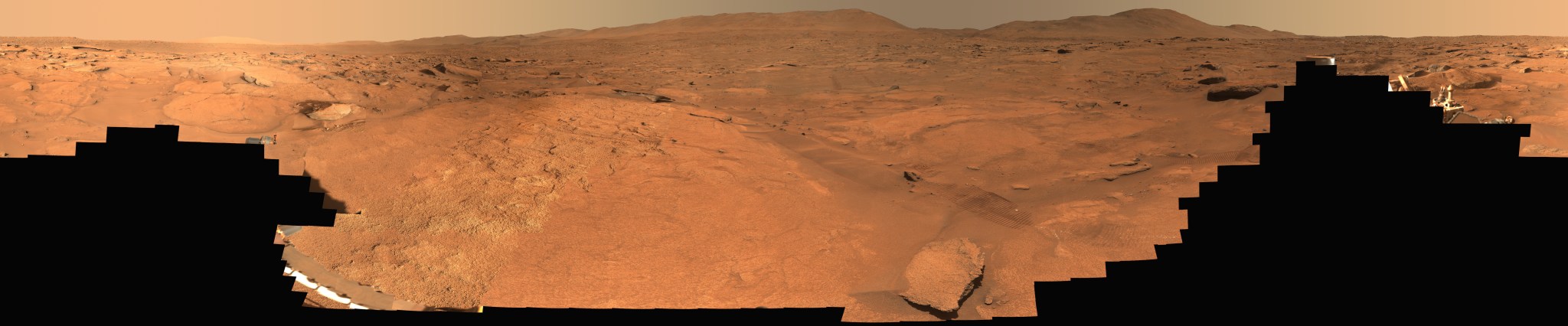
In the quiet hum of the Perseverance rover's wheels crunching over ancient bedrock, the mission scientists encountered a geological puzzle that defied their most basic expectations. As the vehicle traversed the inner edge of Jezero Crater in September 2023, it reached a region designated the "Margin Unit," a zone stretching along the shoreline of an ancient lake that once cradled life or the evidence of it. The prevailing assumption was straightforward: sedimentary rocks here should have formed from layers of sand piled gently upon one another, much like the dunes on Earth's beaches, recording a history of slow, incremental deposition. Instead, the data returned a complex narrative of dynamic, shifting environments that suggests the early Martian shoreline was far more turbulent and chemically active than previously imagined.
The revelation lies in the intricate texture of these rocks, which tell a story of repeated flooding and drying cycles that left behind a mosaic of mineral deposits rather than uniform strata. This complexity implies that the ancient lake in Jezero was not a stagnant body of water, but a living system subject to significant fluctuations in water volume and chemistry. Each layer tells a different part of a climatic drama, where the water level rose and fell with such frequency that the shoreline was constantly being reshaped. This finding forces us to reconsider the stability of the early Martian environment, suggesting that the conditions necessary for life, if it existed, were not only possible but perhaps more volatile and rapidly changing than our models had predicted.
What makes this discovery particularly profound is the implication for the potential habitability of Mars billions of years ago. If the shoreline was a zone of constant chemical exchange driven by these shifting water systems, it may have served as a biological "sweet spot" where nutrients were cycled efficiently enough to support microbial communities. The margin unit acts as a geological archive, preserving the chemical signatures of these interactions within its rock matrix. By studying these layers, we are essentially reading the diary of a wet world, uncovering clues about how water shaped the chemistry of a planet and whether that chemistry ever crossed the threshold from mere geology into biology.
The significance of this work extends beyond the immediate context of Jezero Crater; it rewrites our understanding of planetary evolution across the solar system. The methods used to analyze these formations—combining remote sensing with direct sampling and spectroscopy—provide a blueprint for future missions seeking to understand exoplanets or moons like Europa and Enceladus. We are learning that water worlds are not static backdrops but dynamic theaters where geological and biological processes can intertwine in surprising ways. Every pebble Perseverance analyzes brings us closer to answering the ultimate question of our time: are we alone?
As the rover continues its meticulous journey, collecting samples that will eventually be returned to Earth for detailed study, the Margin Unit stands as a testament to the power of patience and precision in scientific discovery. It reminds us that the universe often holds secrets that only reveal themselves when we are willing to look closer, to question our assumptions, and to embrace the complexity of the data. The story of early Mars is not yet written; it is being written in real-time, one rock layer at a time, by a machine driven by human curiosity and the enduring hope of finding kin in the stars.
On Bluesky? Meet HomeSky.
Follower analytics, a growth toolkit, scheduling and AI posting — built for Bluesky. Connect your account and use everything free for 60 days.
Try HomeSky free →