Scientists Release Details About Moon's New Massive Crater
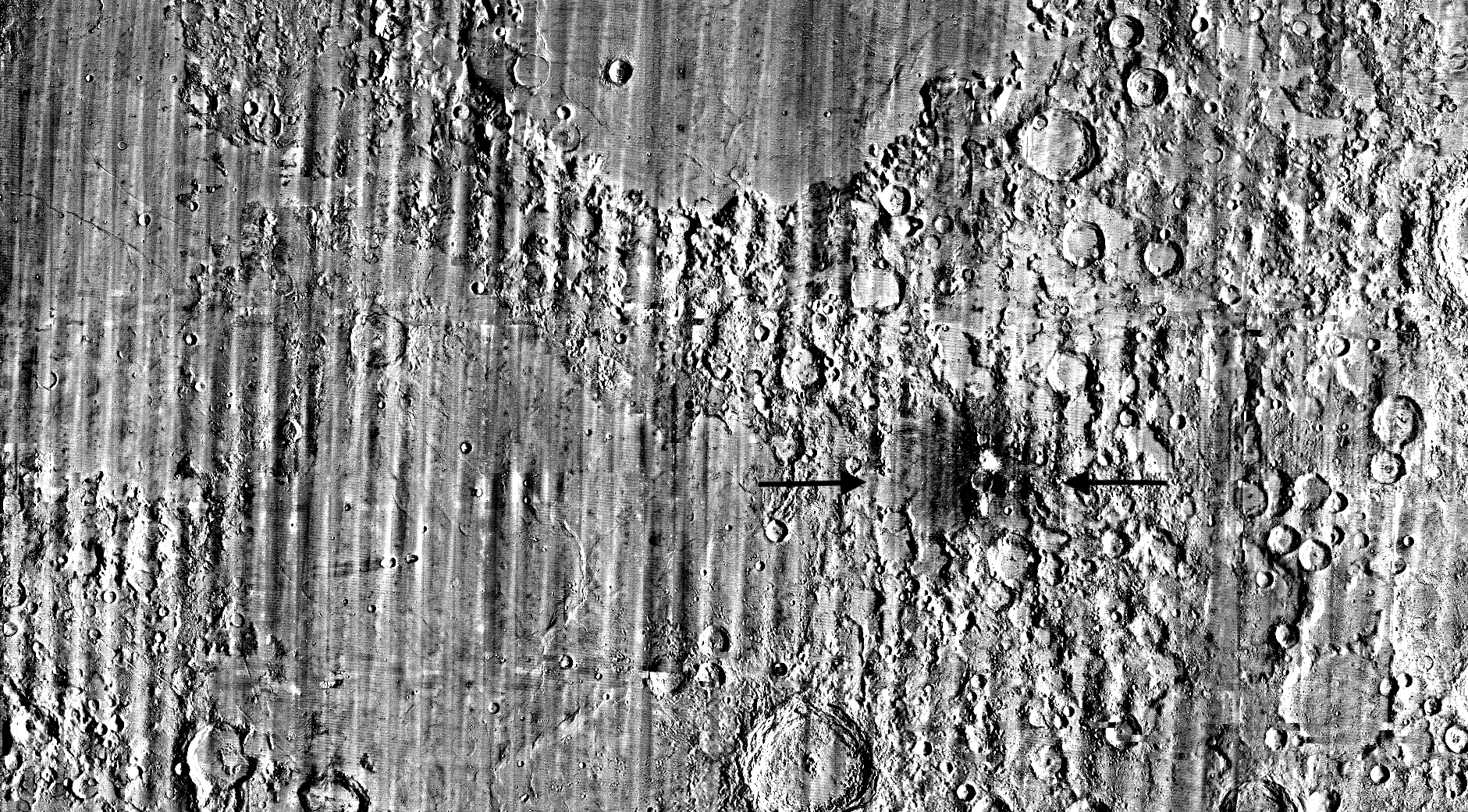
We often look up at the Moon with a sense of familiarity, viewing it as an unchanging sentinel that has watched humanity for eons without flinching. Its face appears frozen in time, a perfect marble hanging in the velvet dark, always presenting the same side to our world. Yet, this stillness is a profound illusion. The lunar landscape is not a static museum piece but a dynamic, violent frontier where the fabric of space constantly rewrites itself through the relentless bombardment of asteroids and comets. While most of these impacts are microscopic events invisible to the naked eye, creating a fresh dusting of regolith that erases the history of the surface, they leave scars that professional astronomers can track with keen eyes.
The latest revelation from the scientific community, detailed in a new paper published in Science Advances, shatters the assumption that the largest craters formed in the modern era are merely minor geological footnotes. Researchers have identified a massive, previously overlooked impact site that dwarfs the usual suspects of lunar history. This discovery is significant not because it changes our understanding of the Moon's ancient past, but because it redefines the scale of destruction happening right now, within the timeframe of human observation. It reminds us that the Moon is not a quiet observer of our solar system; it is a participant in a chaotic dance of celestial debris, where a single impactor can rewrite the geography of our nearest neighbor.
To understand the magnitude of this find, one must consider the mechanics of impact cratering. When an object from space strikes the Moon, there is no atmosphere to burn it up or no water to cushion the blow. The energy is transferred instantly, vaporizing rock and ejecting debris at hypersonic speeds, carving a bowl into the highlands or maria. The new crater represents a class of event that was likely happening at a higher frequency than we previously appreciated. Its existence suggests that the rate of large impacts has not necessarily slowed down over the last few decades, challenging the notion that the Moon is entering a geological lull as the early heavy bombardment phase fades into memory.
This discovery also serves as a humbling reminder of our place in the cosmos. For centuries, we have projected our need for stability onto the Moon, using it as a metaphor for constancy and reliability. But as we learn more about its active surface, the narrative shifts from one of passive endurance to one of constant survival. The Moon absorbs the violence of the solar system that we would never witness, shielding Earth from the worst of it while simultaneously revealing its own fragility. Every new crater is a testament to the raw power of gravity and the sheer luck required for our planet to remain the cradle of life.
As we look forward, the implications of this research extend beyond lunar geology into the realm of planetary defense. If we are still being struck by objects large enough to create such features, the potential for similar impacts on Earth, however statistically remote, remains a non-zero probability. The detailed mapping and analysis provided by the new paper offer a template for monitoring our own planet's neighborhood. It is a call to vigilance, urging us to study the cosmos not just with wonder, but with the sober awareness of a species that shares a fragile orbit with a violent and unpredictable universe.
On Bluesky? Meet HomeSky.
Follower analytics, a growth toolkit, scheduling and AI posting — built for Bluesky. Connect your account and use everything free for 60 days.
Try HomeSky free →